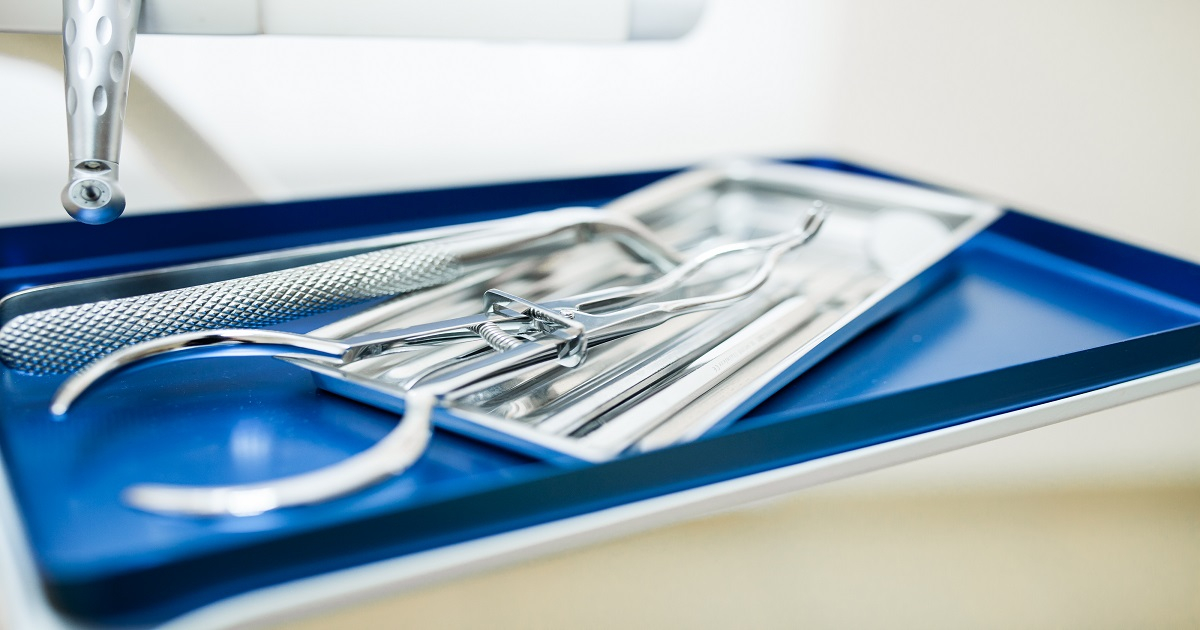
Maxillofacial Instruments: Instruments of Precision Surgery
Maxillofacial instruments help the surgeons to carry out complex operations on the face, jaw, and oral cavity. These special instruments allow specific cutting, elevation, and reconstruction, reducing trauma and accelerating healing. Maxillofacial Instruments used in contemporary oral and maxillofacial surgery (OMFS) have been identified as important in the treatment of trauma, deformities, and cancers. These are made by Cerahi Industries with high-grade stainless steel, durable and sharper than the industry norms.
This blog discusses maxillofacial tools in detail. Readers also get an idea of their varieties, applications, how to maintain them, and their selection. Whether you furnish a clinic or supplier base, knowledge of these tools enhances efficiency and results.
Understanding Maxillofacial Instruments
The maxilla (upper jaw), mandible (lower jaw), and other facial structures are the target of maxillofacial instruments. They are employed in orthognathic surgery, trauma repair, and tumor resection by surgeons. They have fine tips and ergonomic designs to do delicate bone work and are unlike general surgical tools.
This sphere is fuelled by innovation. New developments incorporate titanium alloys and ergonomic handles, which make it less tiring to work on long operations. The maxillofacial tools of Cerahi comply with ISO 13485 standards, which provide international reliability.
History of Maxillofacial Instruments
In the 19th century, pioneers created early maxillofacial tools used in war injuries. Modular designs and laser-etched patterns prevail today. These evolutions give options for customization, e.g., changeable blades due to different bone densities.
Major Maxillofacial Instruments
Surgeons classify maxillofacial tools according to their purpose: cutting, elevating, retracting, and holding. All types assist in particular stages of surgery, from incision to closure.
Cutting Instruments
Chisels and osteotomes are cutting tools. Osteotomes are used to cut more dense maxillary structures, as surgeons use a mallet to split bone with a chisel. The beveled-edge chisels that Cerahi produces are kept sharp by repeatedly subjecting them to sterilization.
Segmental resections are done by saw systems, such as reciprocating and oscillating blades. These motorized maxillofacial tools minimize handwork and vibration.
Elevators and Luxators
Tooth or bone fragments are loosened by elevators. Periosteal elevators raise flaps with no tearing of tissue, and straight elevators root sockets. Luxators cut periodontal ligaments in extractions that are atraumatic.
Cerahi provides sets with color-coded handles to be easily identified and simplify the workflow in high-capacity clinics.
Retractors and Forceps
Surgical sites are revealed by retractors. Minnesota retractors are used to retract cheeks, and Dingman retractors are used to retract the tongue and lips. The tissue forceps help to hold the fine structures without crushing.
In fixation, fragments are held in place with bone-holding forceps. The serrated-jaw forceps used by Cerahi are effective in holding fast in a wet field.
Drills and Burs
Plates and screws are provided with pilot holes by high-speed drills. Bone edges are rounded by burs, and edges are polished by diamond burs. These rotary maxillofacial tools have built-in irrigation to avoid heating.
Uses in Oral and Maxillofacial Surgery
Maxillofacial tools are useful in various situations. Surgeons who operate trauma cases use elevators and forceps to fix jaw fractures, repositioning them using mini-plates.
Orthognathic surgery is surgery that corrects the jaws. Osteotomes are used by surgeons to move or reposition mandibles to enhance aesthetics and functionality.
Dental Implantology and Reconstructive Procedures
Trephines and drivers are used in the preparation of fixture sites in implantology. Surgical processes such as cleft palate repair are classified as reconstructive cases where fine chisels are required to graft accurate cases.
Oncologic surgeries involve the removal of tumors, and they are then reconstructed with custom plates. Cerahi has modular kits, which accommodate these sophisticated workflows.
Choosing Maxillofacial Instruments of the Highest Quality
Customers focus on material, certification, and ergonomics. Grades of stainless steel 410 or 420 are resistant to corrosion, and passivated finishes are sterile.
Best Practices in Maintenance and Sterilization
Wipe down clean, with enzymatic sprays immediately after use. Cleaners are used using ultrasonic cleaners and then autoclaved at 134 C. Hinge lubricated every week to maintain motion. Keep in foam-lined cassettes to avoid damage. Frequent sharpening keeps cutting efficiency.
Inventions That Influenced Maxillofacial Instruments
Guides are 3D-printed, and this improves accuracy in planning. Robotic-assisted systems are used in conjunction with piezo-electric osteotomes to make vibration-free cuts. Cerahi combines these trends in providing hybrid kits to progressive surgeons. Sustainability matters too. The waste is reduced by recyclable materials and long-lasting alloys that conform to the global healthcare guidelines.
Why use Cerahi as Maxillofacial Instruments?
Cerahi Industries is one of the manufacturers of maxillofacial equipment in Sialkot, Pakistan. Our tools are made of medical grade steel and are subjected to extensive tensile strength and edge retention testing. Bulk orders are customized, such as laser-engraved logos.
Surgeons complement our sets with a balanced weight and non-slip grips. Become a partner with Cerahi to take your practice to a new level- contact us to receive quotes.
Conclusion
Maxillofacial tools enable surgeons to change lives with accurate surgeries. These instruments propel victory in OMFS with elevators pulling bone up, retractors revealing fields, and so on. Cerahi Industries invests in quality to guarantee sterile and durable performance. Prepare your team and see better results in each process.
FAQs
Q1: What are the materials of maxillofacial instruments that make them durable?
A: It is based on premium levels of stainless steel (410 and 420) with titanium over-coatings to protect against corrosion and multiple sterilizations.
Q2: What are the differences between elevators and luxators in maxillofacial surgery?
A: Elevators are used to pry and loosen the structures with leverage, and luxators are used to cut the ligaments atraumatically to extract them easily.
Q3: What makes maxillofacial instruments last longer?
A: Wear is prevented by ultrasonic cleaning, autoclaving, and lubrication of hinges to last 500+ times.
Q4: What maxillofacial tools are appropriate in the repair of jaw fractures?
A: Osteotomes, bone-holding forceps, and drills are effective in stabilizing and fixating bones in cases of trauma surgery.
Q5: Does Cerahi provide maxillofacial instrument sets that can be customized?
A: Yes, we have bespoke kits with engraved handles and customizable parts according to specialized surgery requirements.

 English
 Arabic
 French
 Spanish
 Portuguese
 Deutsch
 Turkish
 Dutch
Dutch
 Russian
 Romaian
 Portuguese (Brazil)
 Greek
Greek