


Modern power transmission networks require conductors that can handle high electrical loads, long transmission distances, and demanding environmental conditions. Among the most widely used overhead transmission conductors in the global utility industry is the ACSR cable. Known for its strength, conductivity, and cost-effectiveness, ACSR cable has become a preferred choice for power utilities, EPC contractors, and infrastructure developers.
As global electricity demand continues to grow, selecting the right overhead conductor directly impacts grid reliability, maintenance costs, and transmission efficiency. Understanding the structure, applications, and selection criteria of ACSR cables helps engineers and procurement buyers make informed decisions for transmission and distribution projects.
HNBF Power is a global manufacturer of overhead conductors and power cables, supplying reliable ACSR cable solutions for utility, industrial, and infrastructure projects worldwide.
What Is an ACSR Cable?
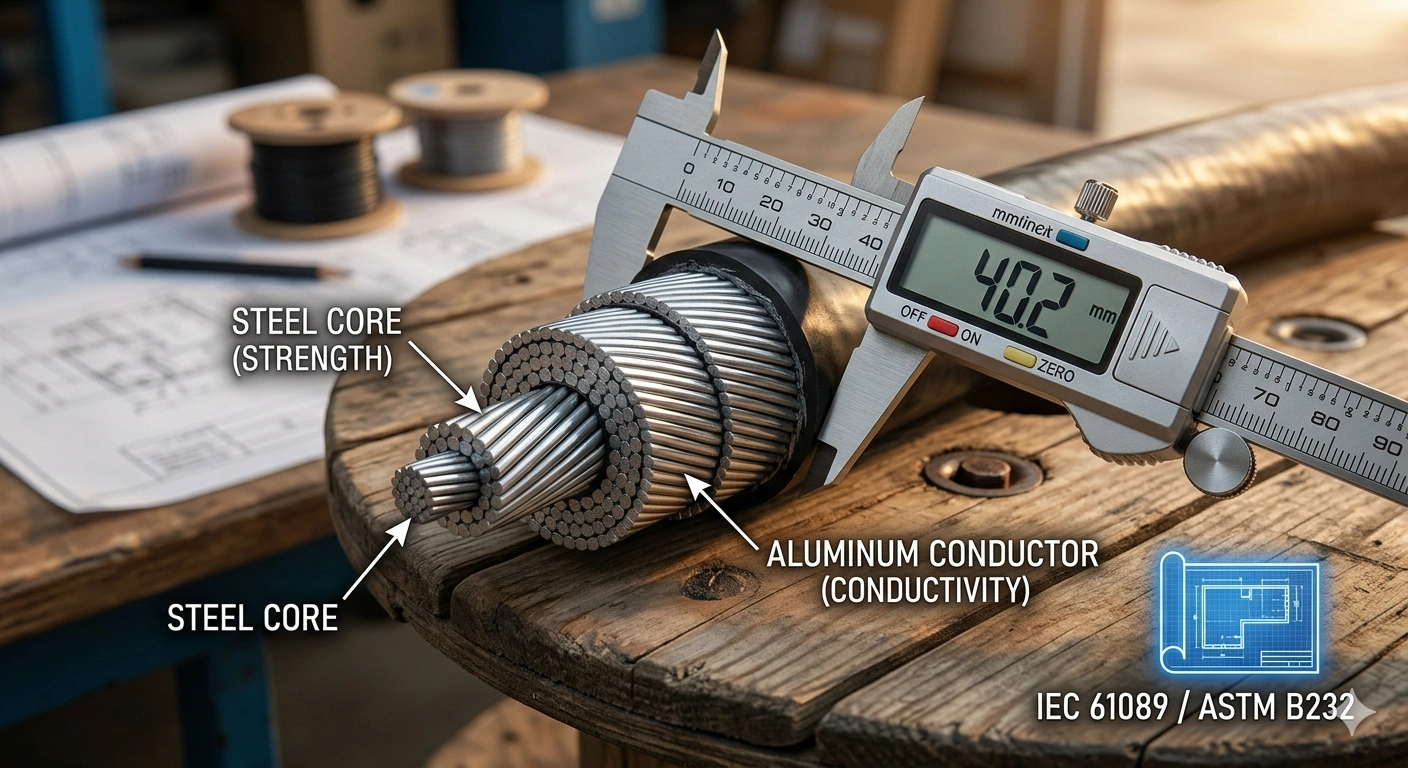
ACSR stands for Aluminum Conductor Steel Reinforced. It is a stranded overhead conductor made of two main components:
- Aluminum strands for electrical conductivity
- A steel core for mechanical strength
The aluminum layers carry most of the electrical current, while the galvanized steel core provides tensile strength required for long-span installations and harsh environmental conditions.
This combination allows ACSR cable to achieve an excellent balance between conductivity and durability, making it suitable for medium, high, and extra-high voltage transmission lines.
Structure of ACSR Cable
Aluminum Outer Layers
The outer aluminum strands are lightweight and highly conductive. Aluminum offers excellent corrosion resistance and lower weight compared to copper, helping reduce transmission line load.
Steel Reinforcement Core
The central steel core increases mechanical strength and minimizes sag during long-distance transmission. This reinforcement makes ACSR cable ideal for areas with:
- Heavy wind loads
- Ice accumulation
- Mountainous terrain
- Long transmission spans
Stranding Design
ACSR conductors are manufactured using concentric stranded construction, which improves flexibility, mechanical performance, and installation efficiency.
Key Advantages of ACSR Cable
High Tensile Strength
One of the biggest advantages of ACSR cable is its ability to withstand high mechanical stress. The steel core enables the conductor to support long spans between towers while maintaining structural stability.
This is especially important for:
- High-voltage transmission lines
- River crossings
- Mountain transmission projects
- Rural electrification networks
Excellent Conductivity
The aluminum strands provide efficient current transmission with reduced energy loss. This helps utilities improve overall grid performance while maintaining cost efficiency.
Lightweight Design
Compared to copper conductors, ACSR cable is lighter, reducing installation difficulty and lowering tower structure requirements.
Cost-Effective Solution
ACSR cable provides a practical balance between performance and cost. Its durability and long operational life help reduce maintenance and replacement expenses over time.
Strong Weather Resistance
ACSR conductors are designed to perform reliably under extreme weather conditions, including:
- High temperatures
- Strong winds
- Ice loading
- Coastal environments
Common Applications of ACSR Cable
Power Transmission Lines
ACSR cable is widely used in overhead transmission systems because of its high strength-to-weight ratio and reliable conductivity.
Distribution Networks
Utility companies use ACSR conductors for medium-voltage and low-voltage distribution systems in urban and rural areas.
Industrial Power Infrastructure
Large industrial facilities often require dependable overhead conductors to support stable power supply across extensive production sites.
Renewable Energy Projects
Wind farms and solar power plants frequently use ACSR cable for grid connection and power evacuation systems due to its mechanical durability and transmission efficiency.
Factors to Consider When Selecting ACSR Cable
Choosing the correct ACSR cable requires evaluating several technical and operational factors.
Current Carrying Capacity
The conductor must support the required electrical load without excessive heating or energy loss.
Mechanical Strength Requirements
Projects with long spans or challenging terrain require higher tensile strength conductors.
Environmental Conditions
Climate conditions such as temperature, wind speed, corrosion exposure, and ice loading influence conductor selection.
Voltage Level
Different transmission voltage levels require specific conductor sizes and configurations.
Installation Conditions
Installation methods, tower spacing, and route design also affect conductor choice.
Working with an experienced manufacturer helps ensure proper conductor selection based on project specifications and utility standards.
ACSR Cable vs Other Overhead Conductors
ACSR vs AAC
AAC (All Aluminum Conductor) offers higher conductivity but lower mechanical strength compared to ACSR. AAC is commonly used for shorter spans and urban distribution systems.
ACSR vs AAAC
AAAC (All Aluminum Alloy Conductor) provides better corrosion resistance and lighter weight, but ACSR generally delivers superior tensile strength for heavy-duty transmission applications.
ACSR vs ABC Cable
ABC (Aerial Bundled Cable) is primarily used in low-voltage distribution networks for improved safety and reduced power theft, while ACSR is mainly used for overhead transmission lines.
Why Quality Matters in ACSR Cable Manufacturing
Poor-quality conductors can lead to:
- Increased line losses
- Premature sagging
- Mechanical failure
- Frequent maintenance
- Reduced grid reliability
High-quality ACSR cable manufacturing requires:
- Precision stranding technology
- High-purity aluminum
- Reliable galvanized steel core
- Strict quality testing
- International standard compliance
HNBF Power manufactures ACSR cables using advanced production equipment and rigorous quality control processes to ensure stable performance for utility transmission projects worldwide.
How HNBF Power Supports Utility and EPC Projects
HNBF Power provides comprehensive overhead conductor solutions for global transmission and distribution infrastructure projects. The company supplies:
- ACSR conductors
- AAC conductors
- AAAC conductors
- ABC cables
- LV power cables
- Concentric cables
With a strong focus on utility-grade manufacturing, HNBF Power supports engineers, contractors, and procurement teams with:
- Customized conductor specifications
- Technical consultation
- Stable production capacity
- International project experience
- Reliable product quality
These capabilities help customers improve project efficiency while ensuring long-term transmission reliability.
FAQs About ACSR Cable
What does ACSR cable stand for?
ACSR stands for Aluminum Conductor Steel Reinforced, an overhead conductor combining aluminum strands with a steel core for improved conductivity and mechanical strength.
Where is ACSR cable commonly used?
ACSR cable is commonly used in overhead transmission and distribution lines, utility infrastructure, industrial facilities, and renewable energy projects.
Why is steel used inside ACSR conductors?
The steel core provides tensile strength and reduces sag, allowing the conductor to support long-distance transmission spans.
Is ACSR cable suitable for harsh weather conditions?
Yes. ACSR conductors are designed to withstand strong winds, ice loading, and high-temperature environments.
How do I choose the right ACSR cable size?
The correct conductor size depends on voltage level, current capacity, span length, environmental conditions, and project requirements.
Conclusion
ACSR cable remains one of the most reliable and widely used solutions for overhead power transmission and distribution systems. Its combination of high conductivity, mechanical strength, and cost efficiency makes it an ideal choice for utility infrastructure projects worldwide.
Selecting a trusted manufacturer is critical for ensuring long-term grid performance and operational reliability. HNBF Power delivers high-quality ACSR cable solutions designed to meet the evolving demands of modern power transmission networks.
Contact HNBF Power today to discuss customized ACSR cable solutions for your utility, industrial, or infrastructure project.

 Arabic
 French
 Spanish
 Portuguese
 Deutsch
 Turkish
 Dutch
Dutch
 Italiano
 Russian
 Romaian
 Portuguese (Brazil)
 Greek
Greek