


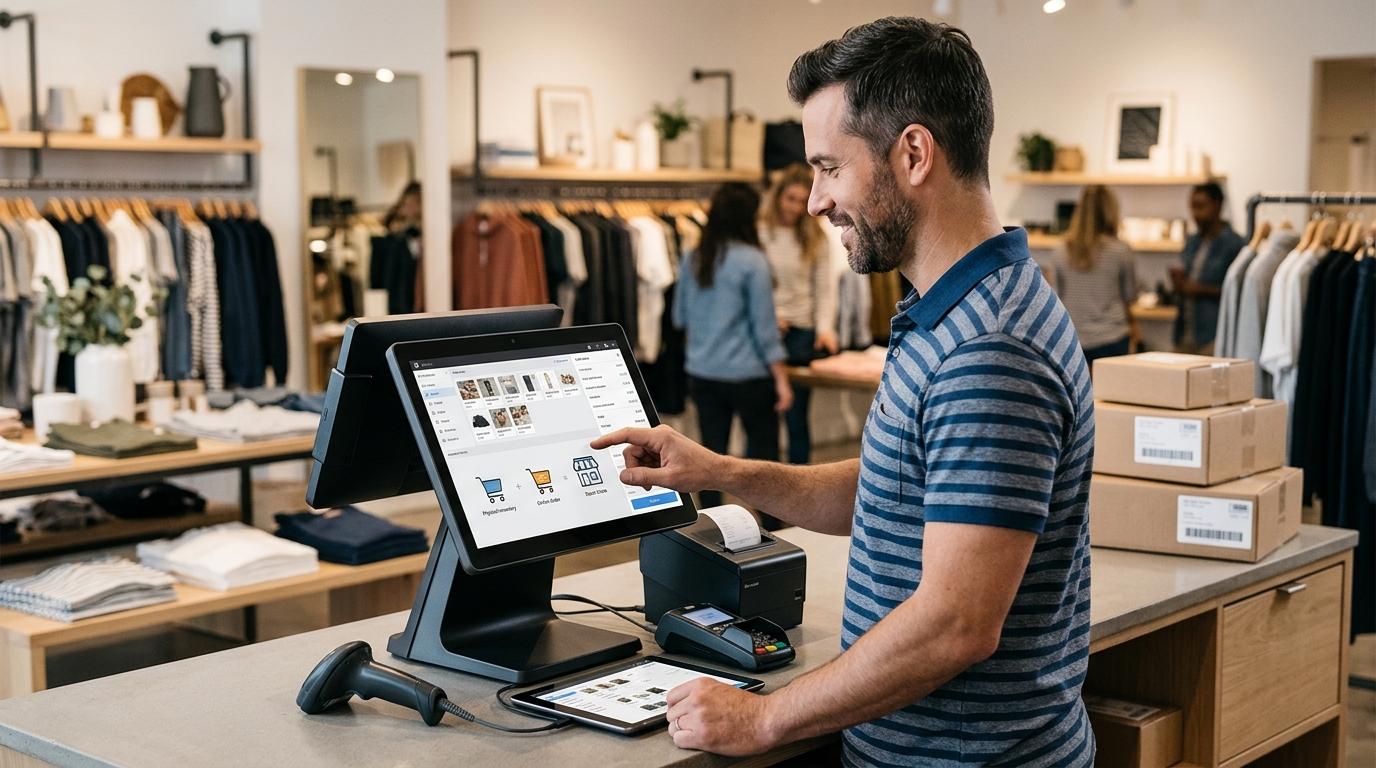
Retail is no longer limited to physical stores or online shops. Most customers now move between both channels before making a purchase. They may browse products online, check availability in-store, and finally complete the purchase through whichever option is most convenient. This combination of online and offline shopping is known as a hybrid retail model. In this system, the Point of Sale (POS) is no longer just a checkout tool; it becomes the central connection between both worlds. Modern retail solutions, including systems developed by Mhouse, are designed to support this unified retail experience.
Understanding Hybrid Retail Models
A hybrid retail model combines physical store operations with digital platforms such as websites, mobile apps, and online marketplaces. Instead of treating them separately, businesses integrate both channels into a single system.
Customers expect consistency across these platforms. They want the same pricing, product availability, and service experience whether they are shopping online or in-store. This creates a need for a centralized system that manages both environments together.
POS as the Central Data Hub
In a hybrid retail setup, the POS system becomes the core data hub. It connects sales, inventory, customer information, and payment data from both online and offline channels.
When a product is sold in-store, the POS updates online inventory in real time. Similarly, online purchases reflect immediately in physical store stock. This prevents issues like overselling or inaccurate stock information, which can harm customer trust.
Unified Inventory Management
One of the biggest challenges in hybrid retail is inventory management. Without integration, businesses often face mismatched stock levels between online and offline systems.
A modern POS system solves this by maintaining a unified inventory database. Every transaction, regardless of channel, updates the same system. This ensures accurate stock visibility across all platforms and helps retailers manage supply more efficiently.
Seamless Customer Experience Across Channels
Customers today expect a seamless experience. They may start shopping on a mobile app and complete the purchase in-store or vice versa. A hybrid POS system supports this journey by syncing customer data across all platforms.
This allows features such as click-and-collect, in-store returns for online purchases, and personalized offers based on purchase history. The result is a smoother and more connected shopping experience.
Omnichannel Payment Integration
Payment flexibility is a key part of hybrid retail success. Customers use different payment methods depending on the channel, including digital wallets, cards, and cash.
A hybrid POS system supports all these payment methods and ensures they are recorded in a single system. This simplifies accounting and provides clear financial reporting across all sales channels.
Real-Time Analytics and Reporting
Hybrid retail generates large amounts of data from multiple sources. A POS system plays an important role in collecting and analyzing this data in real time.
Retailers can track which products perform better online versus in-store, understand customer behavior patterns, and identify peak sales times. This helps in making informed decisions about marketing, inventory planning, and pricing strategies.
Improving Operational Efficiency
Without integration, managing online and offline operations separately can lead to inefficiencies. Staff may spend extra time reconciling data, updating inventory manually, or handling customer complaints due to mismatched information.
A hybrid POS system reduces these challenges by automating data synchronization. This improves operational efficiency and allows staff to focus more on customer service rather than backend management.
Supporting Flexible Fulfillment Options
Hybrid retail also introduces flexible fulfillment models such as buy online, pick up in-store (BOPIS), ship-from-store, and same-day delivery.
A modern POS system manages these fulfillment options by coordinating inventory and order processing across locations. This ensures that customers receive their products faster and more conveniently.
Role of Technology Providers in Hybrid Retail
Building a strong hybrid retail system requires reliable technology infrastructure. POS providers play a key role in enabling this integration.
Platforms like Mhouse focus on creating POS systems that unify online and offline operations. These systems help retailers manage inventory, payments, and customer data in a single ecosystem, reducing complexity and improving performance.
Final Thoughts
The role of POS in hybrid retail models has evolved from a simple billing tool to a complete business management system. It connects online and offline channels, ensures accurate inventory tracking, and supports a seamless customer experience. As hybrid retail continues to grow, businesses that invest in integrated POS systems will be better positioned to handle customer expectations and operational complexity.

 Arabic
 French
 Spanish
 Portuguese
 Deutsch
 Turkish
 Dutch
Dutch
 Italiano
 Russian
 Romaian
 Portuguese (Brazil)
 Greek
Greek