


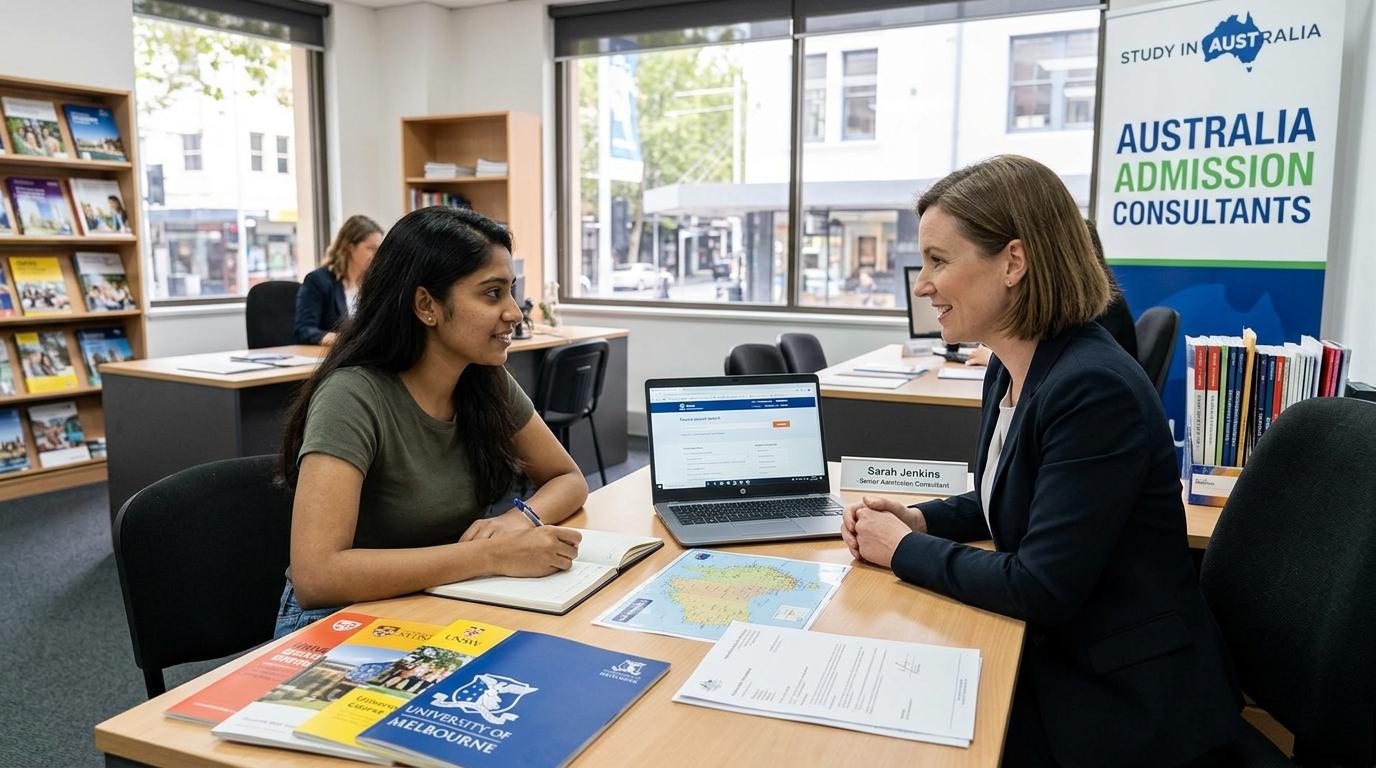
Applying to a university in Australia from Singapore is exciting — but let's be honest, it can also feel overwhelming. Between shortlisting universities, understanding entry requirements, writing personal statements, and preparing for standardised tests, there's a lot on your plate.
That's exactly where Australia admission consultants for Singapore students step in. They don't just hand you a checklist. They walk with you through every stage, making sure you don't miss a single deadline or opportunity.
Whether you're a JC2 student with four months to apply or a Poly student thinking about transferring to an Australian university, this guide will show you exactly how the right consultant can make the difference between a rejection and an acceptance letter.
Why Singapore Students Need Admission Guidance
Singapore's education system is competitive. You've probably spent years chasing O-Level or A-Level grades, and now you're expected to navigate a completely different university system overseas.
Here's the thing — Australian universities don't evaluate you the same way local universities do. They look at a combination of:
-
Academic grades (O-Levels, A-Levels, Polytechnic GPA)
-
Personal statements or motivation letters
-
Standardised test scores (SAT/ACT for some programs)
-
Co-curricular activities and leadership records
-
English proficiency scores (IELTS/TOEFL)
Most students figure this out too late. A good consultant helps you understand this early and prepares you systematically.
What Australia Admission Consultants Actually Do
Many students think consultants just help fill out forms. That's a huge misconception.
Here's what experienced australia admission consultants actually do:
1. Academic Profile Assessment
They review your grades, strengths, and career goals to identify the most suitable courses and universities for you.
2. University and Course Shortlisting
Not every university suits every student. Consultants help you build a smart list — safety schools, match schools, and reach schools — so you're not putting all your eggs in one basket.
3. Personal Statement Coaching
This is often the most underrated part. A strong personal statement can elevate an average academic profile. Consultants help you craft a story that is authentic and compelling.
4. Application Submission Support
From UAC (Universities Admissions Centre) applications to direct university portals, consultants ensure your applications are complete and error-free.
5. Scholarship Guidance
Australia offers generous scholarships for international students. Consultants know which ones you're eligible for and how to apply effectively.
6. Pre-Departure Support
Visa applications, accommodation, health insurance, orientation — a good consultant doesn't disappear after you get admitted.
How to Identify a Good Consultant
Not all consultants are created equal. Here's what to look for:
| Criteria | What to Check |
| Experience | Years of working with Singapore students specifically |
| University Partnerships | Official recognition from Australian universities |
| Transparency | Clear fee structure, no hidden charges |
| Track Record | Verifiable success stories and placements |
| Personalisation | Custom advice, not generic templates |
| Test Prep Support | Help with SAT, ACT, IELTS preparation |
Ask for references. A confident, reputable consultant will have no problem sharing past student success stories.
Red Flags to Avoid
Watch out for these warning signs:
-
Guaranteed admission promises — No one can guarantee admission to any university
-
Pushing you toward specific universities without asking about your goals
-
Charging large upfront fees with no service breakdown
-
No knowledge of current Australian university requirements
-
Discouraging you from asking questions
Trust your gut. If something feels off during your initial consultation, it probably is.
Questions Parents Should Ask
Parents, here's your checklist when meeting a consultant:
-
How many Singapore students have you placed in Australian universities?
-
Which Australian universities are you officially affiliated with?
-
How do you handle visa applications and rejections?
-
What is your support process after acceptance?
-
How do you assist with standardised test preparation?
Getting clear answers to these questions gives you confidence in the consultant you choose.
Mini Student Case Study
Priya's Story — From Polytechnic to University of Melbourne
Priya graduated from Temasek Polytechnic with a Diploma in Business Studies. She had a GPA of 3.6 and wasn't sure if Australian universities would consider her profile strong enough.
Her consultant reviewed her profile and identified that the University of Melbourne and Monash University both have articulation pathways for Polytechnic graduates.
Together, they worked on:
-
Strengthening her personal statement around her internship experience
-
Gathering strong referee letters from her lecturers
-
Preparing an IELTS score of 7.0 to meet the entry requirement
Priya received an offer from Monash University's Bachelor of Commerce program within six weeks of applying. The key? She started the process 10 months before her intended intake.
Start early. That's the single biggest advantage.
SAT/ACT Preparation — Why It Matters for Australian Admissions
Some Australian universities and competitive programs request SAT or ACT scores as part of their international student applications — especially if you're applying directly from secondary school without A-Levels.
A strong ACT Test score can significantly strengthen your application, particularly for science, engineering, and business programs at top-tier institutions like ANU or University of Sydney.
If you're unsure where to start with test preparation, professional support makes a real difference. Test Prep at The Princeton Review Singapore offers structured SAT and ACT coaching specifically designed to help Singapore students hit their target scores efficiently.
Don't leave your test scores to chance — especially when they can be the deciding factor between two equally competitive applicants.
Australia University Application Timeline
Here's a realistic planning timeline for Singapore students:
| Timeframe | Action Items |
| 12–18 months before intake | Research universities, begin test prep (SAT/ACT/IELTS) |
| 10–12 months before intake | Meet australia admission consultants, build shortlist |
| 8–10 months before intake | Draft personal statements, gather documents |
| 6–8 months before intake | Submit applications, apply for scholarships |
| 4–6 months before intake | Receive offers, accept admission, apply for student visa |
| 2–3 months before intake | Arrange accommodation, attend pre-departure briefings |
The most common mistake? Starting too late. Many students think six months is enough. It rarely is.
Common Mistakes Singapore Students Make
Let me be direct with you — these are the mistakes I see students repeat every year:
-
Applying to only one or two universities — always have backups
-
Underestimating the personal statement — it's not just a formality
-
Waiting for A-Level results before starting applications — you lose 3–4 months
-
Ignoring scholarship deadlines — they often close before general admissions
-
Not preparing for English proficiency tests — even strong English speakers sometimes fall short of IELTS requirements
-
Choosing a university based only on ranking — course fit and career outcomes matter more
Pro Tips from Admission Experts
Here are a few insider strategies that experienced australia admission consultants use:
1. Apply Early, Not Just On Time
Many Australian universities use rolling admissions. Early applicants often have a better shot at limited seats and scholarship pools.
2. Tailor Every Personal Statement
A generic personal statement sent to five universities hurts you. Each statement should speak directly to that university's values and your chosen program.
3. Use Your CCA Records Strategically
Australian universities value well-rounded students. Your leadership roles in school CCAs can be a real differentiator.
4. Get Your Referee Letters Early
Teachers and lecturers get busy. Ask them at least three months before your submission deadline.
5. Research Graduate Outcomes, Not Just Rankings
Look at employment rates, industry connections, and internship programs. These matter more for your career than a university's global ranking position.
FAQ Section
Q1: Do I need a consultant to apply to Australian universities?
No, you can apply independently. But a good consultant saves you time, reduces errors, and often improves your chances significantly — especially for competitive programs.
Q2: How much do Australia admission consultants typically charge in Singapore?
Fees vary widely. Some charge a flat fee per application, others charge a full-service package. Always ask for a detailed breakdown before committing.
Q3: Can Polytechnic graduates apply directly to Australian universities?
Yes! Many Australian universities have articulation agreements with Singapore Polytechnics. Your Diploma GPA and program are key factors.
Q4: Is the SAT or ACT required for Australian university admissions?
Not always. Requirements vary by university and program. However, a strong score can enhance your application, especially for competitive programs or scholarship applications.
Q5: How early should I start the application process?
Ideally, 12–18 months before your intended semester start. At minimum, 8–10 months.
Q6: What's the most important part of an Australian university application?
It's a combination — grades, personal statement, and supporting documents. No single element wins it alone. That's why holistic preparation matters.
Conclusion
Applying to an Australian university from Singapore is absolutely achievable — but it rewards students who plan smart, start early, and get the right guidance.
Working with experienced australia admission consultants isn't a shortcut. It's a strategy. It means having someone in your corner who knows the system, understands what universities are looking for, and helps you present the best version of yourself.
Whether you're a JC student eyeing the University of Sydney, a Poly graduate exploring Monash, or a parent trying to understand what your child needs — the right support can make this journey far less stressful and far more successful.
You've worked hard to get here. Make sure your application reflects that.

 English
 Arabic
 French
 Spanish
 Portuguese
 Deutsch
 Turkish
 Italiano
 Russian
 Romaian
 Portuguese (Brazil)
 Greek
Greek