


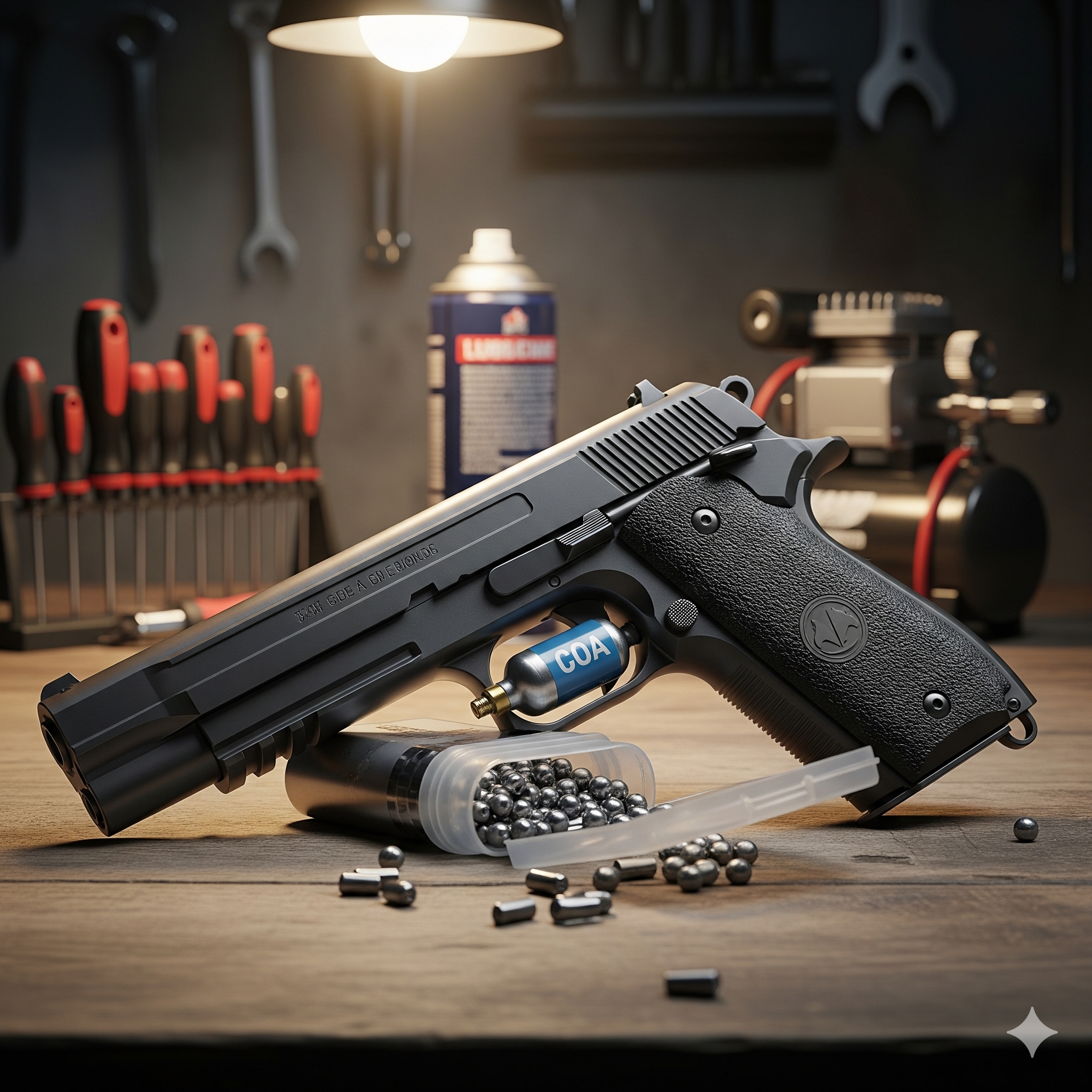
Personal safety is a priority for many individuals, leading to increased interest in various self-defence and recreational shooting products. Among the options frequently discussed are blank guns for self defence and air guns. While both may resemble traditional firearms in appearance, they serve very different purposes and operate using entirely different mechanisms.
For first-time buyers, understanding the distinctions between these products is essential. Factors such as intended use, legal considerations, maintenance requirements, effectiveness, safety, and practicality all play a role in determining which option may be suitable for a particular situation.
In this comprehensive guide, we will explore how blank guns and air guns work, their advantages and limitations, common applications, and what buyers should consider before making a purchase.
What Are Blank Guns for Self Defence?
Blank guns are devices designed to fire blank cartridges rather than live ammunition. A blank cartridge produces a loud noise, muzzle flash, and smoke but does not discharge a conventional projectile like a firearm cartridge.
Many people consider blank guns for self defence because they can create a loud deterrent effect that may attract attention and potentially discourage a threat. In addition to personal security applications, blank guns are commonly used in theatrical productions, film productions, sporting events, training exercises, and historical reenactments.
Because blank guns resemble conventional firearms, they should always be handled responsibly and in accordance with local laws and regulations.
How Blank Guns Work
Blank guns function similarly to traditional firearms in appearance and operation, but they use specially designed blank cartridges.
The firing process generally involves:
-
Loading blank cartridges into the firearm.
-
Pulling the trigger.
-
Igniting the cartridge primer.
-
Producing gas pressure, noise, and muzzle flash.
-
Releasing gases through the barrel without firing a traditional projectile.
The result is a realistic firing sound and visual effect without the use of conventional ammunition.
Common Uses of Blank Guns
Blank guns are utilized in several different environments.
Personal Security Applications
Some individuals choose blank guns as a deterrent device because of the loud report they generate.
Film and Television Productions
Movie sets frequently use blank-firing firearms to create realistic shooting scenes.
Sporting Events
Starting pistols used in races often operate using blank cartridges.
Training Simulations
Security and emergency response training sometimes incorporate blank firearms to simulate realistic scenarios.
Historical Reenactments
Historical organizations often use blank guns during demonstrations and educational events.
Advantages of Blank Guns
Several benefits contribute to the popularity of blank-firing firearms.
Realistic Appearance
Many blank guns closely resemble real firearms in appearance, weight, and handling characteristics.
Audible Deterrence
The loud sound generated by a blank cartridge can draw attention and potentially discourage unlawful behavior in certain situations.
Training Familiarity
Blank guns can help users become familiar with firearm handling principles in controlled environments where legally permitted.
Variety of Models
Manufacturers offer a wide range of blank-firing pistols and revolvers to suit different preferences and budgets.
Limitations of Blank Guns
While blank guns offer certain advantages, they also have important limitations.
No Conventional Projectile
Blank guns are not designed to fire standard bullets, which fundamentally distinguishes them from traditional firearms.
Legal Restrictions
Ownership, transportation, and use may be regulated differently depending on the jurisdiction.
Potential Misidentification
Because many blank guns closely resemble actual firearms, they can easily be mistaken for real weapons by members of the public or law enforcement.
Maintenance Requirements
Blank cartridges produce residue that requires routine cleaning and maintenance.
What Is an Air Gun?
An air gun is a shooting device that uses compressed air, gas, or spring-powered mechanisms to launch pellets or BBs toward a target.
Modern air gun models are popular among shooting enthusiasts for recreational target shooting, competitive sports, skill development, and pest management where legally permitted.
Unlike firearms, air guns do not use gunpowder-based ammunition. Instead, they rely on compressed air or mechanical systems to propel projectiles.
Types of Air Guns
Several categories of air guns are available on the market.
Spring-Piston Air Guns
These models use a compressed spring mechanism to generate power.
Benefits:
-
Reliable operation
-
No external air source required
-
Affordable entry-level option
Drawbacks:
-
More recoil than other air gun types
-
Requires manual cocking before each shot
CO₂ Air Guns
These guns utilize replaceable carbon dioxide cartridges.
Benefits:
-
Easy operation
-
Consistent shooting experience
-
Rapid follow-up shots
Drawbacks:
-
Ongoing cartridge costs
-
Performance can vary with temperature
PCP Air Guns
Pre-Charged Pneumatic (PCP) air rifles use compressed air stored in a reservoir.
Benefits:
-
Exceptional accuracy
-
High shot consistency
-
Powerful performance
-
Multi-shot capability
Drawbacks:
-
Higher purchase cost
-
Requires specialized filling equipment
Why Air Guns Are Popular
Air guns continue to attract new enthusiasts every year for several reasons.
Excellent Accuracy
Quality air rifles are capable of impressive precision, making them ideal for target shooting and skill development.
Affordable Shooting
Pellets are generally inexpensive compared to traditional firearm ammunition, helping reduce operating costs.
Wide Variety of Models
Buyers can choose from compact air pistols, hunting rifles, target rifles, and advanced PCP platforms.
Reduced Noise
Most air guns produce significantly less noise than conventional firearms, making them suitable for controlled shooting environments where permitted.
Competitive Sports Opportunities
Numerous local and international competitions are dedicated exclusively to air rifle and air pistol disciplines.
Blank Guns vs Air Guns: Key Differences
Although they may appear similar at first glance, blank guns and air guns serve very different purposes.
Purpose
Blank Guns
Typically used for:
-
Training simulations
-
Theatrical productions
-
Sporting event starts
-
Audible deterrence applications
Air Guns
Typically used for:
-
Target shooting
-
Marksmanship training
-
Recreational shooting
-
Competitive shooting sports
-
Pest control where legally permitted
Projectile Capability
Blank Guns
Blank guns fire blank cartridges and do not launch conventional projectiles.
Air Guns
Air guns launch pellets or BBs toward a target using compressed air or gas.
Accuracy
Blank Guns
Not intended for precision target shooting.
Air Guns
Specifically engineered for accuracy and controlled shot placement.
Winner: Air Gun
Recreational Shooting
Blank Guns
Limited recreational applications.
Air Guns
Widely used for target practice and recreational marksmanship.
Winner: Air Gun
Realism
Blank Guns
Provide realistic sound and visual effects.
Air Guns
Offer realistic shooting mechanics but generally less muzzle flash and noise.
Winner: Blank Guns
Cost of Operation
Blank Guns
Require blank cartridges.
Air Guns
Pellets are generally inexpensive and widely available.
Winner: Air Gun
Choosing Between Blank Guns and Air Guns
The best choice depends entirely on your intended use.
Choose Blank Guns If You Need
-
Training simulation equipment
-
Film or theatrical props
-
Sporting event starter devices
-
Realistic sound and visual effects
Individuals researching blank guns for self defence often prioritize realism and deterrence characteristics over target-shooting capabilities.
Choose an Air Gun If You Want
-
Precision target shooting
-
Marksmanship practice
-
Recreational shooting
-
Competitive shooting sports
-
Long-term shooting hobby development
A quality air gun provides a practical and enjoyable platform for learning shooting fundamentals and improving accuracy over time.
Important Legal Considerations
Before purchasing either product, it is essential to understand local regulations.
Ownership Requirements
Different jurisdictions may regulate ownership differently.
Transportation Rules
Certain areas impose specific transportation and storage requirements.
Public Display Restrictions
Displaying devices that resemble firearms in public settings may lead to misunderstandings and legal consequences.
Age Restrictions
Minimum age requirements may apply depending on local legislation.
Always verify current laws and regulations in your area before purchasing, carrying, or using any shooting-related equipment.
Safety Guidelines for Responsible Ownership
Whether you own a blank gun or an air gun, responsible handling should always remain a top priority.
Treat Every Device Responsibly
Handle all shooting devices with care and respect.
Use Appropriate Eye Protection
Protective eyewear should always be worn during shooting activities.
Store Securely
Keep equipment securely stored and inaccessible to unauthorized users.
Follow Manufacturer Instructions
Always read and follow operating guidelines provided by the manufacturer.
Use Designated Shooting Areas
Only operate equipment in safe and approved environments.
Maintain Your Equipment
Regular cleaning and inspections help ensure reliable performance and safe operation.
The Growing Popularity of Shooting Sports
Interest in recreational shooting sports continues to expand worldwide. Technological advancements have improved equipment reliability, accuracy, and accessibility.
Modern air rifles now feature:
-
Advanced optics compatibility
-
Precision barrels
-
Adjustable triggers
-
Lightweight synthetic stocks
-
PCP air systems
-
Enhanced ergonomics
Similarly, blank-firing platforms continue to evolve with improved manufacturing quality and realistic design features.
As a result, consumers have access to more options than ever before, allowing them to choose products tailored to their specific interests and requirements.
Conclusion
While blank guns and air guns may share some visual similarities, they are fundamentally different products designed for different purposes. Blank guns primarily provide realistic sound and visual effects for training, theatrical productions, sporting events, and certain deterrence-oriented applications. Air guns, on the other hand, are purpose-built for target shooting, recreational marksmanship, and competitive shooting activities.
For buyers focused on shooting accuracy, skill development, and long-term recreational use, a quality air gun is often the more versatile option. Those interested in realistic simulation devices may prefer exploring blank guns for self defence and related products that fit their specific requirements.
Ultimately, understanding your goals, complying with local laws, and prioritizing safe handling practices will help ensure a positive and responsible ownership experience.
Frequently Asked Questions (FAQ)
1. What is the main difference between a blank gun and an air gun?
A blank gun fires blank cartridges that produce sound and flash without a conventional projectile, while an air gun launches pellets or BBs using compressed air, gas, or spring power.
2. Are air guns suitable for target shooting?
Yes. Air guns are specifically designed for target shooting, recreational shooting, and marksmanship training, making them highly popular among shooting enthusiasts.
3. Can blank guns be used for sporting events?
Yes. Blank-firing starter pistols are commonly used to signal the start of races and other sporting competitions.
4. Are air guns expensive to operate?
Generally, air guns are relatively affordable to use because pellets are inexpensive and widely available compared to many other shooting systems.
5. Do blank guns require maintenance?
Yes. Blank cartridges can leave residue inside the firearm, making regular cleaning and inspection important for reliable operation.
6. What safety equipment should be used with air guns?
Protective eyewear is strongly recommended, and shooters should always follow safe handling practices, use suitable backstops, and shoot only in approved locations.

 English
 French
 Spanish
 Portuguese
 Deutsch
 Turkish
 Dutch
Dutch
 Italiano
 Russian
 Romaian
 Portuguese (Brazil)
 Greek
Greek