


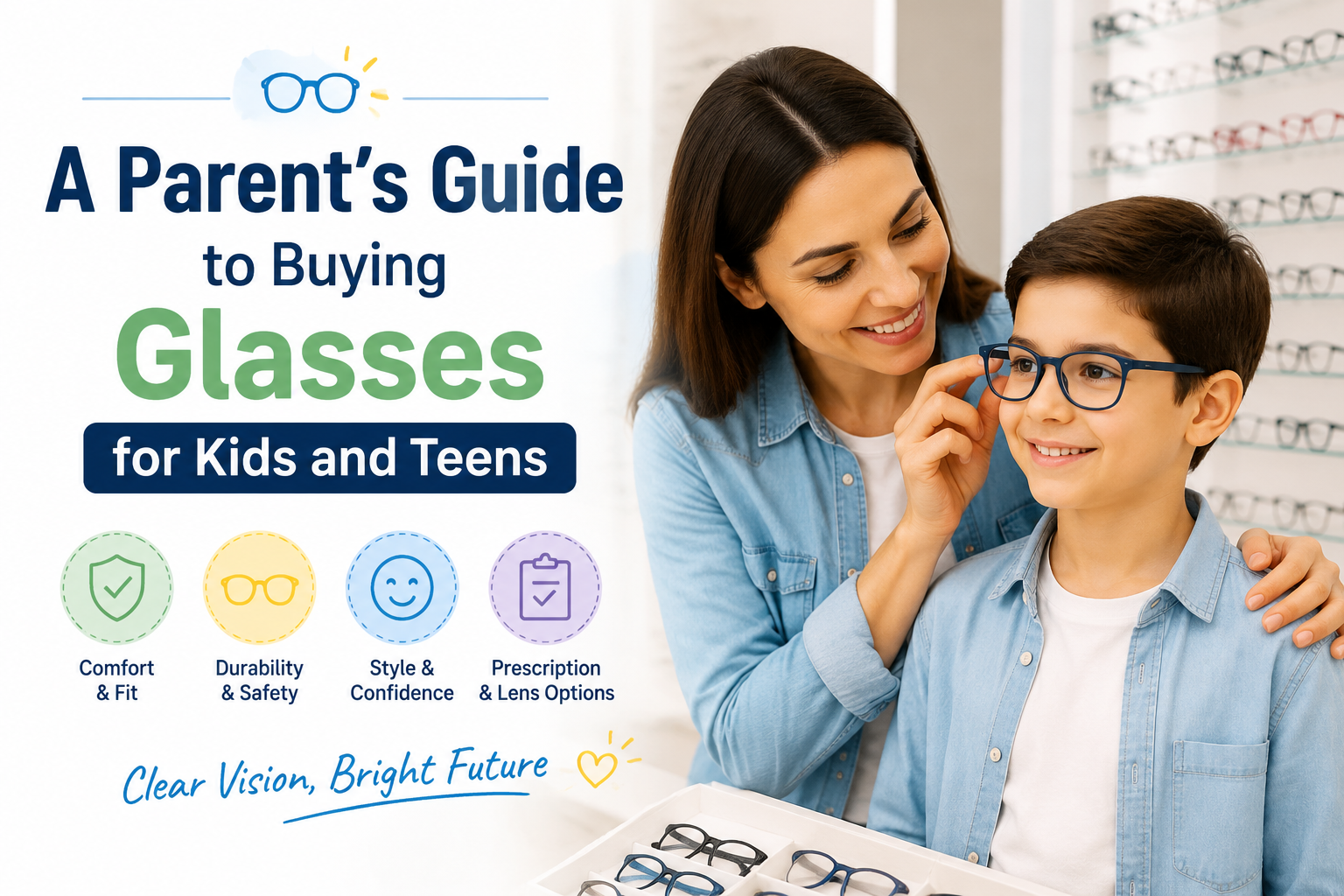
Choosing eyewear for children and teenagers can feel overwhelming for many parents. Vision needs to change quickly during growth years, and the right pair of glasses must balance comfort, durability, style, and eye health. Unlike adults, kids are often more active, less careful with accessories, and highly influenced by appearance—making the decision even more important, especially when selecting suitable teen eyeglasses frames that match both comfort and personality.
This guide breaks down everything parents need to know to select the right eyewear for growing eyes, from frame materials to lens protection and practical fitting tips.
Why Proper Eyewear Matters for Young Eyes
Children’s eyes are still developing, and untreated vision issues can affect learning, concentration, and confidence. Regular eye exams are essential, but choosing the right glasses ensures that corrective care actually works in daily life.
Well-fitted eyewear helps:
- Improve classroom focus and reading ability
- Support healthy visual development
- Reduce eye strain from screens and homework
- Boost confidence in social settings
- Prevent discomfort and headaches
For teenagers, appearance also plays a big role, so selecting stylish yet functional frames becomes equally important.
Understanding Frame Options for Kids and Teens
When selecting eyewear, the frame is just as important as the lenses. It must handle active lifestyles while remaining comfortable for long hours of wear.
1. Flexible and Durable Materials
Children often drop or bend their glasses, so durability is key. Common materials include:
- TR90 plastic – Lightweight, flexible, and impact-resistant
- Silicone frames – Soft, ideal for younger children
- Stainless steel – Strong but slightly heavier
- Acetate frames – Stylish option often preferred by teens
Flexible frames are especially helpful for active kids who play sports or spend a lot of time outdoors.
2. Comfortable Fit is Non-Negotiable
Poorly fitting glasses can cause constant slipping or pressure behind the ears and nose. Parents should look for:
- Adjustable nose pads for a custom fit
- Spring hinges that bend without breaking
- Lightweight frames that don’t feel heavy
- Proper temple length to avoid tightness
A good fit ensures that children actually keep their glasses on throughout the day.
Choosing the Right Lens Type
While frames are visible, lenses do the real work of vision correction. Selecting the right lens type is essential for eye safety and comfort.
1. Scratch-Resistant Coating
Kids are active, so lenses should be treated to resist scratches and daily wear.
2. Blue Light Protection
With increased screen time from tablets, laptops, and smartphones, blue light filtering lenses help reduce eye strain and improve sleep patterns.
3. Impact-Resistant Lenses
Polycarbonate lenses are highly recommended for children because they:
- Are shatter-resistant
- Provide UV protection
- Are lightweight and safe for sports
4. Anti-Reflective Coating
This helps reduce glare from screens, headlights, and classroom lighting, improving visual clarity.
Finding the Right Style for Teenagers
Teenagers often care deeply about appearance, making style a major factor in eyewear selection. The right pair of teen eyeglasses frames should reflect personality while still offering proper support.
Popular styles among teens include:
- Round frames for a retro look
- Rectangular frames for a modern, structured appearance
- Transparent or clear frames for a minimalist style
- Bold-colored frames for personality expression
Allowing teens to participate in the selection process increases the likelihood they will wear their glasses consistently.
Key Factors Parents Should Consider
Before purchasing eyewear, parents should evaluate several practical factors beyond style.
Durability for Everyday Life
Kids are not gentle with accessories. Frames should withstand rough handling, sports, and accidental drops.
Ease of Maintenance
Choose materials that are easy to clean and resistant to smudges or dirt buildup.
Growth Considerations
Children’s facial structure continues to develop over time, so it’s better to avoid frames that feel too restrictive or have very stiff construction, as they may quickly become uncomfortable or outgrown.
Safety Standards
Ensure lenses meet safety standards for impact resistance and UV protection.
Tips for Getting the Perfect Fit
Proper fitting is often overlooked but is crucial for comfort and effectiveness.
- The center of the lenses should align with the pupils
- Glasses should not slide down the nose
- Temples should rest comfortably without pressing behind the ears
- Frames should not touch the cheeks when smiling
- Weight should be evenly distributed across the face
A professional fitting session is highly recommended to ensure accuracy.
Encouraging Kids to Wear Their Glasses
Even the best eyewear is useless if a child refuses to wear it. Parents can encourage consistent use by:
- Letting children choose their frame style
- Choosing trendy colors or designs
- Explaining how glasses improve vision and school performance
- Keeping an additional pair of glasses for school activities or sports can be a smart way to prevent disruption if the primary pair gets damaged or misplaced.
- Using positive reinforcement instead of pressure
For younger kids, making glasses part of a routine helps build habit and acceptance.
When to Replace Kids’ Glasses
Children’s vision changes quickly, so regular updates are necessary. Glasses should be replaced when:
- The prescription becomes outdated
- Frames are damaged or too tight
- The child complains of headaches or blurry vision
- Lenses are heavily scratched
Most children need updated prescriptions every 1–2 years, sometimes more frequently during growth spurts.
Final Thoughts on Choosing Eyewear for Young Wearers
Selecting glasses for children and teenagers is about more than vision correction—it’s about comfort, confidence, and lifestyle support. From durable materials and protective lenses to stylish designs that appeal to teens, the right eyewear should meet both medical and personal needs.
When parents focus on fit, durability, and lens quality, they ensure their child not only sees better but also feels confident wearing their glasses every day.

 English
 Arabic
 French
 Spanish
 Portuguese
 Turkish
 Dutch
Dutch
 Italiano
 Russian
 Romaian
 Portuguese (Brazil)
 Greek
Greek