


The Origin Story That Reads Like a Natural Wonder
Oud does not simply exist in nature. It has to be created by nature under very specific conditions of stress. When certain tree species found primarily across Southeast Asia and South Asia become infected by a particular type of mold, the tree responds by producing a dark, dense, aromatic resin deep within its heartwood. That resin — aged over decades inside the living wood — is what we know as oud.
The trees that yield this resin are not common, and the infection that triggers resin production occurs in only a small percentage of them naturally. This biological rarity is not a marketing story. It is the foundational reason why oud has commanded extraordinary value across centuries and continues to do so today.
When the infected heartwood is harvested and processed — either distilled into oil or burned as incense — it releases one of the most complex, layered aromas in the natural world. Deep, smoky, sweet, animalic, woody, and resinous all at once. No synthetic compound has ever fully replicated it.
Thousands of Years of Cultural Reverence
Long before oud appeared in luxury department stores, it was burning in the temples of ancient India and Egypt. Sanskrit texts reference aromatic wood resins used in sacred rituals. The trade routes that carried silk and spices across Asia also carried oud, and it arrived in the Arabian Peninsula where it became woven into the very identity of hospitality and ceremony.
In Gulf cultures especially, oud is not a fragrance product. It is a cultural institution. Burning chips of oud wood to scent garments before a gathering, passing a censer around guests at a dinner, giving oud oil as a wedding gift — these are not old traditions that have faded. They are living practices that continue in millions of households today.
The Middle East's deep relationship with oud is arguably what introduced it to Western fine fragrance. As global travel increased and perfumers began studying non-European fragrance traditions, the richness and complexity of oud was simply impossible to ignore.
Why Oud Is So Difficult to Source Ethically
Here is where the story becomes genuinely complicated. The demand for oud has grown so dramatically over the past two decades that wild populations of the trees that produce it are now critically endangered in several countries. Decades of over-harvesting — driven by surging global appetite — pushed the tree onto international protected species lists.
Responsible cultivation programs have emerged in response, with farmers across Vietnam, Cambodia, Thailand, and parts of India now growing the trees commercially and artificially inducing the infection process to trigger resin production. Farmed oud is more consistent and far more available than wild material, but purists argue the complexity of truly wild oud remains unmatched.
For the conscious consumer, understanding this distinction matters. Asking where and how oud is sourced is no longer a niche question — it is the right question, and reputable fragrance houses should have a clear answer.
The Different Forms Oud Takes in the Modern Market
Part of what makes oud so versatile as a fragrance material is that it exists in several distinct forms, each with different applications and price points.
Oud Oil (Attar)
The purest and most potent form. A single drop of quality oud oil applied to the wrist can project for twelve hours or longer. Traditionally worn without alcohol in concentrated form directly on skin.
Oud Wood Chips
Burned on charcoal to release aromatic smoke. A deeply traditional usage across the Middle East and South Asia, used to scent rooms, clothing, and hair before gatherings.
Oud in Alcohol-Based Fragrance
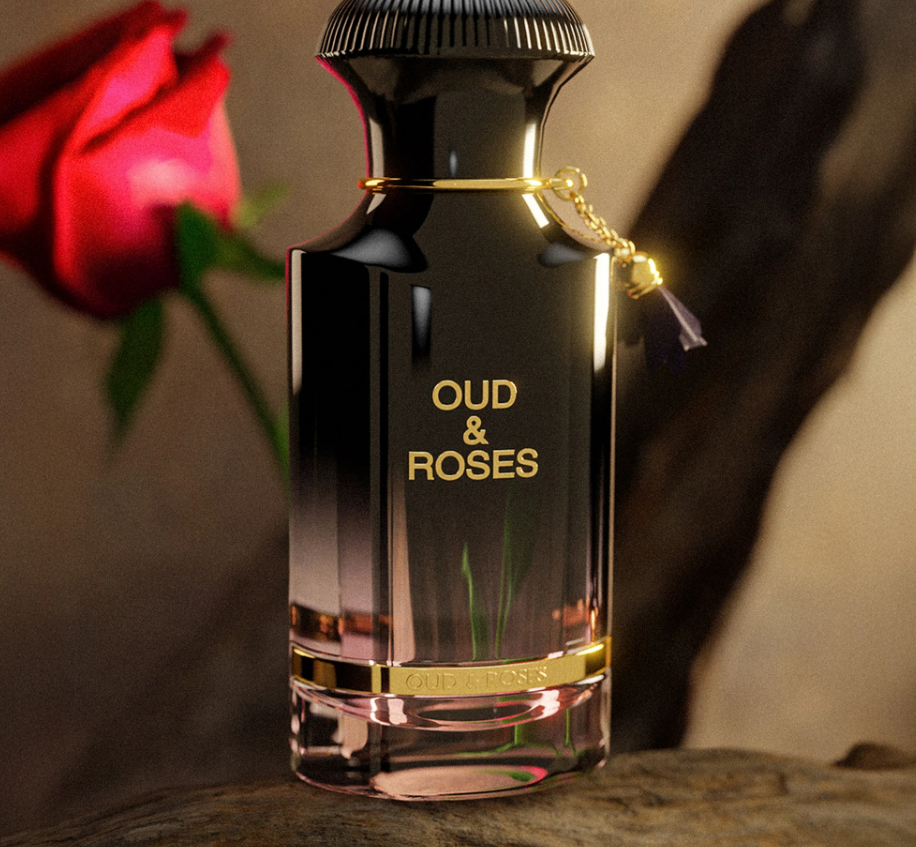
The form most common in Western-style luxury perfumery. Oud — real or reconstructed — forms the backbone of thousands of contemporary fragrances, paired with rose, leather, saffron, and wood accords.
Synthetic Oud Molecules
Created in laboratories to approximate the character of natural oud at scale. Used widely in mass-market fragrances, they capture aspects of oud's profile without the rarity or depth of the natural material.
How to Tell Real Oud from a Good Imitation
The market for oud-inspired fragrance is enormous, but genuine oud is rare even within that market. Most fragrances described as "oud" on their packaging contain synthetic oud molecules rather than actual oud oil. That is not necessarily a problem — synthetic molecules can be exceptional — but knowing the difference helps you shop wisely and spend appropriately.
Real oud has a quality that perfumers describe as "alive." It shifts subtly on your skin as it warms, moving through phases of sweetness, smokiness, and animalic depth in a way no single synthetic molecule can fully capture. It also has an unmistakable density — a richness that feels like it occupies physical space rather than simply floating on the surface of your skin.
Price is a signal but not the only one. Transparency from the fragrance house about their raw material sourcing is far more reliable. If a product claims to contain real oud but offers no information about its origin, that silence is informative.
Pairing Oud with Other Notes for Maximum Effect
Part of what makes oud such a beloved base material for perfumers is how generously it interacts with other ingredients. Rather than dominating a composition, it acts more like a foundation that amplifies what is placed above it.
The New Generation of Oud Wearers
For a long time, oud in Western fragrance culture was associated almost exclusively with ultra-luxury positioning and Middle Eastern-inspired aesthetics. That is changing rapidly. A younger generation of fragrance enthusiasts — driven by curiosity and an interest in materials over marketing — has embraced oud not as a status symbol but as a genuine olfactory experience.
Independent and niche perfume houses have played a major role in this shift. Rather than presenting oud as aspirational luxury, they present it as a material with a story — one that rewards knowledge and attention. The result is a far more sophisticated consumer base that understands what they are smelling and why it matters.
Oud has also benefited from the broader shift toward gender-neutral fragrance. Its profile — complex, powerful, neither overtly feminine nor masculine — fits naturally into a market that is moving away from binary fragrance categories entirely.
Conclusion: Some Materials Simply Cannot Be Replaced
In a fragrance world full of innovations, reconstructed molecules, and synthetic approximations, oud occupies a position that technology has not yet managed to displace. Its formation takes decades. Its complexity is biological and irreproducible. Its cultural history spans continents and millennia.
Understanding oud — where it comes from, how it is processed, what forms it takes, and how to identify quality — transforms how you experience any fragrance that contains it. You stop smelling a note and start reading a material with centuries of meaning behind it.
Whether you encounter oud for the first time as a burning wood chip in a Gulf household, or as the base of a sleek niche fragrance bottle on a European shelf, the experience is the same in one important way. It asks for your attention. And every time you give it that attention, it reveals something new.
That is the mark of a truly extraordinary material. And it is why oud, after all this time, still reigns supreme.

 English
 Arabic
 French
 Spanish
 Portuguese
 Deutsch
 Turkish
 Dutch
Dutch
 Italiano
 Romaian
 Portuguese (Brazil)
 Greek
Greek