


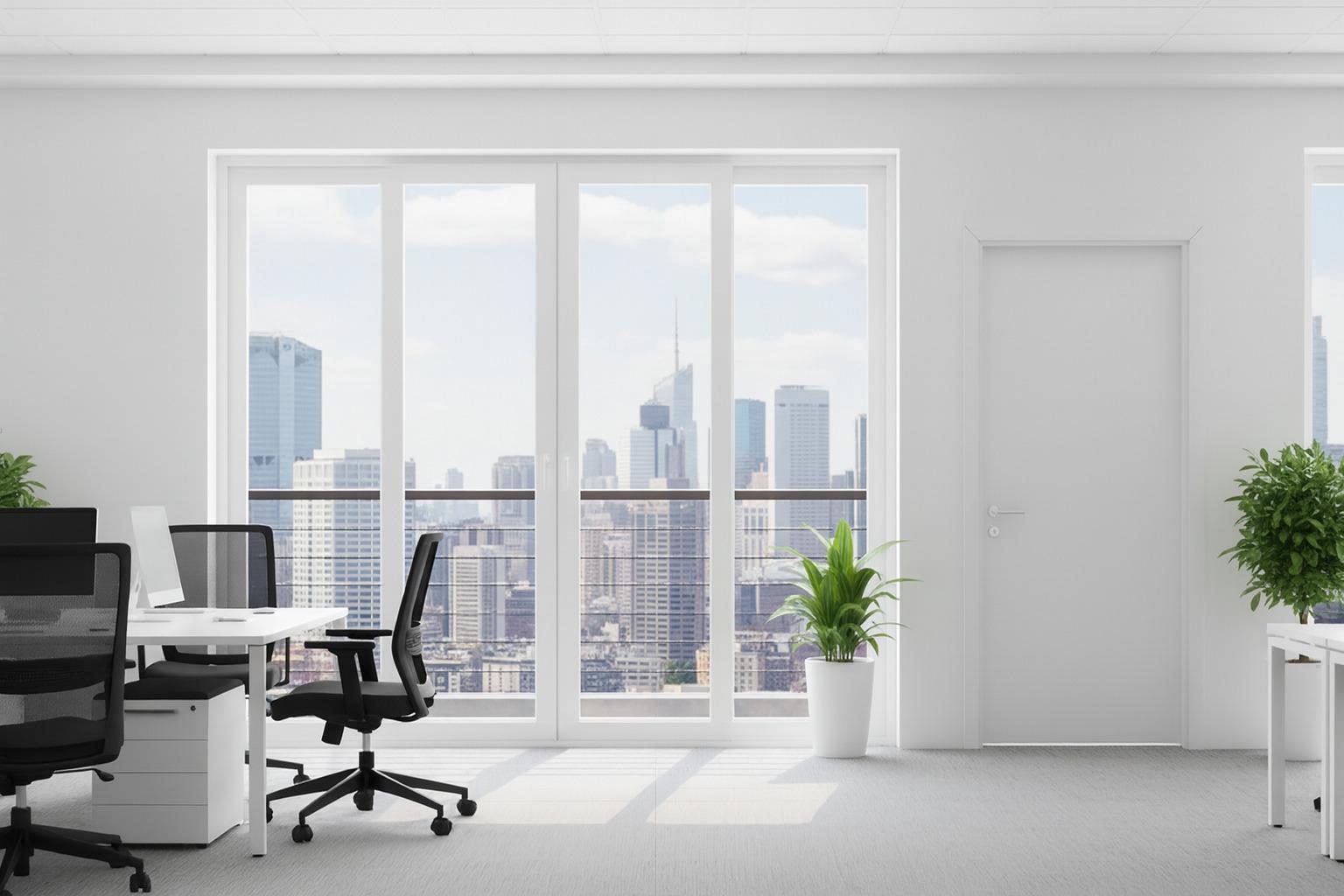
In commercial construction, attention often gravitates toward structural systems, floor plans, and interior layouts. Yet, some of the most visible elements of an office building are also among the most influential. Office doors and windows shape how a workspace looks, performs, and adapts over time.
As businesses demand workplaces that are efficient, durable, and visually appealing, architects and developers are giving greater importance to these essential design components.
Balancing Aesthetics with Performance
The modern office is expected to make a strong first impression while supporting everyday functionality. Large office windows help maximise natural light, creating brighter interiors and reducing dependence on artificial lighting during working hours. At the same time, they contribute to the contemporary appearance that many commercial projects seek.
Office doors serve a similar purpose. Beyond providing access, they help define spaces, support privacy requirements, and influence the overall visual language of a workplace. Selecting the right materials and profiles can help create a cohesive design without compromising performance.
For architects, the challenge lies in achieving both visual appeal and long-term reliability.
Meeting the Demand of High-Use Commercial Spaces
Unlike residential buildings, office environments experience continuous movement and heavy daily usage. Doors and windows must withstand frequent operation while maintaining their structural integrity and appearance.
This is where material selection becomes critical. Commercial projects increasingly prioritise solutions that offer durability, corrosion resistance, and minimal maintenance requirements. Strong and well-engineered systems can help reduce lifecycle costs while ensuring consistent performance across years of operation.
For developers and facility managers, this translates into greater value over the lifespan of the building.
Building for Future-Ready Workspaces
Workplace design continues to evolve as organisations seek more flexible and sustainable environments. Spaces are expected to accommodate changing occupancy patterns, support employee well-being, and align with energy-conscious building practices.
Office doors and windows play an important role in meeting these objectives. Well-designed systems can improve ventilation, optimise daylight utilisation, and support adaptable layouts. As a result, they have become an integral part of commercial building strategies rather than standalone architectural elements.
The success of a commercial workspace depends on more than its layout alone. Office windows and doors influence aesthetics, functionality, and long-term building performance. For architects, developers, and business owners, choosing the right solutions can help create office environments that remain efficient, durable, and relevant for years to come.

 English
 Arabic
 French
 Spanish
 Portuguese
 Deutsch
 Turkish
 Dutch
Dutch
 Italiano
 Russian
 Portuguese (Brazil)
 Greek
Greek