


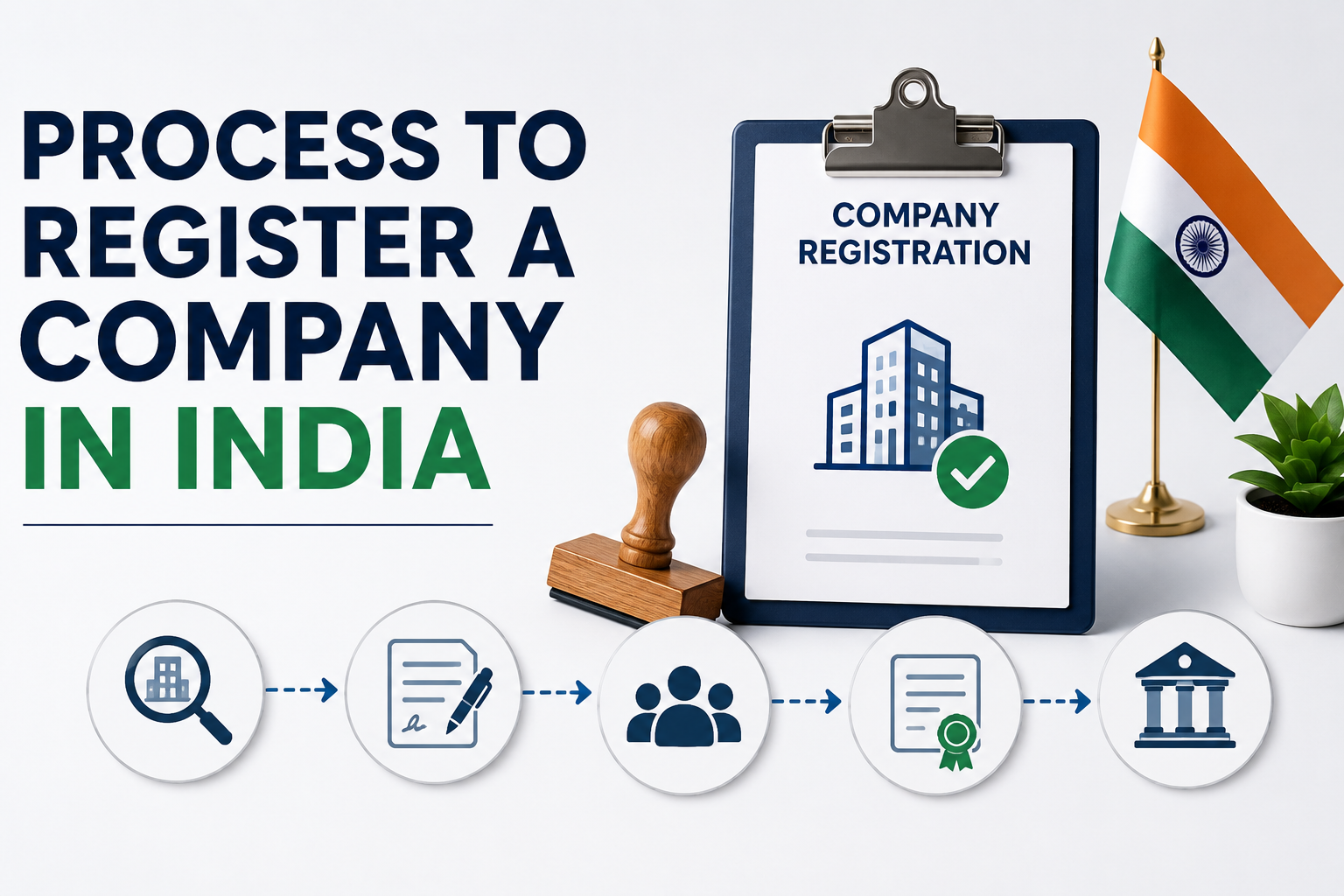
India has become one of the most attractive destinations for entrepreneurs and international businesses looking to expand into Asia. With a rapidly growing economy, supportive government initiatives, and increasing foreign investment, many companies from the UK and Europe are choosing to register a company in India to establish a long-term presence.
Before beginning the incorporation process, however, it is essential to understand the legal and operational requirements. Preparing the right documents, selecting the appropriate business structure, and complying with Indian regulations can significantly reduce delays and help your business start on the right footing.
This guide explains the initial requirements to register a company in India, outlines the key steps involved, and shows how Stratrich Consulting can help foreign investors complete the process efficiently.
Why India Is a Preferred Business Destination
India offers businesses access to one of the world's largest and fastest-growing markets. According to the Department for Promotion of Industry and Internal Trade (DPIIT), the country continues to receive strong Foreign Direct Investment (FDI) across sectors such as technology, manufacturing, renewable energy, logistics, healthcare, and financial services.
Some of the reasons global companies choose to register a company in India include:
-
Access to more than 1.4 billion consumers
-
A highly skilled English-speaking workforce
-
Competitive operating costs
-
Liberal FDI policies in many industries
-
Strong digital infrastructure
-
Government initiatives that encourage entrepreneurship and investment
These factors make India an attractive destination for businesses seeking long-term growth.
The Initial Requirements to Register a Company in India
Before submitting an incorporation application, businesses should complete several important preparations.
| Requirement | Why It Is Required |
|---|---|
| Select a business structure | Determines ownership, taxation, and compliance obligations |
| Decide the company name | Required for government approval and incorporation |
| Identify directors and shareholders | Every company must appoint eligible individuals or entities |
| Arrange a registered office address | Provides the company's official correspondence location |
| Prepare identity and address documents | Required to verify directors and shareholders |
| Understand sector-specific regulations | Confirms whether additional approvals are necessary |
| Plan tax registrations | Enables legal business operations after incorporation |
Completing these requirements before filing helps ensure a smoother registration process.
Choose the Right Business Structure
One of the first decisions is selecting the most suitable legal entity.
Foreign investors commonly choose:
-
Private Limited Company
-
Wholly Owned Subsidiary
-
Limited Liability Partnership (LLP), where permitted
-
Branch Office (for eligible businesses)
For many UK and European companies, a Private Limited Company is the preferred option because it offers limited liability, operational flexibility, and better opportunities for future investment.
Finalise a Suitable Company Name
The proposed company name should be unique and comply with the naming guidelines issued by the Ministry of Corporate Affairs (MCA).
A strong business name should:
-
Reflect your brand identity
-
Avoid similarity with existing companies
-
Meet Indian naming regulations
-
Be suitable for long-term business growth
Choosing alternative names is also advisable in case your preferred option is unavailable.
Prepare the Required Documents
To register a company in India, directors and shareholders generally need to provide:
-
Passport (for foreign nationals)
-
Proof of residential address
-
Passport-sized photograph
-
Email address and mobile number
-
Registered office address in India
-
Parent company documents (if incorporating through an overseas entity)
Depending on the country of origin, certain documents may require notarisation and apostille certification.
Understand Foreign Direct Investment Rules
Before incorporation, businesses should verify whether their industry permits 100% foreign ownership under the automatic route or requires government approval.
Understanding FDI regulations at the beginning helps investors:
-
Choose the right ownership structure
-
Avoid regulatory delays
-
Prepare appropriate documentation
-
Ensure legal compliance
Professional guidance is especially valuable for businesses operating in regulated sectors.
Plan Your Financial and Tax Setup
Company registration is only one part of establishing operations.
Businesses should also prepare for:
-
PAN registration
-
TAN registration
-
GST registration (where applicable)
-
Corporate bank account opening
-
Accounting systems
-
Payroll processes
Planning these activities in advance reduces delays after incorporation.
Real-Life Case Study: Siemens Energy's Expansion in India
A good example of structured market entry is Siemens Energy, which has expanded its operations in India by establishing engineering capabilities, manufacturing facilities, and partnerships with local businesses.
Its success reflects the importance of proper planning before incorporation. By meeting regulatory requirements early and investing in operational readiness, Siemens Energy has been able to support large-scale infrastructure and energy projects across the country.
This demonstrates that successful expansion starts with a well-prepared business foundation.
Example: A UK Manufacturing Business
Imagine a manufacturing company in Birmingham that plans to source components and sell products in India.
Before it decides to register a company in India, the management team:
-
Chooses a Private Limited Company structure
-
Identifies directors
-
Collects notarised documents
-
Secures a registered office address
-
Reviews FDI eligibility
-
Plans GST and tax registrations
Because these requirements are completed before incorporation, the registration process moves efficiently, allowing the company to begin operations without unnecessary delays.
How Stratrich Consulting Simplifies the Registration Process
Foreign investors often face challenges when dealing with unfamiliar regulations and documentation requirements. Stratrich Consulting provides comprehensive support from the initial planning stage through ongoing compliance.
Its services include:
-
Business structure consultation
-
Company incorporation
-
Wholly Owned Subsidiary registration
-
Company name advisory
-
FDI guidance
-
PAN, TAN, and GST registration
-
Accounting and bookkeeping
-
Payroll management
-
Corporate secretarial services
-
ROC compliance
-
Tax planning and business advisory
By managing every stage of the process, Stratrich Consulting helps businesses establish operations quickly while ensuring compliance with Indian laws.
Why Businesses Choose Stratrich Consulting
Companies from the UK and Europe trust Stratrich Consulting because it offers:
-
Extensive experience with foreign-owned businesses
-
End-to-end incorporation support
-
Expertise in Indian corporate and tax regulations
-
Transparent communication and project management
-
Ongoing compliance and accounting services
-
Personalised guidance based on business objectives
Rather than acting as only a registration provider, Stratrich Consulting becomes a long-term business partner that supports sustainable growth.
Conclusion
Understanding the initial requirements to register a company in India is essential for a successful market entry. Choosing the right business structure, preparing accurate documentation, understanding FDI regulations, and planning tax compliance can significantly simplify the incorporation process.
For UK and European businesses, Stratrich Consulting provides complete support throughout every stage of company formation. From incorporation and regulatory guidance to accounting, taxation, payroll, and annual compliance, the firm helps foreign investors establish a compliant and future-ready business in India with confidence.

 Arabic
 French
 Spanish
 Portuguese
 Deutsch
 Turkish
 Dutch
Dutch
 Italiano
 Russian
 Romaian
 Portuguese (Brazil)
 Greek
Greek