


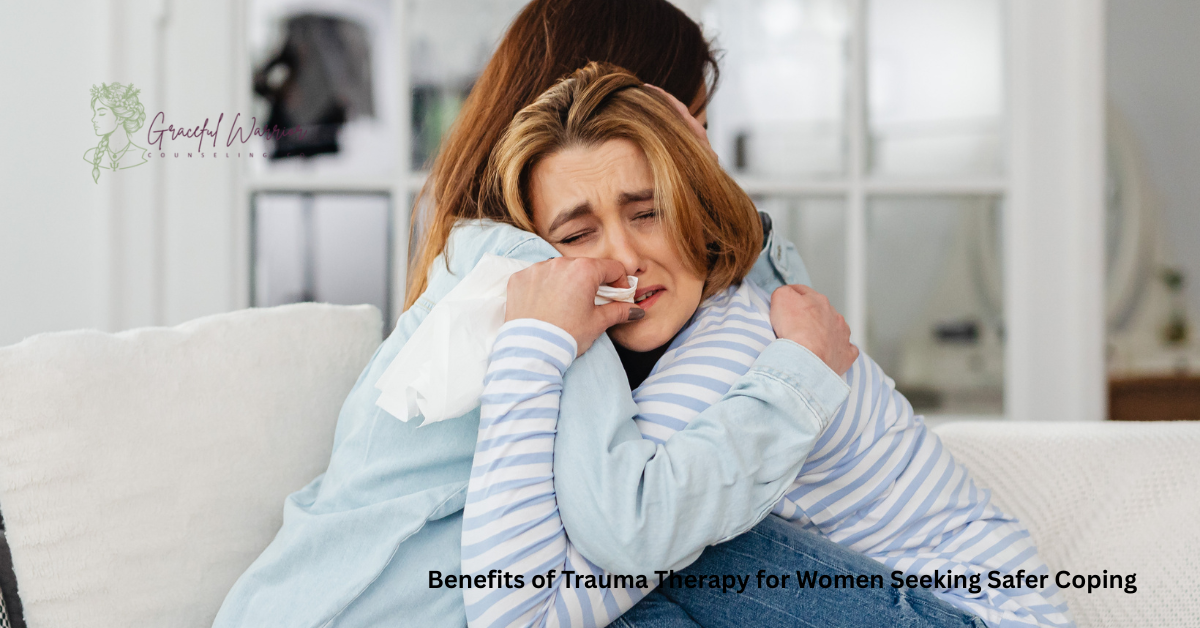
Trauma does not always look like a crisis. For many women, it appears as constant alertness, difficulty trusting others, emotional shutdown, people-pleasing, disrupted sleep, or the feeling that relaxing is unsafe.
These reactions are not signs of weakness. They may be protective responses that developed during frightening, overwhelming, or harmful experiences. Those responses can continue long after the immediate danger has passed, affecting relationships, work, physical well-being, and a woman’s sense of control.
The benefits of trauma therapy for women extend beyond discussing what happened. Effective treatment can help women understand their reactions, develop safer coping strategies, reduce distress, challenge harmful beliefs, and rebuild trust in themselves.
Trauma-informed therapy should not pressure a person to disclose everything immediately. It should create a structured environment where safety, choice, collaboration, and trust guide the process. These principles are central to trauma-informed care as described by the Substance Abuse and Mental Health Services Administration.
At Graceful Warrior Counseling Co, trauma support is approached as a personal process rather than a standardized path. The goal is not to erase a woman’s history. It is to help her respond to the present without being controlled by survival patterns from the past.
https://resilientmbs.com/co-252-denial-code-in-medical-billing/
What Makes Trauma Therapy Different From General Counseling?
General counseling can help people work through stress, relationships, grief, and emotional challenges. Trauma therapy includes those elements but also considers how overwhelming experiences may affect memory, beliefs, emotions, behavior, and physical responses.
A trauma-trained therapist may help a woman notice patterns such as:
-
Avoiding people, places, or conversations connected to the trauma
-
Feeling emotionally numb or disconnected
-
Experiencing intrusive memories, nightmares, or sudden distress
-
Blaming herself for what happened
-
Staying constantly alert for possible danger
-
Struggling to set boundaries or recognize safe relationships
-
Using overworking, isolation, substances, or unhealthy relationships to cope
Not everyone who experiences trauma develops post-traumatic stress disorder. However, when symptoms continue and interfere with relationships, sleep, work, or daily functioning, professional support may be appropriate. The National Institute of Mental Health recommends working with a mental health professional experienced in trauma when PTSD symptoms are present.
https://resilientmbs.com/top-rated-medical-billing-company-in-naperville/
Trauma Therapy Should Be Individualized
Women come to therapy with different histories, cultures, identities, responsibilities, and support systems. Some have experienced a single traumatic event. Others have lived through repeated abuse, neglect, medical trauma, discrimination, loss, community violence, or unsafe relationships.
For this reason, PTSD treatment for women should not be built around assumptions. A thoughtful treatment plan considers the woman’s current safety, symptoms, goals, readiness, strengths, and preferences.
Seven Important Benefits of Trauma Therapy for Women
1. Understanding Survival Responses Without Shame
One of the first benefits of trauma therapy for women is learning why certain reactions occur.
A woman may feel embarrassed by freezing during conflict, becoming intensely anxious when someone raises their voice, or shutting down when emotional closeness increases. Trauma-informed therapy can help her understand that these responses may have developed as forms of protection.
This understanding does not excuse harmful behavior or remove personal responsibility. It replaces harsh self-judgment with useful awareness. Once a pattern is recognized, the woman and therapist can begin working on healthier responses.
2. Developing Safer Coping Skills
Avoidance, emotional suppression, overworking, substance use, and unhealthy relationship patterns can provide temporary relief. Over time, however, they may create additional distress.
Trauma therapy helps women build practical coping skills for moments of activation. These may include grounding exercises, paced breathing, identifying triggers, sensory regulation, self-compassion, and planning for difficult situations.
The purpose is not to eliminate every uncomfortable emotion. It is to help a woman experience emotions without immediately feeling overwhelmed, unsafe, or out of control.
Graceful Warrior Counseling Co helps clients explore coping strategies that fit their actual lives, including the demands of work, family, relationships, and caregiving.
https://resilientmbs.com/medical-billing-services-in-kenosha/
3. Improving Emotional Regulation After Trauma
Trauma can contribute to emotional reactions that feel unpredictable or disproportionate to the present situation. A minor disagreement may trigger panic. A delayed text message may create intense fear of abandonment. A stressful workday may lead to complete emotional shutdown.
Therapy can help women notice the early signs of distress before the reaction becomes overwhelming. Over time, this may support stronger emotional regulation after trauma and improve the ability to pause, assess the present situation, and choose a response.
This process is sometimes described as nervous system recovery. The phrase does not mean that therapy instantly “resets” the nervous system. It refers to gradually developing a greater ability to move between alertness, rest, connection, and emotional engagement without remaining stuck in survival mode.
4. Challenging Guilt, Shame, and Self-Blame
Women who have experienced abuse, assault, neglect, or coercion may blame themselves for not leaving sooner, not fighting back, trusting the wrong person, or responding in ways they now regret.
Trauma-focused cognitive behavioral therapy and Cognitive Processing Therapy can help identify beliefs that developed after trauma. These approaches examine whether thoughts such as “It was my fault,” “I cannot trust anyone,” or “I should have prevented it” accurately reflect the facts.
Cognitive Processing Therapy, Prolonged Exposure, and Eye Movement Desensitization and Reprocessing are among the trauma-focused psychotherapies with the strongest evidence for PTSD treatment. Treatment choice should be based on clinical needs and shared decision-making rather than assuming that one approach is best for everyone.
5. Reducing Avoidance and Fear
Avoidance can feel protective. A woman may avoid driving, dating, medical appointments, crowded places, family gatherings, intimacy, or conversations that remind her of what happened.
Although avoidance can reduce distress temporarily, it may also make life smaller. Evidence-based trauma therapy can help a person approach safe but feared situations gradually and with professional guidance.
This does not mean forcing someone to confront memories before she is ready. Ethical trauma treatment includes preparation, informed consent, ongoing assessment, and respect for the client’s ability to pause or reconsider.
6. Rebuilding Boundaries and Relationship Safety
Trauma can affect how a woman recognizes danger, responds to conflict, or communicates her needs. Some women become highly guarded. Others tolerate disrespect because setting limits feels unsafe or unfamiliar.
Therapy can help women distinguish between genuine danger and trauma-related alarm. It may also support clearer boundaries, more direct communication, and better recognition of emotionally safe relationships.
These skills matter in romantic relationships, friendships, workplaces, families, and healthcare settings. Healing trauma does not require trusting everyone. It involves learning how to evaluate trust more accurately and act when a situation does not feel safe.
7. Restoring Choice and Personal Agency
Trauma often involves a loss of control. Recovery should not repeat that experience.
A trauma-informed therapist explains treatment options, asks permission, welcomes questions, and involves the client in decisions. SAMHSA identifies empowerment, voice, choice, collaboration, and psychological safety as essential parts of trauma-informed care.
Restoring agency may mean making decisions without excessive guilt, saying no, leaving unsafe situations, reconnecting with personal values, or imagining a future that is not organized around fear.
For women in Texas and Virginia seeking a supportive treatment environment, Graceful Warrior Counseling Co emphasizes collaboration and respect throughout the therapeutic process.
Evidence-Based Approaches Used in Trauma Therapy
Different methods address different parts of the trauma response. A qualified therapist may recommend one primary approach or carefully integrate supportive strategies based on the client’s needs.
Cognitive Behavioral and Cognitive Processing Approaches
Cognitive approaches help clients examine how trauma has influenced their thoughts, emotions, and behavior. The therapist and client may work together to challenge inaccurate beliefs involving guilt, danger, control, worth, or trust.
These methods are structured, but they should still leave room for the woman’s individual experiences and goals.
EMDR for Women
EMDR is a structured trauma treatment that involves briefly focusing on traumatic memories while engaging in bilateral stimulation, such as guided eye movements or alternating taps.
Research supports EMDR as a treatment for PTSD symptoms, although questions remain about exactly how each component contributes to its effects. A trained provider should explain the process, screen for suitability, and teach stabilization strategies before trauma processing begins.
Exposure-Based Therapy
Exposure-based approaches help clients gradually face trauma memories or safe situations they have avoided. The process is planned and completed within a therapeutic structure. It is not the same as being pushed into a distressing situation without preparation or consent.
Somatic Healing and Body-Based Strategies
Trauma can be experienced through physical sensations such as tension, restlessness, numbness, rapid heartbeat, or difficulty breathing. Somatic healing strategies may help women notice these cues and use grounding, movement, breathing, or sensory awareness to respond.
Body-based practices are often used as supportive tools. They should not automatically be presented as replacements for well-established PTSD treatments when a person meets the criteria for a trauma-related disorder.
How Mental Health Professionals Can Make Stronger Referrals
Mental health professionals, physicians, case managers, and community organizations often identify trauma symptoms before a client specifically requests trauma therapy.
A strong referral should consider more than location or insurance participation. Referral partners should ask whether the therapist:
-
Has training and experience in trauma treatment
-
Uses evidence-based or evidence-informed approaches
-
Explains risks, benefits, and treatment alternatives
-
Respects client choice and pacing
-
Screens for current safety concerns
-
Avoids guaranteeing results
-
Has clear crisis and emergency procedures
-
Practices within state licensing and telehealth requirements
Graceful Warrior Counseling Co provides an educational and clinically respectful pathway for women and referring professionals exploring trauma-focused support in Texas and Virginia.
When Should a Woman Consider Trauma Therapy?
A woman does not need to wait until her symptoms become unbearable. Therapy may be worth considering when past experiences repeatedly affect sleep, concentration, relationships, self-esteem, emotional control, physical comfort, or the ability to feel safe.
Professional support may also be appropriate when coping strategies are becoming harmful or when triggers are interfering with medical care, employment, parenting, or daily routines.
Trauma therapy is not a promise of immediate relief. Progress can be gradual, and the most appropriate approach depends on the person’s symptoms, history, preferences, and current circumstances. Still, the right therapeutic relationship can provide structure, education, and practical support for meaningful change.
Take the Next Step Without Pressure
Seeking trauma therapy does not require having the perfect words for what happened. It begins with recognizing that current coping strategies may no longer be providing the safety or relief they once offered.
Women and referral partners in Texas and Virginia can contact Graceful Warrior Counseling Co to ask about trauma-informed services, treatment approaches, availability, and next steps. A consultation can help determine whether the practice is an appropriate fit without creating pressure to begin treatment immediately.
FAQs
What are the main benefits of trauma therapy for women?
Trauma therapy may help women understand survival responses, develop safer coping skills, reduce avoidance, challenge self-blame, regulate emotions, strengthen boundaries, and regain a sense of choice. Outcomes vary according to the person, trauma history, treatment approach, and therapeutic relationship.
Is EMDR effective for women with trauma?
EMDR is an evidence-based treatment recommended in several clinical guidelines for PTSD. It has been studied in people with different trauma histories, including sexual violence. A trained clinician should determine whether EMDR is appropriate based on the client’s symptoms, stability, preferences, and treatment goals.
Do I need a PTSD diagnosis to receive trauma therapy?
No. Some women seek trauma-informed therapy because past experiences affect their relationships, emotions, behavior, or sense of safety even when they do not meet the full criteria for PTSD. A licensed professional can complete an assessment and recommend suitable options.
Does trauma therapy require describing every detail of the trauma?
Not always. The amount of detail involved depends on the treatment method and the client’s needs. A trauma-informed therapist should explain what an approach involves and obtain informed consent before beginning memory-focused work.
How long does trauma therapy take?
There is no universal timeline. Some structured PTSD treatments are designed to be completed within a specific number of sessions, while complex or ongoing concerns may require longer support. Treatment length depends on symptoms, safety, goals, attendance, response to treatment, and other clinical factors.

 Arabic
 French
 Spanish
 Portuguese
 Deutsch
 Turkish
 Dutch
Dutch
 Italiano
 Russian
 Romaian
 Portuguese (Brazil)
 Greek
Greek