


INTRODUCTION
A Modular Ophthalmic Operation Theatre is a technologically advanced surgical environment specifically designed to meet the unique requirements of ophthalmic procedures. Unlike conventional operation theatres, modular ophthalmic operation theatres combine cleanroom engineering, advanced HVAC systems, laminar airflow technology, HEPA filtration, seamless hygienic construction, intelligent environmental monitoring, and ergonomic layouts to create a sterile, efficient, and patient-friendly surgical space. These specialized features help minimize infection risks, improve surgical precision, optimize workflow, and support better clinical outcomes. As hospitals and eye care centers continue to modernize their healthcare infrastructure, installing a Modular Ophthalmic Operation Theatre has become a strategic investment that enhances patient safety, regulatory compliance, operational efficiency, and long-term cost-effectiveness.
Modern ophthalmic surgeries require highly controlled environments where air quality, temperature, humidity, and cleanliness remain stable throughout every procedure. This blog explores the major benefits of installing a Modular Ophthalmic Operation Theatre and why it has become the preferred solution for advanced eye care facilities.
Why Specialized Ophthalmic Operation Theatres Matter
Eye surgeries involve delicate tissues and highly precise microsurgical procedures.
A specialized operating environment helps:
- Reduce contamination
- Improve surgical accuracy
- Protect patients
- Enhance surgeon efficiency
- Maintain sterile conditions
- Support faster recovery
A Modular Ophthalmic Operation Theatre is specifically engineered to meet these demanding requirements.
Superior Infection Control
One of the biggest advantages is improved infection prevention.
The theatre incorporates:
- Laminar airflow systems
- HEPA filtration
- Positive pressure ventilation
- Controlled air circulation
- Cleanroom engineering
Together, these systems significantly reduce airborne contamination during surgery.
Advanced Laminar Airflow Technology
Laminar airflow creates smooth, unidirectional airflow across the surgical field.
Benefits include:
- Uniform air movement
- Reduced turbulence
- Continuous removal of airborne particles
- Cleaner operating conditions
This technology is particularly important for ophthalmic procedures requiring exceptional sterility.
High-Efficiency HEPA Filtration
HEPA filters maintain excellent indoor air quality.
Their benefits include:
- Removal of microscopic airborne particles
- Reduced microbial contamination
- Cleaner surgical environment
- Better patient protection
High-quality filtration supports infection-free surgical procedures.
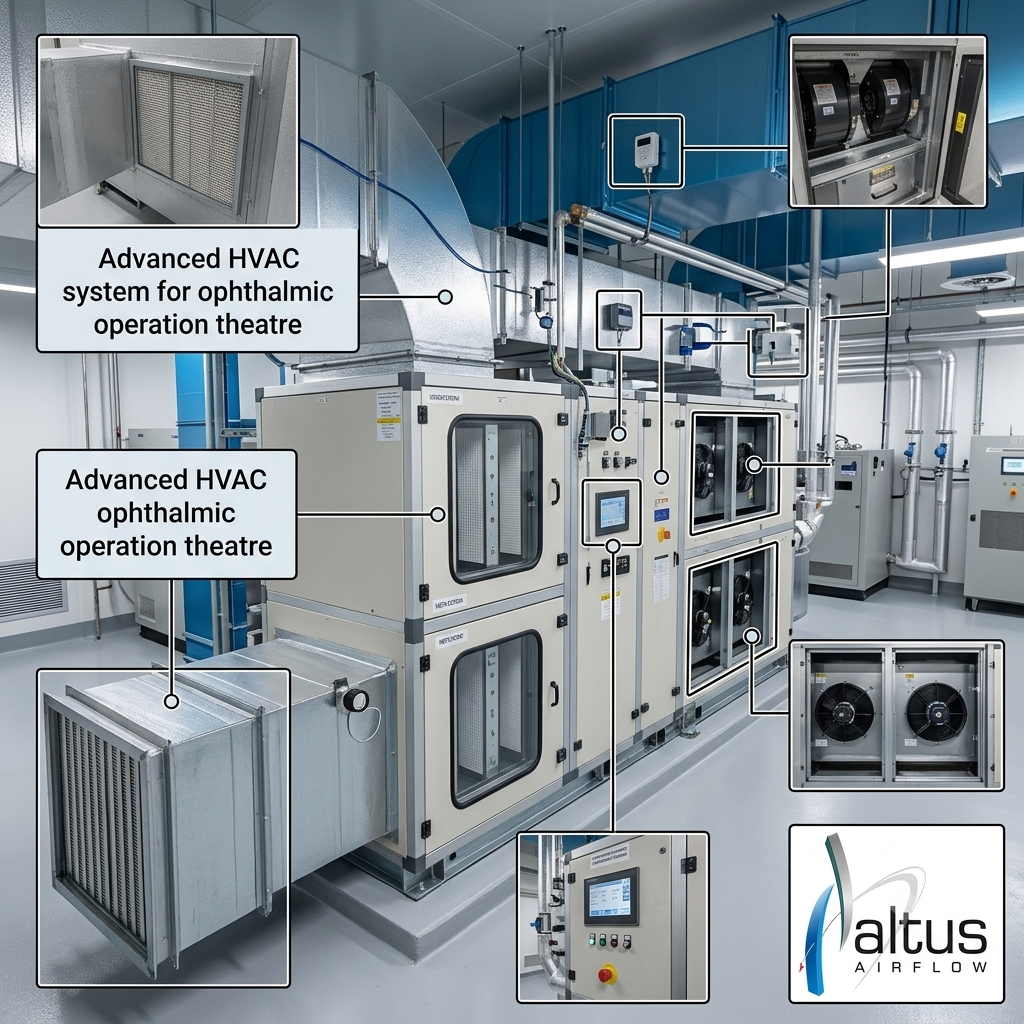
Optimized HVAC Systems
Advanced HVAC engineering maintains ideal operating conditions.
The system regulates:
- Temperature
- Humidity
- Air pressure
- Air changes per hour
- Fresh air supply
Stable environmental conditions improve both patient comfort and surgical precision.
Positive Pressure Ventilation
Positive pressure prevents contaminated air from entering the operation theatre.
Advantages include:
- Cleaner surgical environment
- Reduced cross-contamination
- Stable air quality
- Improved infection prevention
Maintaining pressure differentials is essential for sterile surgeries.
Cleanroom Engineering
Modular ophthalmic operation theatres incorporate cleanroom principles.
Features include:
- Controlled airflow
- Hygienic construction
- Environmental zoning
- Contamination control
- Air quality management
These principles create a consistently sterile environment.
Seamless Hygienic Wall Panels
Smooth modular wall panels improve cleanliness.
Benefits include:
- Easy cleaning
- Reduced dust accumulation
- Moisture resistance
- Long-term durability
Seamless surfaces eliminate areas where bacteria may accumulate.
Medical-Grade Flooring
Healthcare-grade flooring contributes to infection prevention.
Key features include:
- Seamless installation
- Chemical resistance
- Anti-slip properties
- Easy maintenance
Durable flooring improves both safety and hygiene.
Hermetically Sealed Doors
Specialized airtight doors preserve cleanroom conditions.
Advantages include:
- Pressure retention
- Reduced air leakage
- Better contamination control
- Stable environmental conditions
These doors help maintain the sterile operating environment.
Better Surgical Workflow
Efficient layouts improve surgical performance.
Proper planning provides:
- Organized equipment placement
- Efficient staff movement
- Reduced procedure delays
- Improved productivity
Optimized workflow contributes to smoother operations.
Integrated Medical Utilities
A Modular Ophthalmic Operation Theatre includes integrated medical systems.
These commonly include:
- Medical gas outlets
- Electrical panels
- Communication systems
- Surgical lighting
- Equipment mounting systems
Integrated infrastructure reduces clutter and improves accessibility.
Enhanced Equipment Integration
Modern ophthalmic equipment requires specialized installation.
Typical integrated equipment includes:
- Operating microscopes
- Phacoemulsification systems
- Vitrectomy machines
- Digital imaging systems
- Microsurgical equipment
Professional integration improves operational efficiency.
Environmental Monitoring
Continuous monitoring ensures environmental stability.
Important parameters include:
- Temperature
- Humidity
- Differential pressure
- Air quality
Real-time monitoring helps maintain optimal operating conditions.
Faster Project Completion
Modular construction significantly reduces installation time.
Advantages include:
- Factory-manufactured components
- Reduced on-site construction
- Predictable project schedules
- Faster commissioning
Hospitals can begin operations sooner.
Easy Maintenance
Modular systems simplify maintenance activities.
Benefits include:
- Replaceable wall panels
- Accessible utilities
- Simplified repairs
- Reduced downtime
Maintenance becomes faster and more cost-effective.
Improved Energy Efficiency
Modern modular theatres incorporate energy-saving technologies.
These include:
- High-efficiency HVAC systems
- LED lighting
- Variable Frequency Drives (VFDs)
- Smart environmental controls
Lower energy consumption reduces operating expenses.
Regulatory Compliance
Professional modular operation theatres are designed to support healthcare and cleanroom standards.
Compliance focuses on:
- Environmental control
- Air quality
- HVAC performance
- Infection prevention
- Healthcare engineering practices
Compliance strengthens operational reliability.
Long-Term Cost Savings
Although modular operation theatres involve an initial investment, they provide long-term financial benefits.
Savings result from:
- Lower maintenance costs
- Reduced energy consumption
- Improved equipment lifespan
- Fewer operational disruptions
The long-term return on investment is substantial.
Better Patient Safety
Patient safety remains the primary objective.
Benefits include:
- Reduced infection risks
- Improved environmental stability
- Cleaner surgical conditions
- Enhanced recovery support
Safer surgeries improve patient confidence and clinical outcomes.
Improved Staff Productivity
A well-designed theatre benefits medical professionals as well.
Advantages include:
- Comfortable working conditions
- Efficient equipment access
- Better workflow
- Cleaner environment
Improved ergonomics increase staff efficiency.
Future-Ready Infrastructure
Modern Modular Ophthalmic Operation Theatre solutions support technological advancement.
Future-ready features include:
- Smart environmental controls
- Digital monitoring systems
- AI-assisted facility management
- IoT-enabled monitoring
- Building Management System integration
These technologies allow hospitals to adapt to future healthcare innovations.
Key Benefits of Installing a Modular Ophthalmic Operation Theatre
Installing a professionally engineered Modular Ophthalmic Operation Theatre provides:
- Superior infection prevention
- Laminar airflow technology
- HEPA filtration
- Advanced HVAC systems
- Positive pressure ventilation
- Cleanroom engineering
- Hygienic modular construction
- Faster installation
- Improved workflow
- Energy efficiency
- Easier maintenance
- Regulatory compliance
- Better patient safety
- Long-term operational reliability
These advantages make modular operation theatres the preferred solution for modern ophthalmic healthcare facilities.
Conclusion
A Modular Ophthalmic Operation Theatre offers significant advantages over conventional operating rooms by combining advanced cleanroom engineering, laminar airflow technology, HEPA filtration, specialized HVAC systems, seamless hygienic construction, environmental monitoring, and optimized surgical workflows. These features improve infection prevention, enhance surgical precision, increase operational efficiency, reduce maintenance costs, and support better patient outcomes. Hospitals and eye care centers that invest in modular operation theatres benefit from reliable long-term performance, regulatory compliance, and future-ready healthcare infrastructure. For customized modular ophthalmic operation theatre design, engineering, installation, validation, and turnkey project execution, Altus Airflow provides comprehensive solutions tailored to the evolving needs of modern ophthalmic facilities.
Frequently Asked Questions
1. What are the main benefits of installing a Modular Ophthalmic Operation Theatre?
A Modular Ophthalmic Operation Theatre offers superior infection control, advanced laminar airflow, HEPA filtration, energy-efficient HVAC systems, optimized workflow, improved patient safety, and easier maintenance.
2. How does a Modular Ophthalmic Operation Theatre improve infection control?
A Modular Ophthalmic Operation Theatre reduces contamination through HEPA filtration, laminar airflow systems, positive pressure ventilation, cleanroom engineering, and seamless hygienic construction.
3. Does a Modular Ophthalmic Operation Theatre improve surgical efficiency?
Yes. A Modular Ophthalmic Operation Theatre enhances surgical efficiency by integrating specialized equipment, optimizing staff movement, improving environmental stability, and supporting efficient workflow planning.
4. Is a Modular Ophthalmic Operation Theatre energy efficient?
Yes. Modern Modular Ophthalmic Operation Theatre solutions include energy-efficient HVAC systems, LED lighting, Variable Frequency Drives (VFDs), and intelligent environmental controls that reduce energy consumption.
5. Why should hospitals invest in a Modular Ophthalmic Operation Theatre?
Hospitals should invest in a Modular Ophthalmic Operation Theatre because it provides improved contamination control, better patient outcomes, regulatory compliance, operational efficiency, lower maintenance costs, and long-term infrastructure reliability.
Read Our Previous Blog------>What are the key features offered by Laminar Airflow System Manufacturers?

 English
 Arabic
 French
 Spanish
 Portuguese
 Deutsch
 Turkish
 Dutch
 Italiano
 Russian
 Portuguese (Brazil)
 Greek