


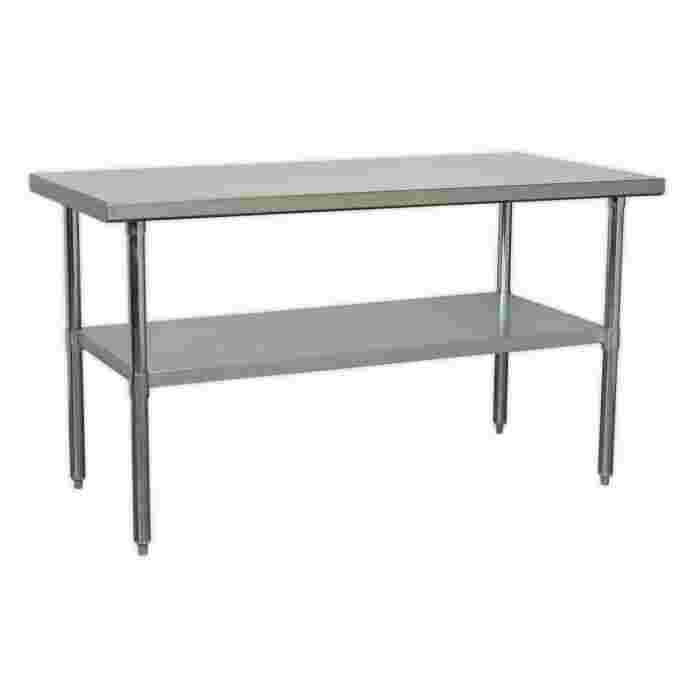
Choosing a workbench sounds like a simple decision until you actually start comparing options and realise how much variation exists between models built for different jobs. A bench designed for light electronics assembly behaves very differently under load than one built for welding, and a garage hobbyist has very different priorities than a facilities manager kitting out an industrial workspace. Working through the practical factors that actually matter, rather than picking whichever bench looks sturdiest in a photo, makes it far easier to end up with a piece of equipment that genuinely earns its place in your space for years rather than months.
Understanding the Demands of Your Specific Workspace
Before comparing individual models, it helps to think honestly about what the bench will actually be used for day to day. A workshop handling heavy metalwork, engine repairs, or fabrication tasks needs a bench built to absorb impact and support significant weight without flexing, while a garage used mainly for hobby projects or light DIY repairs can often get by with a lighter, more affordable option. Industrial workspaces bring their own considerations again, since multiple staff may share the same bench across different shifts, meaning durability and ease of cleaning matter just as much as raw strength. Talking to the people who will actually use the bench day to day, rather than making assumptions from a desk, often surfaces practical requirements that would otherwise be easy to overlook until after the purchase has already been made.
Weighing Up Material and Construction Quality
The materials used in a bench's frame and worktop have a direct impact on how well it holds up over time. Steel-framed benches tend to offer the strongest, most rigid support for heavy or repetitive use, while wood or laminate worktops can be a practical choice for lighter tasks where resistance to impact matters less than a smooth, easy-to-clean surface. Checking how a bench is actually assembled, including weld quality and bracing, gives a much clearer picture of long-term reliability than simply comparing weight capacity figures listed on a spec sheet, and browsing the current range of workbenches side by side is a useful way to see how these construction details vary between models. It is also worth asking suppliers directly about the gauge of steel or grade of timber used, since these details are not always obvious from a product photo but make a real difference to how the bench performs under sustained daily use.
Considering Size and Layout Within Your Space
Even the best-built bench becomes a liability if it does not actually fit comfortably within the available floor space, leaving too little room to move around it safely or access stored tools. Measuring your workspace carefully before ordering, and accounting for clearance needed to open drawers or cabinet doors fully, prevents the frustrating experience of a bench that technically fits but makes daily movement around it awkward. It is also worth thinking ahead about whether the space might need to accommodate additional equipment later, since a slightly more compact bench can sometimes preserve valuable flexibility down the line. Sketching out a simple floor plan, even a rough one, before ordering can reveal awkward pinch points or blocked walkways that would otherwise only become apparent once the bench has already been delivered and assembled in place.

Matching Load Capacity to Real Working Conditions
Manufacturers publish load capacity ratings, but it pays to think about how that weight will actually be distributed during real use rather than assuming an even, centred load every time. Heavy components placed toward one edge, or repeated impact from tools being set down forcefully, place different demands on a bench's structure than a simple static weight rating suggests. Choosing a bench with some margin above your expected maximum load gives a useful safety buffer against the kind of everyday wear that gradually accumulates in any busy workspace. Reviewing a handful of similar businesses or workshops facing comparable demands can also offer a useful reality check, helping confirm that the load capacity you are considering genuinely matches what similar operations rely on successfully.
Thinking About Storage and Accessibility
A bench that also provides drawers, shelving, or cabinet space underneath can meaningfully improve daily workflow by keeping frequently used tools within easy reach rather than scattered across a separate tool chest. This becomes especially valuable in smaller workshops or garages where floor space is limited and every extra piece of standalone storage furniture competes for room. Reviewing the full range of storage-equipped benches available through Direct2U makes it easier to compare integrated storage options directly against simpler, storage-free designs to see which genuinely suits your working habits best. Storage that suits one trade rarely suits another equally well, so it is worth thinking specifically about the shapes and sizes of the tools and materials you use most often before settling on a particular configuration.
Making a Confident Final Decision
Once you have a clear picture of your workspace demands, material preferences, size constraints, load requirements, and storage needs, narrowing down the right bench becomes a far more straightforward process. Taking the time to compare these factors properly upfront, rather than making a rushed decision based on price alone, helps ensure the bench you choose continues supporting your work reliably for years, whether it ends up anchoring a busy industrial facility or a quiet corner of a home garage. Keeping a written note of your key requirements before browsing also helps avoid being swayed by an appealing feature that ultimately has little bearing on how well the bench will actually serve your specific working needs.

 English
 Arabic
 French
 Spanish
 Portuguese
 Deutsch
 Turkish
 Dutch
Dutch
 Russian
 Romaian
 Portuguese (Brazil)
 Greek
Greek