


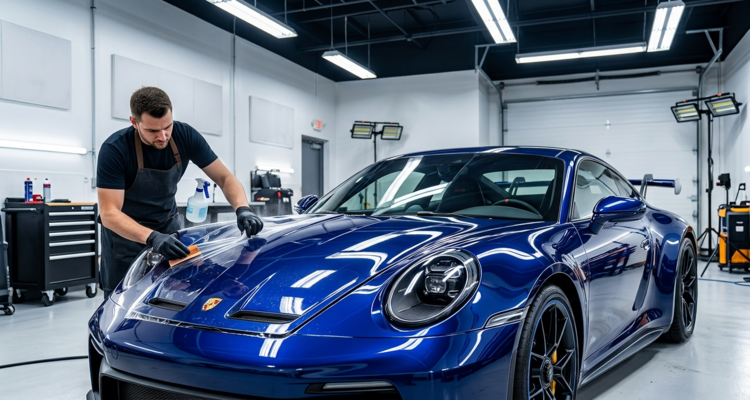
The automotive industry is witnessing growing interest in vehicle exterior protection as car owners become increasingly focused on maintaining the appearance and condition of their vehicles. From daily commuters to luxury and performance car enthusiasts, more drivers are exploring modern solutions designed to reduce the effects of road exposure, environmental contaminants, and everyday wear.
This growing awareness is contributing to the expansion of the automotive paint protection market, with technologies such as Paint Protection Film (PPF), surface coatings, and advanced detailing solutions becoming more widely considered as part of vehicle maintenance.
Growing Focus on Vehicle Exterior Protection
A car's exterior is continuously exposed to conditions that can affect its appearance. Road debris, gravel, dust, insects, pollution, sunlight, bird droppings, and changing weather conditions can gradually contribute to surface imperfections.
Traditional washing, waxing, and polishing remain important for maintaining cleanliness and appearance. However, these methods do not provide a substantial physical barrier against road debris and minor impacts.
As a result, vehicle owners are increasingly looking toward preventive protection rather than waiting for visible paint damage to occur.
The Rising Role of Paint Protection Film
Paint Protection Film has become one of the most recognized technologies in the automotive protection segment. The film is applied over selected painted surfaces to create an additional layer between the original finish and external elements.
Professionally installed PPF can help reduce the effects of minor stone chips, scratches, road debris, insects, and certain environmental contaminants.
High-exposure areas such as the front bumper, hood, fenders, side mirrors, and door edges are commonly considered for protection. The level of coverage can vary depending on the vehicle and owner's requirements.
PPF Coating Adds Another Protection Option
Alongside protective films, surface coating technologies are also attracting attention. A PPF Coating can be used as part of a vehicle protection strategy when the coating is specifically formulated and confirmed as compatible with the relevant PPF or automotive surface.
Depending on the product, a coating may offer properties such as water repellency, easier cleaning, improved gloss, and additional resistance to certain environmental contaminants.
It is important to understand that coatings and films serve different purposes. PPF provides a physical protective layer, while a compatible coating primarily focuses on surface characteristics and maintenance.
Technology Is Changing Automotive Protection
Modern PPF technology has evolved beyond conventional clear films. Matte and satin finishes can provide different visual appearances, while certain printable films can support customized graphics and branding.
Some advanced films also feature self-healing properties designed to minimize the visibility of certain minor surface marks under suitable heat.
These developments are helping combine vehicle protection with personalization, particularly among automotive enthusiasts and premium vehicle owners.
Professional Installation Remains Important
The quality of an automotive protection solution depends not only on the product but also on its installation and maintenance. Proper surface preparation, accurate application, and clean edge finishing can influence the final appearance and performance of PPF.
Vehicle owners should consider product specifications, warranty, compatibility, installation experience, and maintenance requirements before selecting a protection solution.
Regular cleaning also remains important. Following manufacturer-recommended care procedures can help maintain the film or coating's appearance and condition.
The Future of Automotive Paint Protection
The increasing demand for automotive protection reflects a broader shift toward preventive vehicle care. Rather than focusing only on repairing exterior damage after it occurs, owners are increasingly considering ways to reduce exposure from the beginning.
As materials and application technologies continue to improve, paint protection solutions are likely to become more versatile, offering greater combinations of durability, appearance, maintenance benefits, and customization.
Conclusion
The automotive industry's growing interest in paint protection reflects changing expectations among modern vehicle owners. Advanced solutions such as PPF and compatible PPF Coating technologies offer different approaches to preserving a vehicle's exterior and simplifying long-term maintenance.
With the right product, professional installation, and appropriate aftercare, modern paint protection can become an important part of a comprehensive vehicle-care strategy, helping owners maintain their cars' appearance while addressing the challenges of everyday driving.
Frequently Asked Questions
1. Why is demand for automotive paint protection increasing?
Greater awareness of vehicle maintenance, rising interest in preserving factory finishes, and advancements in PPF technology are contributing to increased interest in automotive paint protection.
2. What is PPF used for?
PPF creates a protective layer over painted surfaces and can help reduce exposure to minor scratches, stone chips, road debris, insects, and environmental contaminants.
3. What is PPF Coating?
PPF Coating refers to a compatible surface coating used with suitable paint protection film or automotive surfaces. Depending on the product, it can enhance properties such as water repellency and ease of cleaning.
4. Can coating replace PPF?
Generally, coatings and PPF serve different purposes. PPF provides a physical barrier, while coatings primarily enhance surface properties. They may complement each other when compatible.
5. Does PPF require maintenance?
Yes. Regular cleaning and following the manufacturer's recommended maintenance procedures are important for maintaining the appearance and condition of the film.

 English
 Arabic
 French
 Spanish
 Deutsch
 Turkish
 Dutch
 Italiano
 Russian
 Romaian
 Portuguese (Brazil)
 Greek