


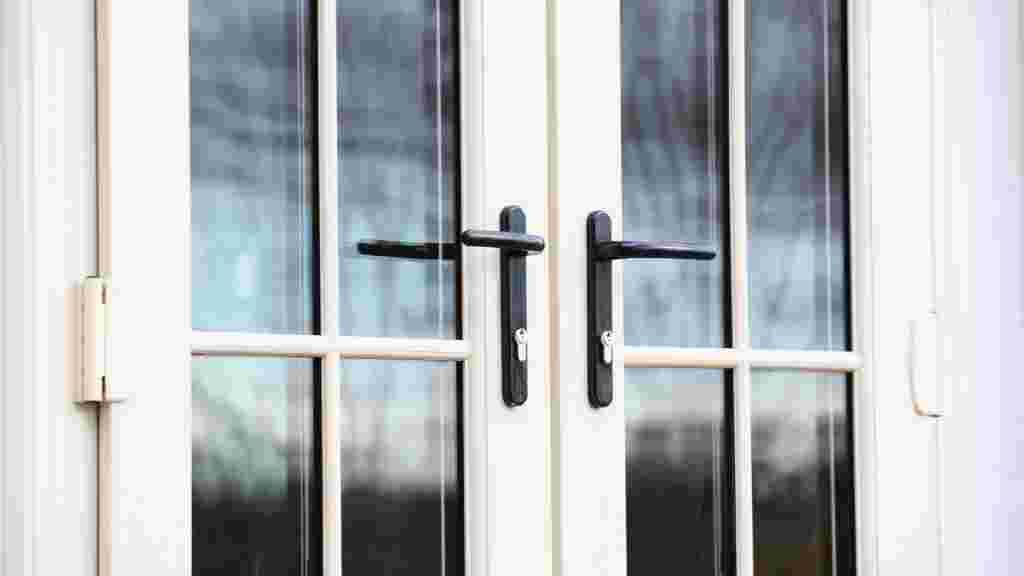
Replacing UPVC door handles sounds like one of those quick Saturday jobs. Two screws out, new handle on, kettle boiled. Sometimes it really is that easy. Sometimes you discover the new handle is 4mm out and the screws won’t line up. That’s usually where the swearing starts.
The good news? You don’t need to be a locksmith. You just need accurate measurements, the right screwdriver and ten quiet minutes before ordering anything. Get those bits right and the fitting itself is normally pretty painless, even if DIY isn’t usually your thing.
How do I know which UPVC door handles I need?
Start with the measurements. Don’t buy based on appearance alone, because two handles can look almost identical online while having completely different fixing points.
Measure the distance from the centre of the handle spindle to the centre of the keyhole. This is called the PZ measurement. Common UK sizes include 92mm, 70mm and 68mm, though other sizes are out there.
Next, measure between the centres of the fixing screws. Not from the outside edges. Screw centres can vary quite a bit, and being a couple of millimetres wrong is enough to make a replacement useless.
I once helped replace a handle on a 2008-era Safestyle door. We assumed it was the common 92mm PZ size, which it was, but the screw centres measured 211mm rather than the 215mm shown on the first product we found. Four millimetres. Tiny difference, completely wrong handle.
Check the overall backplate length and width too. A slightly larger plate can hide old marks, which is handy. A smaller one may expose faded plastic or previous screw holes, not ideal really.
Why has my UPVC door handle gone floppy?
A drooping lever doesn’t always mean the whole lock has failed. The spring cassette inside the handle may simply be worn or broken. On some models, the spring is built into the backplate. On others, the multipoint locking mechanism helps return the lever to its normal position.
Remove the handles and test them away from the door. If the lever still hangs down, the handle spring is probably the culprit. If the handle feels fine when removed, the issue could sit inside the lock case.
Try the spindle as well. A worn, bent or incorrectly sized spindle can make the movement feel loose. Don’t keep forcing it. That can turn a cheap handle replacement into a much more expensive gearbox job.
Can I replace the handle without changing the lock?
Yes, in most cases. The cylinder, gearbox and multipoint strip are separate parts, so changing UPVC door handles doesn’t usually affect your keys.
Keep the existing spindle until you’ve compared it with the new one. Some replacement sets arrive with a spindle that’s too long and needs cutting. Others include one that’s just short enough to cause trouble. The spindle should pass securely through the lock and sit inside both handles without pushing the backplates away from the door.
When I changed a set on a rented house in Leeds, the supplied spindle was 120mm. The old one measured 110mm and fitted properly, so we reused it. The job took about 14 minutes after that. Before measuring, we’d spent longer searching through the toolbox.
If the key is difficult to turn, the hooks won’t engage or the handle only lifts halfway, replacing the handles may not solve it. That points more towards alignment or an internal lock fault.
Are lever-pad and lever-lever handles the same?
No. A lever-lever set has a standard lever on both sides. A lever-pad set has a smaller fixed or moving pad outside, often used so the door can’t be opened externally without a key.
You need to match the existing operation. Switching styles without checking the lock setup may change how the door works, especially if the spindle system is split. Some lever-pad arrangements use two offset spindle sections rather than one continuous bar.
Photograph both sides before taking anything apart. It sounds overly cautious, but that single photo can save a fair bit of head scratching.
Should I choose standard or security handles?
Standard handles are usually fine for a back garden entrance, shed connection or an internal porch door where security isn’t the main concern. For a front or easily reached side entrance, security handles are worth considering.
Security versions may include stronger backplates, reinforced fixing points and cylinder protection designed to make snapping or gripping attacks harder. Look for recognised UK testing marks such as TS 007, and check whether the handle is compatible with your existing euro-cylinder.
Good UPVC door handles should feel solid when operated. They shouldn’t scrape the door surface, flex sharply or leave the cylinder sticking too far beyond the backplate. That last detail matters more than many people realise.
My preference is a simple satin chrome finish with a thicker security backplate. I fitted one costing £38 instead of a £17 basic set, and the difference wasn’t subtle. Less movement, smoother return, nicer in the hand. Still, paying more doesn’t fix bad measurements.
How do you fit a replacement handle?
Open the door first. That way, you can’t accidentally lock yourself out while parts are sitting on the floor.
Remove the two fixing screws from the inside backplate while supporting the outside handle. Pull both sides away gently and keep hold of the spindle. Compare every measurement with the replacement before fitting it.
Slide the spindle through the lock, position both backplates, and insert the screws by hand. Tighten them evenly. Don’t crank one screw down fully while the other is loose, as the plates can twist and make the lever stiff.
Test the handle several times with the door open. Lift it, press it down, turn the key and check that the latch, hooks and bolts move correctly. Then test it with the door closed.
If the operation becomes stiff after tightening, loosen the screws slightly and realign the plates. Sometimes that’s all it is.
How long should replacement handles last?
A decent set can last for years, but usage, weather exposure and fitting quality all matter. A busy family entrance gets far more wear than a patio exit opened twice a week.
Clean the handles with mild soapy water and a soft cloth. Harsh chemicals can damage plated finishes. A small amount of suitable lubricant on moving lock parts may help, but don’t flood the handle or key cylinder with oily spray.
If UPVC door handles start feeling loose, check the fixing screws early. Leaving them wobbling puts extra strain on the spindle and lock case, then the problem spreads…
FAQs
Can I use any handle on a UPVC door?
No. The PZ measurement, screw centres, spindle arrangement and backplate dimensions must match. The handle style should also suit the existing lock operation.
Do replacement handles come as a pair?
Most sets include an inside and outside handle, fixing screws and a spindle. Check the product description, because cylinders and locks are rarely included.
Why won’t my new handle spring back up?
The screws may be overtightened, the backplates could be misaligned or the spindle may be the wrong length. If those are correct, the lock mechanism itself may be worn.
Need a replacement without the guesswork? Measure the PZ distance, screw centres and backplate size, then choose a matching handle set—or send those three measurements to a trusted UK door-hardware supplier for a quick compatibility check.

 Arabic
 French
 Spanish
 Portuguese
 Deutsch
 Turkish
 Dutch
 Italiano
 Russian
 Romaian
 Portuguese (Brazil)
 Greek