


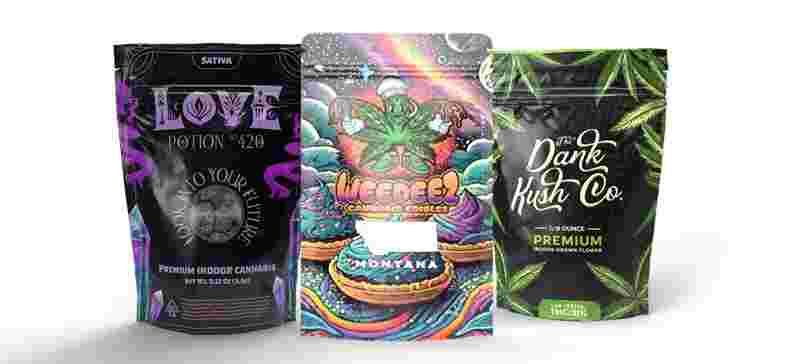
FDA compliance for edible packaging is a distinct regulatory category from standard packaging materials, triggered by the fact that the packaging itself is intended for consumption.
This overview covers what candy brands should understand and verify before sourcing edible packaging, without substituting for direct legal or regulatory consultation.
FDA Compliance for Edible Packaging: The Direct Food Contact Trigger
Any material intended for direct food contact — which by definition includes an edible packaging material meant to be consumed alongside the product it wraps — falls under FDA food-contact substance regulations. This is a distinct regulatory category from standard packaging materials, which only need to avoid transferring harmful substances to food through indirect contact; edible packaging is itself the substance in direct, intended contact.
Brands should confirm their supplier can document that materials used in edible packaging meet applicable FDA food-contact and food-safety standards, and should request that documentation as part of the sourcing process rather than assuming compliance by default.
FDA compliance for edible packaging also intersects with Good Manufacturing Practice (GMP) requirements that apply broadly across food production. A facility manufacturing edible mylar bags should be able to demonstrate GMP-aligned processes covering sanitation, equipment maintenance, and employee hygiene practices, similar to what would be expected of any food product manufacturing facility.
Labeling Requirements for Edible Packaging
Standard candy labeling requirements — ingredient lists, allergen declarations, nutritional information where applicable — apply to edible packaging just as they would to the candy itself, since the packaging is functionally part of the consumable product. This means the edible bag's own ingredients need to be accounted for in the product's overall labeling, not treated as a separate, unlabeled component.
Brands should work with their labeling or regulatory consultant to confirm that combined nutritional and allergen information — covering both the candy and the edible packaging — is accurately represented on final retail packaging.
Record-keeping practices matter alongside the compliance documentation itself. Brands should maintain organized records of all FDA compliance documentation received from suppliers, ideally tied to specific production batches or lot numbers, so that documentation can be quickly retrieved if a regulatory question or product recall situation arises after a product has already reached retail shelves.
Here's what most buyers overlook: compliance documentation needs to be re-verified with each production run, not just at initial sourcing. Ingredient sourcing for food-grade materials can shift between production batches, and a formulation change that seems minor to a supplier can meaningfully affect allergen status or compliance — building a standing requirement for updated documentation into your reorder process protects the brand from an undetected formulation change downstream.
Allergen Considerations Specific to Edible Materials
Because edible packaging materials are food products in their own right, they carry their own allergen profile independent of the candy inside. A brand producing a nut-free gummy line, for example, needs to independently verify the edible bag material doesn't introduce a cross-contamination or allergen risk that undermines that claim.
This is a common oversight: brands correctly manage allergen claims for their core product but don't extend that same scrutiny to a packaging material that customers are also expected to eat.
Combined labeling for edible packaging also needs to account for how ingredient order is presented — FDA labeling conventions generally require ingredients listed in descending order by weight, and combining the candy's ingredients with the edible packaging's ingredients on a single label requires careful handling to represent that combined weight ordering accurately rather than simply appending one ingredient list after another.
What to Request From Your Packaging Supplier
Before committing to a production run, request documentation confirming the material's FDA food-contact status, its full ingredient and allergen breakdown, and any relevant food safety certifications the manufacturing facility holds. Reputable suppliers of edible packaging should be able to provide this without extensive back-and-forth, since it's a standard part of doing business in food-adjacent packaging.
Third-party lab testing is an additional verification step some brands pursue beyond supplier-provided documentation, particularly for a first production run of a new edible packaging product. Independent lab confirmation of food-contact safety and allergen status provides an added layer of assurance beyond supplier documentation alone, though it adds cost and time to the product development timeline.
• Documentation of FDA food-contact compliance for the base material
• Full ingredient list and allergen declaration for the edible packaging itself
• Facility food safety certifications relevant to food-grade manufacturing
• Confirmed shelf-life and storage guidance for the edible material
Working With a Regulatory Consultant Before Production
Given the specialized nature of edible packaging compliance, most candy brands benefit from engaging a food regulatory consultant or attorney before finalizing a production run, rather than relying solely on assurances from a packaging supplier. A consultant can review the specific product formulation, labeling design, and distribution states to confirm FDA compliance for edible packaging is fully addressed before a brand commits to volume production.
This step is particularly important for brands launching their first edible packaging product, since the compliance requirements differ enough from standard candy packaging that assumptions carried over from prior product launches may not hold. Budgeting for regulatory consultation as part of the product development timeline — not as an afterthought once packaging is already designed — avoids costly redesigns late in the process.
Building Compliance Review Into the Product Development Timeline
FDA compliance for edible packaging is most efficiently addressed when built into the product development timeline from the start, rather than treated as a final check before launch. Brands that engage regulatory review early — during initial supplier selection and formulation — generally avoid the costly late-stage redesigns that occur when a compliance issue surfaces only after packaging artwork and production tooling are already finalized.
A practical development timeline includes compliance checkpoints at supplier selection, initial formulation approval, packaging design finalization, and pre-production sampling — each stage offering an opportunity to catch a compliance gap before it becomes an expensive problem to fix later in the process.
Frequently Asked Questions
Does FDA compliance apply to edible packaging the same way it applies to food?
Yes. Any material intended for direct food contact, including edible packaging meant to be consumed, falls under FDA food-contact substance regulations, a distinct category from standard indirect-contact packaging.
Do I need separate labeling for edible packaging ingredients?
Yes. The edible packaging's own ingredients need to be accounted for in the product's overall labeling, since the packaging is functionally part of the consumable product.
Are allergens in edible packaging a separate concern from the candy itself?
Yes. Edible packaging materials carry their own allergen profile independent of the candy inside, and brands need to verify the packaging doesn't introduce a cross-contamination risk to allergen-free claims.
What documentation should I request from an edible packaging supplier?
Request documentation of FDA food-contact compliance for the base material, a full ingredient and allergen breakdown, and relevant food safety certifications for the manufacturing facility.
Does compliance documentation need to be updated for every reorder?
Yes. Ingredient sourcing for food-grade materials can shift between production batches, so requesting updated documentation with each reorder protects against an undetected formulation change.
Should compliance review happen early or late in product development?
Early. Engaging regulatory review during initial supplier selection and formulation generally avoids costly late-stage redesigns compared to treating compliance as a final pre-launch check.
Is third-party lab testing necessary for edible packaging?
It's not always required, but independent lab confirmation of food-contact safety and allergen status provides an added layer of assurance beyond supplier documentation alone.
How should compliance documentation be organized?
Maintain organized records tied to specific production batches or lot numbers so documentation can be quickly retrieved if a regulatory question arises after launch.
Who should I consult for FDA compliance on edible packaging?
A food regulatory consultant or attorney with experience in food-contact substances is the appropriate resource for confirming compliance ahead of production.
Does FDA compliance differ by state?
Federal FDA rules set the baseline, but some states maintain additional food labeling or safety requirements worth confirming for each state where the product will be sold.

 English
 Arabic
 French
 Spanish
 Portuguese
 Deutsch
 Turkish
 Dutch
 Italiano
 Russian
 Romaian
 Portuguese (Brazil)