


"
According to the latest report published by Data Bridge Market Research, the Urban Farming Market
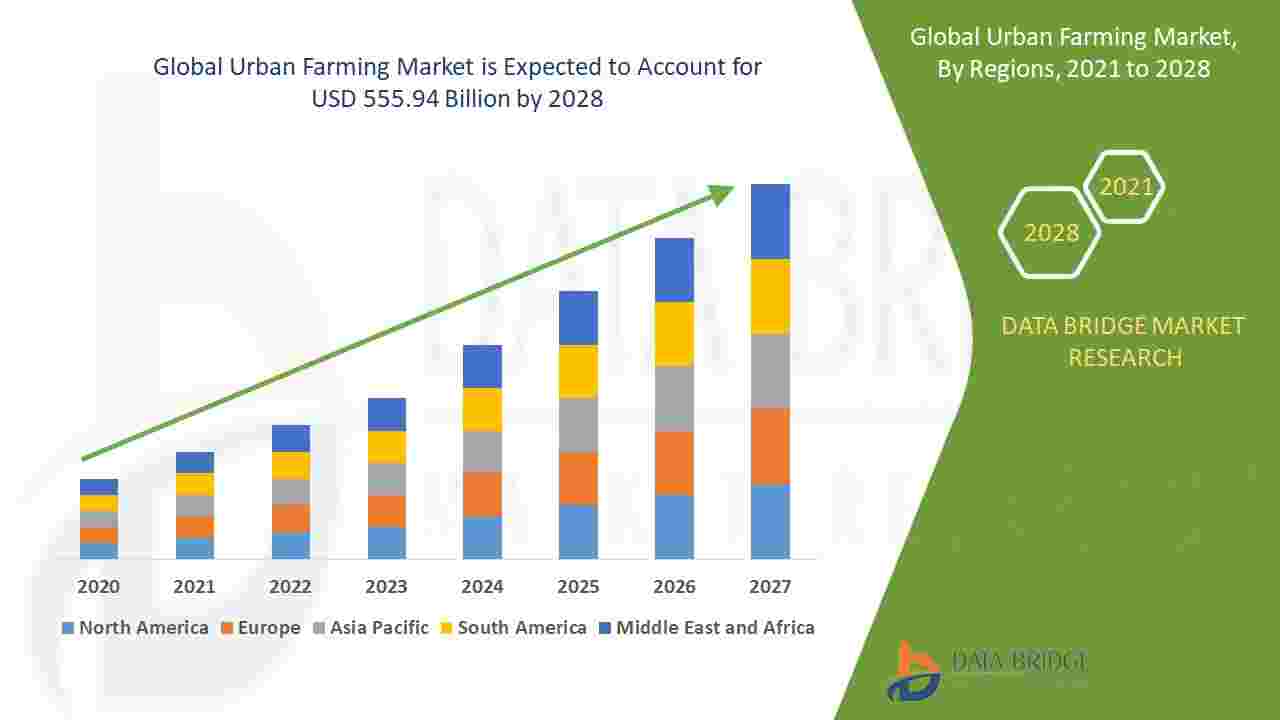
The global urban farming market size was valued at USD 260.24 Billion in 2024 and is projected to reach USD 680.91 Billion by 2032, with a CAGR of 5.20 % during the forecast period of 2025 to 2032.
The reliable Urban Farming Market research report includes a thorough analysis of the market drivers, restraints, threats, and opportunities while it also addresses the lucrative investment options for the market players in the coming years. Estimates at a global as well as regional level are offered by the analysts. The market size, revenue generated from the sales and technologies by various application segments are also evaluated in this marketing report. The report compiles widespread intelligence studies that explore almost every aspect of the global market. The data and information is extensively researched and analyzed in the large scale Urban Farming Market report to guide market players to improve their business planning and ensure long-term success. Stay informed with our latest keyword market research covering strategies, innovations, and forecasts. Download full report: https://www.databridgemarketresearch.com/reports/global-urban-farming-market Urban Farming Market Segmentation and Market Companies Segments - Type: The urban farming market can be segmented based on type into vertical farming, container farming, rooftop farming, and others. Vertical farming has gained significant traction in urban areas as it allows for efficient use of space and resources. - Crop Type: The market can also be segmented by crop type, including fruits, vegetables, herbs, and others. Consumers are increasingly turning to urban farming for fresh and local produce, driving demand for a variety of crops. - Technology: Technology plays a crucial role in urban farming, with segments such as hydroponics, aquaponics, aeroponics, and others leading the way in innovation. These technologies enable year-round cultivation and sustainable practices in urban environments. - Distribution Channel: The distribution channel segment includes direct sales, online platforms, supermarkets, and more. The ease of access to urban-farmed products through multiple channels has contributed to market growth. Market Players - AeroFarms: Known for its vertical farming technology, AeroFarms has made a significant impact on the urban farming market with its sustainable practices and high crop yield. - BrightFarms: Specializing in greenhouse farming, BrightFarms has established a strong presence in urban areas by providing fresh, locally grown produce to consumers. - Gotham Greens: With a focus on rooftop farming, Gotham Greens has set itself apart in the market by leveraging underutilized spaces in cities to cultivate premium quality herbs and greens. - Farm.One: Farm.One stands out in the urban farming market for its innovative use of hydroponics technology to grow rare and exotic herbs for culinary purposes. - Plenty: Utilizing vertical farming and AI-driven systems, Plenty has captured attention in the market for its large-scale production of fresh, flavorful produce in urban settings. The global urban farming market is witnessing robust growth driven by increasing consumer demand for fresh, locally sourced produce, rising awareness of sustainability practices, and technological advancements in agriculture. As urbanization continues to expand, the need for food security and efficient food production methods in cities has propelled the urban farming market forward. Companies like AeroFarms, BrightFarms, Gotham Greens, Farm.One, and Plenty are at the forefront of this market, leveraging innovative farming techniques to meet the growing demand for urban-grown products. With a focus on types, crop varieties, technologies, and distribution channels, the urban farming market is poised for continued expansion in the coming years. The urban farming market is experiencing a transformative shift as more consumers gravitate towards sustainable and locally sourced produce. One emerging trend in the market is the emphasis on precision and controlled farming systems like vertical farming, container farming, and rooftop farming. These methods allow for efficient space utilization, reduced water consumption, and year-round cultivation, addressing the challenges of traditional agriculture in urban environments. Vertical farming, in particular, has gained popularity for its ability to produce high crop yields in a limited footprint, meeting the growing demand for fresh produce in densely populated areas. Another significant aspect shaping the urban farming market is the diversification of crop types being cultivated. While fruits and vegetables remain popular choices, there is a rising interest in herbs, microgreens, and specialty crops due to their high value and culinary appeal. This trend reflects a growing consumer preference for unique and premium products, driving innovation in crop selection and cultivation techniques within the urban farming sector. Furthermore, technology plays a pivotal role in driving efficiency and sustainability in urban farming operations. Advanced technologies such as hydroponics, aquaponics, and aeroponics enable precise control over nutrient delivery, water usage, and environmental conditions, leading to higher yields and resource optimization. Integration of automation, IoT, and AI-driven systems further enhance productivity and decision-making in urban agriculture, paving the way for scalable and environmentally conscious farming practices. In terms of distribution channels, urban farming products are increasingly accessible through direct sales, online platforms, farmers' markets, and partnerships with supermarkets and restaurants. This omnichannel approach not only expands the reach of urban-farmed produce to a wider consumer base but also fosters community engagement and support for local food systems. The convenience and transparency offered by diverse distribution channels contribute to the overall growth of the urban farming market by creating direct connections between producers and consumers. Overall, the global urban farming market is poised for significant expansion fueled by the convergence of consumer preferences for fresh and sustainable food options, technological advancements in agriculture, and the need for resilient food supply chains in urban areas. As key players like AeroFarms, BrightFarms, Gotham Greens, Farm.One, and Plenty continue to innovate and collaborate, the urban farming landscape is expected to evolve with new products, cultivation methods, and market opportunities. By embracing innovation, sustainability, and community partnerships, the urban farming sector is set to redefine urban food production and contribute to a more resilient and environmentally conscious food system.The urban farming market's segmentation by type, crop type, technology, and distribution channels provides insights into the diverse landscape of this evolving industry. Vertical farming, container farming, and rooftop farming stand out as key methods revolutionizing urban agriculture by maximizing space utilization and sustainability. The focus on various crop types, including fruits, vegetables, and herbs, reflects changing consumer preferences towards locally sourced, fresh produce. Technological advancements in hydroponics, aquaponics, and aeroponics demonstrate how innovation is driving efficiency and resource optimization in urban farming practices. Market players like AeroFarms, BrightFarms, Gotham Greens, Farm.One, and Plenty are leading the way in leveraging these trends to meet the growing demand for urban-grown products. AeroFarms' vertical farming technology and sustainable practices, BrightFarms' greenhouse farming expertise, Gotham Greens' rooftop farming approach, Farm.One's hydroponics innovation, and Plenty's AI-driven vertical farming systems showcase the diversity and innovation present in the market. These companies are not only meeting consumer demands for fresh, flavorful produce but also setting new standards for sustainable urban agriculture. The emphasis on precision and controlled farming systems, the diversification of crop types, and the integration of advanced technologies highlight the transformative potential of urban farming in addressing food security and sustainability challenges in urban environments. Moreover, the adoption of omnichannel distribution strategies is increasing accessibility to urban-farmed products, fostering community engagement, and supporting local food systems. The evolution of the urban farming market towards more efficient, sustainable, and community-focused practices signifies a shift towards a more resilient and environmentally conscious food system. As the global urban farming market continues to expand, fueled by consumer demand, technological innovation, and industry collaboration, the future outlook for this sector appears bright. By investing in research and development, embracing sustainable practices, and nurturing partnerships with stakeholders across the value chain, urban farming companies can unlock new opportunities for growth and differentiation. The urban farming sector's ability to adapt to changing consumer preferences, integrate cutting-edge technologies, and promote local food systems is crucial for shaping a sustainable and prosperous future for urban agriculture. Frequently Asked Questions About This Report How are Urban Farming Market companies reducing their water footprint? What are the upcoming trends in the Urban Farming Market for sustainability? What is the projected market valuation for the Urban Farming Market by 2033? How much do the top 10 players contribute to the overall Urban Farming Market share? What is the impact of Legacy Systems on the Urban Farming Market? How do online reviews influence the Urban Farming Market? What is the expected CAGR for the Urban Farming Market during the forecast period? Which product type is expected to witness the fastest growth through 2033? How is Greenwashing risk managed in the Urban Farming Market industry? What is the investment feasibility of the Urban Farming Market? What was the valuation of Urban Farming Market hardware in 2024? What is the growth of Urban Farming Market in the Agriculture tech market? Browse More Reports: Global Needle Destroyer Market
Global Neglected Tropical Diseases Treatment Market
Global Network Security Software Market
Global Neurasthenia Treatment Market
Global Neuronal Ceroid-Lipofuscinoses Market
Global Neurotrophic Keratitis Treatment Market
Global Nitrogen Fixing Fertilizer Market
Global Nitrogenous Water Soluble Fertilizer Market
Global Non-Thermal Processing For Food Market
Global Nootropics Products Market
Global Oil and Fuel Filter Market
Global Oil and Gas Analytics and Digitalization Market
Global Oil and Gas Supporting Activities Market
Global On Premise Time Tracking Software Market
Global Open-Source Help Desk Automation Market
Contact Us: Data Bridge Market Research US: +1 614 591 3140 UK: +44 845 154 9652 APAC : +653 1251 981 Email:- corporatesales@databridgemarketresearch.com"

 Arabic
 French
 Spanish
 Portuguese
 Deutsch
 Turkish
 Dutch
 Italiano
 Russian
 Romaian
 Portuguese (Brazil)
 Greek