


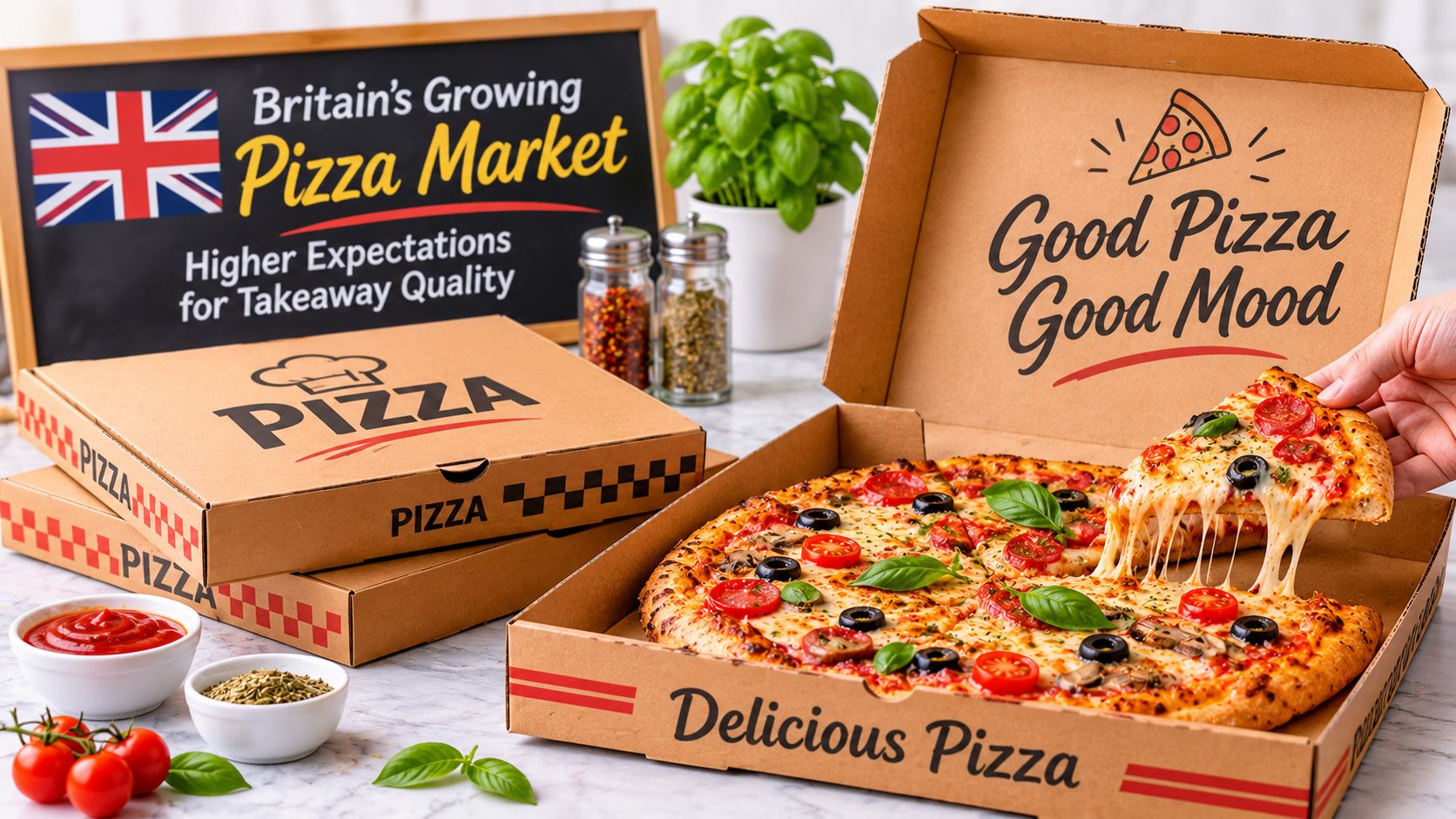
Pizza remains a popular takeaway choice across Britain, offering customers a convenient meal for everything from quick lunches to family dinners and weekend gatherings. However, the way people order and enjoy pizza is changing. Customers now consider more than just flavour when choosing where to order. They also pay attention to ingredient quality, delivery times, menu variety and the condition of their food when it arrives.
For independent pizzerias and larger food businesses, these changing expectations create both opportunities and challenges. Providing a satisfying experience requires attention at every stage, from preparing the pizza to presenting it for collection or delivery.
Changing Preferences in Britain's Pizza Market
Customers have different reasons for choosing pizza. Some prefer traditional combinations, while others enjoy experimenting with new toppings, sauces and crust styles. This variety has encouraged restaurants to review their menus and introduce options that appeal to different tastes.
Classic favourites remain important, but customers may also look for vegetarian choices, plant-based alternatives and distinctive flavour combinations. Offering a balanced menu allows businesses to attract a wider audience without making their kitchens unnecessarily complicated.
Seasonal specials can provide another opportunity to introduce variety. A limited-edition pizza can create interest among regular customers and encourage people to try something different.
However, new menu items should be tested carefully. Restaurants need to consider ingredient costs, preparation time and how well each recipe performs during delivery.
Food Quality Is More Than Just Taste
A freshly prepared pizza should reach the customer in a condition that reflects the care taken in the kitchen. Unfortunately, delivery introduces challenges that do not always exist when food is served immediately.
Heat, moisture, handling and travel time can all affect the final result. A crispy base may become softer, toppings can shift and cheese may lose some of its original texture.
Pizzerias can reduce these problems by reviewing their preparation and delivery processes. Allowing the right amount of time for cooking, checking orders before dispatch and coordinating collections with drivers can all help.
Restaurants should also test their pizzas under realistic delivery conditions. This helps identify which recipes travel well and whether any changes are needed to maintain quality.
Why Suitable Pizza Containers Matter
The container used for a takeaway pizza plays an important role in protecting its appearance and condition. It needs to support the pizza, make carrying easier and help prevent unnecessary movement during transport.
custom pizza boxes give pizzerias the opportunity to consider their pizza sizes, menu requirements and branding when selecting suitable designs. A well-fitted structure can help keep the product organised while providing a consistent presentation for customers.
Ventilation is another consideration. Pizza releases heat and moisture after cooking, so the container should be suitable for the type of product being served. Businesses should test different options to understand how the base, toppings and crust behave during a typical delivery journey.
The right design should support food quality while remaining convenient for both staff and customers.
Presentation Can Influence Customer Satisfaction
Customers often form an impression of a takeaway order before tasting it. A pizza that arrives neatly arranged and in good condition creates a more positive first impression than one that has shifted during transport.
Presentation is especially important for sharing orders. Families and groups may order several pizzas for gatherings, making easy handling and organised delivery particularly useful.
Custom Cardboard Pizza Boxes can help businesses present their products in a practical and consistent way. Retailers can consider suitable dimensions, board strength and printed designs according to their menu and delivery requirements.
The structure should be easy to open and handle without interfering with the food. A simple, well-designed container can often provide a better experience than one with unnecessary features.
Branding Is Becoming Part of the Takeaway Experience
The takeaway container is also an opportunity for a pizza business to communicate its identity. Customers may see the brand before opening their order, and a recognisable design can make the experience feel more consistent.
A clear logo, coordinated colours and simple graphics can help a pizzeria stand out. Businesses do not need to fill every available space with promotional messages. A balanced design is often easier to recognise and looks more professional.
Consistent branding across menus, websites, social media and takeaway materials can also help customers connect different parts of the business.
For independent pizzerias, these details can be particularly useful when competing with larger chains. A distinctive visual identity helps communicate the personality of the business.
Online Ordering Is Raising Expectations
Digital ordering has made it easier for customers to compare restaurants and explore different menus. People can check prices, view photographs and read reviews before deciding where to place an order.
This means restaurants need to keep their online information accurate and useful. Menu descriptions should explain available options clearly, while photographs should provide a realistic representation of the food.
The ordering process should also be straightforward. Complicated checkout steps, unclear delivery charges or missing information can discourage customers from completing a purchase.
Restaurants should regularly review their websites and ordering platforms to make sure opening hours, prices and menu availability are up to date.
Delivery Reliability Matters as Much as Speed
Fast delivery is attractive, but customers also value realistic waiting times and accurate orders. Receiving the wrong pizza or discovering that an order is incomplete can affect the entire experience.
Pizzerias can improve reliability by organising kitchen workflows and checking each order before it leaves the premises. Clear labels and order summaries can help staff confirm the correct pizzas, toppings and additional items.
Communication is important when delays occur. Customers are generally better prepared when a business provides an honest update rather than leaving them uncertain.
Reliable service helps build trust and gives customers a reason to choose the same restaurant again.
Balancing Menu Innovation With Affordability
Customers may enjoy new flavours and premium ingredients, but price remains an important part of many purchasing decisions. Restaurants therefore need to balance creativity with affordability.
One approach is to maintain a selection of familiar pizzas while introducing a smaller number of premium or seasonal options. This gives customers variety without requiring a complete menu overhaul.
Businesses should calculate ingredient, preparation and delivery-related costs before introducing promotions. Meal deals can attract attention, but they need to remain financially practical.
Clear pricing also helps customers understand what they are buying. Transparent information about sizes, toppings and additional charges can reduce confusion and improve confidence.
Reducing Waste Through Better Planning
Takeaway operations can create waste through unused ingredients, incorrect orders and unsuitable containers. Pizzerias can address some of these issues by monitoring demand and improving stock management.
Reviewing sales patterns helps kitchens estimate how much preparation is needed during busy periods. Staff training and order checks can also reduce mistakes that lead to replacement meals.
Businesses can assess whether their containers are appropriately sized and whether the materials are suitable for their intended use. Recyclable options may be considered where local facilities accept them, provided food protection and safety requirements are maintained.
Small operational improvements can support both efficiency and responsible resource use.
Building Customer Loyalty Through Consistency
Attracting new customers is valuable, but encouraging repeat orders is equally important. Customers are more likely to return when they know what to expect from a restaurant.
Consistent recipes, accurate orders, dependable delivery and good communication all contribute to customer confidence. Restaurants can also use feedback to understand what people appreciate and where improvements are needed.
Reviews may highlight popular menu items, delivery concerns or presentation issues. Looking for recurring patterns can help businesses make practical decisions rather than relying on assumptions.
Loyalty offers and occasional menu updates can further maintain interest, provided the quality of the core service remains the priority.
Conclusion
Britain's changing pizza market is encouraging takeaway businesses to look beyond flavour and consider the complete customer experience. Food quality, reliable delivery, convenient ordering and thoughtful presentation all influence how customers perceive a pizzeria.
By reviewing menus, improving kitchen processes and choosing suitable containers, businesses can respond to these expectations more effectively. The most successful approach combines good food with dependable service and consistent presentation.
Ultimately, customers want a pizza that arrives in good condition and delivers the experience they expected when placing their order. Meeting that expectation can help pizzerias build trust and encourage customers to return.

 English
 Arabic
 French
 Spanish
 Deutsch
 Turkish
 Dutch
 Italiano
 Russian
 Romaian
 Portuguese (Brazil)
 Greek