


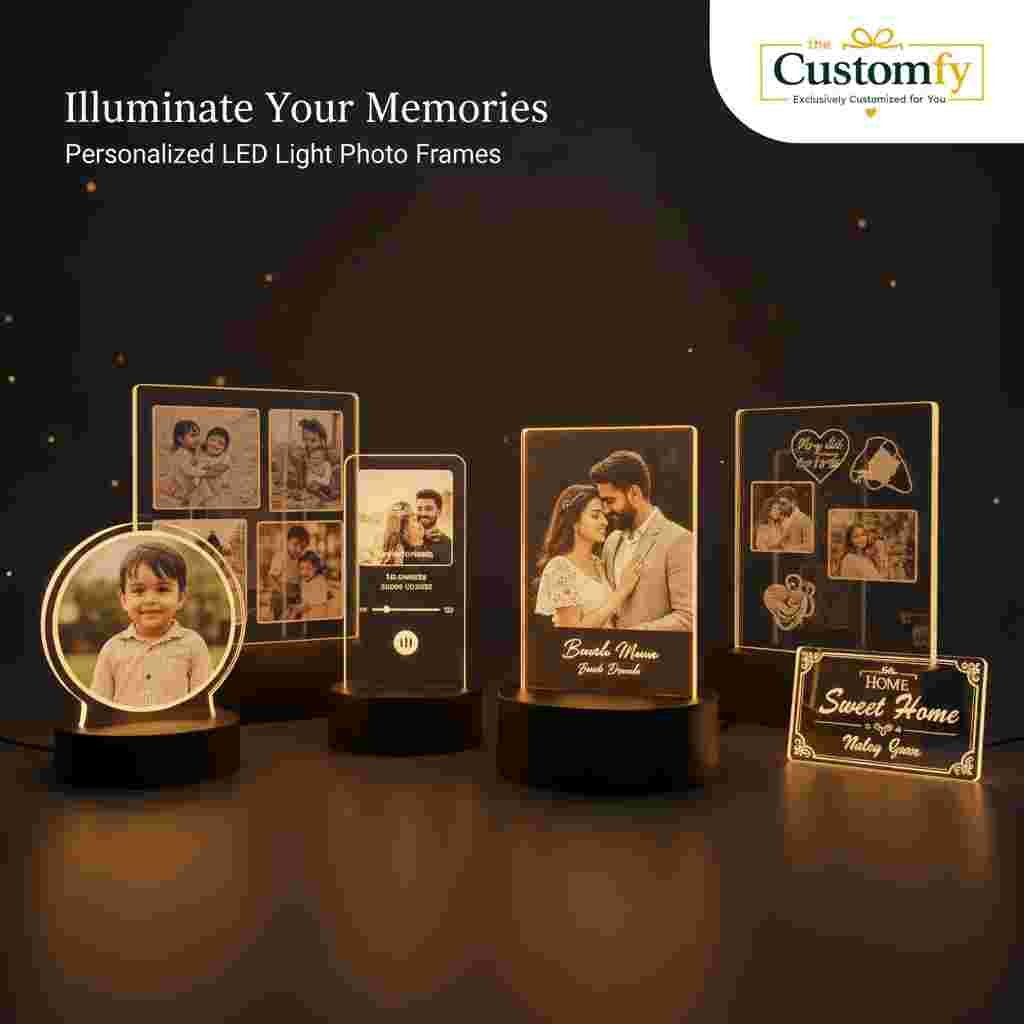
A couple's living room often reflects their shared personality, favourite experiences and important milestones. From wedding portraits to holiday photographs, these memories can make the space feel more welcoming. A well-chosen lighting photo frame offers a way to display those moments while adding an illuminated decorative element to the room.
However, selecting the right frame requires more thought than choosing an attractive photograph. Its dimensions, design, lighting, image arrangement and placement should suit the living room. Here are some practical tips to help couples make the right choice.
1. Identify the Purpose of Your Photo Display
Before exploring different designs, decide what you want the frame to represent. A display featuring one wedding portrait will have different requirements from a collage of photographs collected over several years.
Consider these possibilities:
-
Wedding memories: Highlight a favourite ceremony or reception photograph.
-
Relationship milestones: Combine engagement, wedding and anniversary pictures.
-
Travel experiences: Display photographs from memorable trips together.
-
Family moments: Include pictures with parents, siblings and other loved ones.
-
Everyday memories: Choose candid photographs that reflect your daily life together.
Having a clear purpose makes it easier to select the right layout, photograph count and personalisation details.
2. Measure the Available Display Area
The frame should fit comfortably into the space without competing with other decorative elements. Before purchasing, measure the area where you plan to keep it.
Different locations suit different dimensions:
-
A narrow console table may accommodate a compact rectangular design.
-
A side table beside the sofa may be suitable for a smaller portrait frame.
-
A spacious feature wall can accommodate a larger photo display.
-
A dedicated memory shelf can hold a frame alongside albums and keepsakes.
Also consider the viewing distance. A frame placed across a large living room should have photographs that remain recognisable from a reasonable distance.
3. Select a Layout That Suits Your Photographs
The layout determines how the photographs are presented. Choosing one that matches your image collection can make the display look organised and visually balanced.
Single Portrait Layout
A single-photo design is suitable for couples who want to highlight one important moment. A wedding portrait or anniversary photograph can become the main attraction without requiring additional decorative elements.
Couple Photo Collage
A collage allows you to display multiple memories in one frame. You can combine engagement photographs, wedding pictures, travel experiences and family celebrations.
Timeline Arrangement
A timeline layout presents photographs in chronological order. It can begin with an early photograph of the couple, followed by engagement and wedding memories, and finish with a recent picture.
Choose a layout that gives every photograph enough space. Avoid squeezing several images into a design where faces and important details become difficult to recognise.
4. Match the Frame Design With Your Living Room Style
The frame should complement the furniture, wall colour and overall interior theme. A design that looks attractive on its own may not necessarily suit the room.
Here are some combinations to consider:
| Living Room Style | Suitable Frame Design |
|---|---|
| Modern | Clean shapes and simple photograph arrangements |
| Minimalist | Limited photographs with subtle decorative details |
| Traditional | Family portraits and classic wedding memories |
| Contemporary | Balanced layouts with coordinated colours |
| Rustic | Warm-toned photographs and simple finishes |
Consider the existing décor before selecting the frame. A coordinated design generally looks more natural than one that introduces too many contrasting elements.
5. Understand the Lighting Before Choosing a Frame
The illumination is one of the main features that distinguishes an LED photo frame from an ordinary photo display. However, the brightness and appearance should suit the room.
Before making a selection, check:
-
The type of lighting used in the frame.
-
Whether the illumination is soft or bright.
-
How the light affects the photograph's colours.
-
Whether the frame needs a direct power connection.
-
Whether the lighting is suitable for evening display.
A frame with a balanced lighting effect can make photographs noticeable without becoming distracting. If product demonstrations are available, review them to understand how the illumination looks in an actual setting.
6. Choose Photographs That Work Well Together
Even a good frame design may not create the desired result if the selected photographs are unclear or visually inconsistent.
For better results, follow these tips:
Use high-resolution photographs: Select clear images with visible faces and sufficient detail. Avoid heavily blurred or pixelated pictures.
Maintain a consistent colour appearance: Wedding photographs, travel pictures and older family images may have different colour tones. Choose photographs that look harmonious together.
Consider image orientation: Check whether the layout requires portrait or landscape photographs before finalising your selection.
Avoid unnecessary cropping: Make sure important details, such as faces, wedding attire and meaningful backgrounds, remain visible.
Choose photographs with a connection: Images from the same event or different stages of your relationship can create a more meaningful story.
7. Add Personal Details Without Overloading the Design
Personalisation can make a frame more distinctive, particularly when it displays memories that have special meaning for both partners.
Depending on the available design options, you could include:
-
Both partners' names.
-
Wedding or anniversary dates.
-
A short relationship quote.
-
The location of a memorable occasion.
-
A meaningful phrase or personal message.
Keep the wording short so that the photographs remain the main focus. Before confirming the design, check all names, dates and spellings carefully.
8. Decide Between a Wall Display and a Tabletop Frame
The intended placement can influence which frame design is most suitable.
Wall-Mounted Display
A wall-mounted frame can work well above a sofa, console table or dedicated photo wall. It is a useful option when table space is limited.
Before installation, check the frame's mounting instructions, wall suitability and power connection requirements.
Tabletop Display
A tabletop frame is suitable for a console table, cabinet or side table. It can be moved more easily when rearranging the room.
Make sure the frame has a stable base and does not obstruct frequently used surfaces.
9. Check the Frame's Material and Maintenance Requirements
A photo frame should be practical enough for regular use. Review the product specifications instead of selecting a design based only on appearance.
Pay attention to:
-
Material and finish: Understand the frame's construction and surface finish.
-
Dimensions and weight: Confirm that the intended shelf or wall can accommodate it.
-
Power requirements: Check the supplied power arrangement and electrical specifications.
-
Cleaning: Review how the frame should be cleaned to avoid damaging its surface.
-
Installation: Confirm whether the design supports tabletop placement, wall mounting or both.
For an illuminated frame, follow the manufacturer's care and electrical safety instructions.
10. Think About How the Frame Will Look During the Day and Evening
A living room changes in appearance throughout the day because of natural light, ceiling lights and other decorative lighting.
Consider where the frame will be viewed most often. If it is placed near a window, check whether sunlight creates glare or makes the photographs difficult to see. If it is displayed near a television, consider whether its illumination could become distracting during evening viewing.
A suitable location should allow the photographs to remain visible while keeping the overall lighting comfortable.
Common Selection Mistakes Couples Should Avoid
A few mistakes can affect both the appearance and practicality of the final display.
-
Ignoring measurements: A frame that is too large or too small can look out of place.
-
Selecting photographs in a hurry: Take time to choose clear images that represent meaningful moments.
-
Overlooking lighting details: Check the brightness and power requirements before purchasing.
-
Using too many decorative elements: Keep the layout simple enough for the photographs to stand out.
-
Ignoring the room's colour scheme: Consider the furniture, walls and surrounding accessories.
-
Not checking the final design: Review the photograph placement and personalisation details before confirming the order.
Conclusion
Choosing the right frame for a couple's living room involves finding a balance between personal memories, interior décor and everyday practicality. Start by identifying the photographs you want to display, measuring the available space and selecting a layout that suits the room.
A thoughtfully selected lighting photo frame can bring wedding portraits, travel memories and relationship milestones into one attractive display. Couples can explore personalised photo frame designs at Customfy and choose an option that reflects their shared memories while complementing their living room.
Frequently Asked Questions
1. What size photo frame is best for a couple's living room?
The suitable size depends on the available wall or tabletop space. Measure the intended area and consider the viewing distance before choosing a frame.
2. Which photographs are suitable for a living room LED photo frame?
Wedding portraits, engagement photographs, anniversary pictures, travel memories and family photographs are all suitable choices. Select clear images that work well with the chosen layout.
3. Is a lighting photo frame suitable for a minimalist living room?
Yes. A simple layout featuring one or a few photographs, limited text and subtle illumination can complement minimalist interiors.
4. Should a couple choose a wall-mounted or tabletop photo frame?
A wall-mounted design is suitable when you want to use a feature wall, while a tabletop design works well on consoles, cabinets and side tables. Choose according to available space and installation requirements.
5. How can couples maintain an illuminated photo frame?
Follow the manufacturer's cleaning and care instructions. Keep the frame away from moisture, excessive heat and unsuitable locations, and check its electrical connections periodically.

 Arabic
 French
 Spanish
 Portuguese
 Deutsch
 Turkish
 Dutch
 Italiano
 Russian
 Romaian
 Portuguese (Brazil)
 Greek