


In today's competitive business environment, finding the right customers is just as important as offering the right products or services. Businesses need reliable information to identify potential clients, understand local markets, and build meaningful connections. However, collecting business information manually can be a time-consuming process, especially when dealing with hundreds or thousands of potential prospects.
This is where a Google Map Extractor becomes useful. It helps businesses discover and organize publicly available business information from Google Maps, making prospect research more efficient. Whether you operate a digital marketing agency, run a sales team, or manage a lead generation company, using the right extraction tool can simplify your daily research activities and support better marketing decisions.
Let's explore how a Google Map Extractor works and why it can be a valuable addition to your business toolkit.
1. What Is a Google Map Extractor?
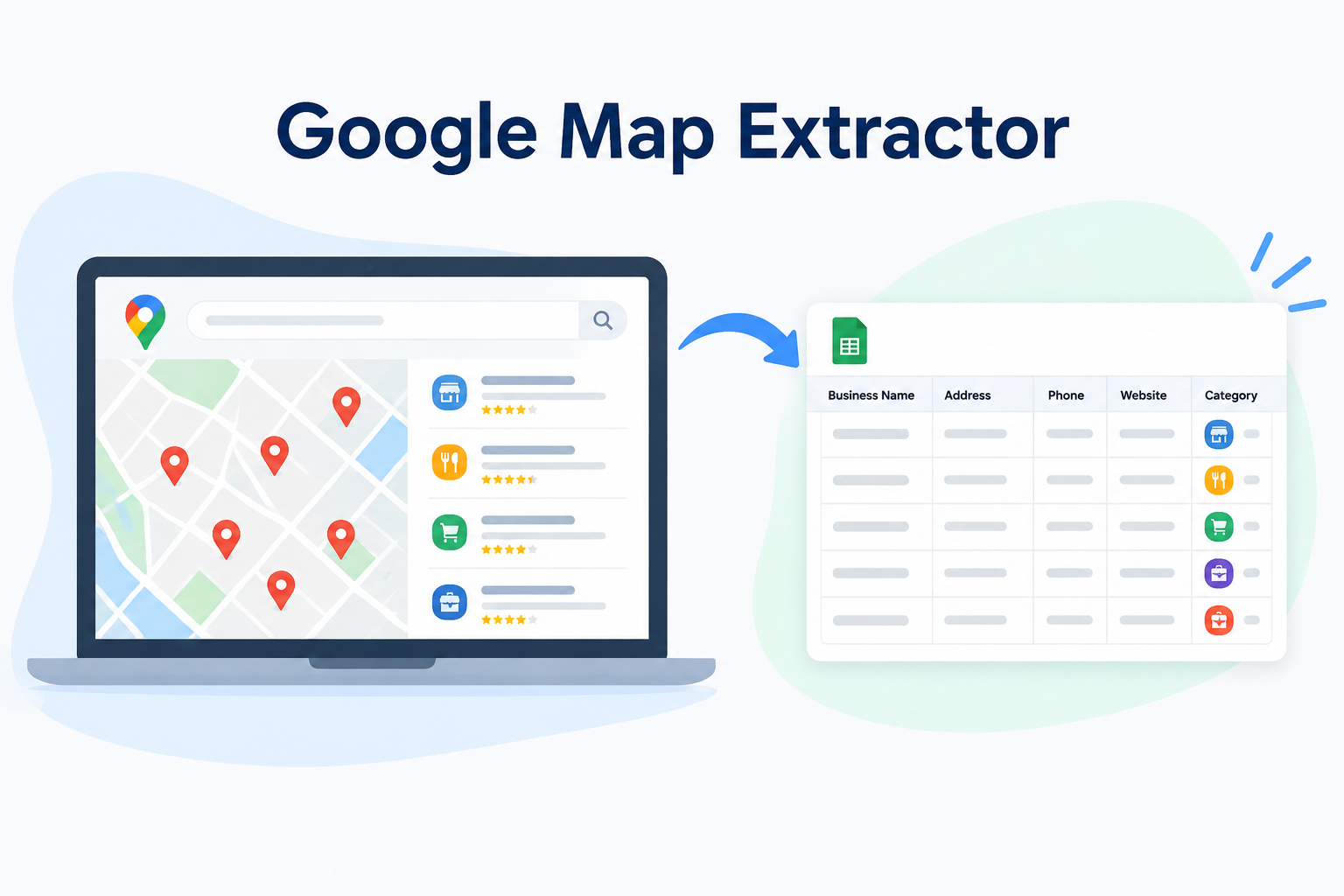
A Google Map Extractor is a software tool designed to collect publicly available business listing information from Google Maps based on specific search criteria. Instead of opening individual listings and copying details manually, users can automate much of the information-gathering process.
For example, a marketing agency looking for potential restaurant clients can search for restaurants in a particular city or region. The extractor helps gather relevant listing information and organize it into a structured format.
Depending on the software and available listing information, users may collect business names, phone numbers, addresses, website URLs, categories, and other publicly displayed details.
The main purpose is to simplify business research, reduce repetitive tasks, and help professionals organize potential prospects more effectively.
2. How Does Google Map Extractor Work?
Using a Google Map Extractor generally involves a straightforward process. Most tools allow users to search for businesses according to their preferred categories and locations.
Here is how the process typically works:
Choose a Business Category: Start by selecting the type of businesses you want to discover. This could include restaurants, construction companies, healthcare providers, real estate agencies, or retail stores.
Select a Location: Enter a city, state, country, or specific area to find relevant businesses operating in that region.
Start the Extraction Process: The software processes relevant business listings and collects available information according to its features and search settings.
Organize Business Information: Extracted details are arranged in a structured format, making them easier to review, filter, and manage.
Export Your Data: Many tools provide CSV or Excel export options, allowing users to save their collected information for further analysis and prospect management.
This process makes business research more convenient and helps teams spend less time on repetitive information collection.
3. What Business Data Can You Extract?
One of the biggest advantages of using a Google Map Extractor is the ability to collect different types of business information from a single research process.
Depending on the availability of information in individual listings and the capabilities of the tool, common data fields include:
-
Business Names: Identify companies and organizations operating in your target market.
-
Phone Numbers: Find publicly listed business contact numbers.
-
Email Addresses: Collect email addresses when publicly available or supported by the tool.
-
Business Addresses: Discover physical business locations for local prospecting.
-
Website URLs: Visit company websites to understand their services and offerings.
-
Business Categories: Organize prospects according to their industries and business types.
Having these details in one organized file can make prospect research easier and provide a useful starting point for sales and marketing activities.
4. Six Ways Google Map Extractor Helps Improve Lead Generation
A well-designed Google Map Extractor can support several business activities. Here are six practical ways it can improve your prospecting efforts.
4.1. Discover Targeted Business Prospects
Finding potential customers becomes easier when you can search according to specific industries and locations. Instead of working with random contact information, businesses can focus on companies that match their ideal customer profiles.
For example, an equipment supplier can search for construction companies in selected cities to identify relevant prospects. This targeted approach helps sales professionals concentrate on businesses that may have a genuine interest in their offerings.
4.2. Save Time on Manual Research
Manually collecting business information requires opening individual listings, checking available details, and transferring information into spreadsheets. Repeating these activities for hundreds of businesses can consume valuable working hours.
A Google Map Extractor automates much of this repetitive work. It helps users collect and organize information more efficiently, allowing teams to focus on customer research, communication strategies, and sales opportunities.
4.3. Find Local and Regional Opportunities
Location-based prospecting is important for businesses that serve particular geographic markets. A Google Map Extractor can help identify companies in selected cities, neighborhoods, and regions.
For instance, a digital marketing agency planning to expand into a new city can research local retailers, healthcare providers, restaurants, and other businesses. This information helps the agency understand the available market and identify potential customers.
4.4. Build Organized Business Contact Lists
Managing business information becomes difficult when details are scattered across different websites and spreadsheets.
Extraction tools help organize collected information into structured files. Users can review business names, contact numbers, addresses, and website details in one place.
These organized records can also be categorized by location or industry, making it easier to manage prospect databases and prepare future sales activities.
4.5. Support Sales and Marketing Campaigns
A relevant business contact list can provide a foundation for different marketing and sales initiatives. Sales representatives can use collected information to identify potential clients and research their business requirements.
Marketing agencies can also use industry-specific business information to develop targeted outreach strategies. However, collecting contact details does not automatically provide permission to contact everyone. Businesses should follow applicable privacy, data protection, and marketing regulations.
4.6. Identify New Market Opportunities
Business listings can provide useful insights into the companies operating in a particular location. By researching different categories and geographic areas, organizations can identify potential markets that deserve further attention.
For example, a software provider may discover several businesses in a growing industry that could benefit from its solutions. This research can help sales teams explore new opportunities and make more informed business decisions.
5. Who Can Benefit from Google Map Extractor?
A Google Map Extractor can be useful for professionals across different industries.
-
Digital Marketing Agencies: Discover potential clients for SEO, advertising, and marketing services.
-
Sales Professionals: Research businesses that match their ideal customer profiles.
-
Lead Generation Companies: Build organized business prospect databases.
-
Small and Medium-Sized Businesses: Identify local companies and explore new partnership opportunities.
-
Market Researchers: Study business categories and explore regional market activity.
-
B2B Service Providers: Find relevant companies that may need their products or services.
Regardless of business size, organized prospect research can help teams approach their markets with better preparation.
6. Google Map Extractor vs. Manual Business Research
Manual research can work when collecting information about a small number of businesses. However, the process becomes increasingly difficult as research requirements grow.
With manual research, users need to open listings individually, review available details, and copy information into spreadsheets. This approach can lead to repetitive work and inconsistent data organization.
A Google Map Extractor simplifies many of these activities by automating information collection and providing structured exports. It also makes location-based and category-based searches more convenient.
Although automation improves efficiency, extracted information should still be reviewed for accuracy, completeness, and relevance before being added to a business database.
7. What to Look for in a Reliable Google Map Extractor?
Choosing the right software is important if you want to get meaningful results from your business research activities.
Consider the following features before selecting a tool:
-
Simple Interface: The software should be easy to understand and operate.
-
Location-Based Search: It should support searches across different cities and regions.
-
Relevant Data Fields: Look for useful information such as business names, phone numbers, addresses, and websites.
-
CSV and Excel Export: Flexible export options make data management easier.
-
Search Flexibility: Industry and category-based searching can help narrow down your prospects.
-
Data Organization: The software should make collected information easy to review and manage.
-
Responsible Data Collection: Choose tools and workflows that respect platform requirements and applicable data protection regulations.
Comparing these features can help you select software that matches your business requirements.
8. Tips for Using Extracted Business Data Effectively
Collecting business information is only the beginning. To make your research more valuable, you should also develop a proper data management strategy.
First, define your ideal customer profile and select business categories that align with your products or services. Next, focus on relevant locations instead of collecting unrelated information.
Once the data is collected, review the records and remove duplicates or incomplete entries. Verify important contact details before using them in your sales activities.
You should also organize prospects into separate categories based on industry, location, and business requirements. Most importantly, ensure that your outreach activities follow applicable privacy laws, consent requirements, and communication regulations.
These simple practices can help transform collected business information into a more useful prospecting resource.
9. Conclusion: Make Business Research Smarter with Google Map Extractor
Finding relevant business information does not have to involve hours of repetitive manual research. A Google Map Extractor can simplify the process by helping businesses discover, collect, and organize publicly available business listing information according to specific industries and locations.
From building structured prospect lists to exploring new markets, the right extraction software can support more efficient research and better-organized sales activities.
If your business wants to improve its prospecting workflow, consider exploring a Google Map Extractor that offers flexible searches, useful data fields, and convenient export options. With a clear strategy and properly managed information, you can make business research more productive and uncover opportunities for future growth.

 Arabic
 French
 Spanish
 Portuguese
 Deutsch
 Turkish
 Dutch
 Italiano
 Russian
 Romaian
 Portuguese (Brazil)
 Greek