


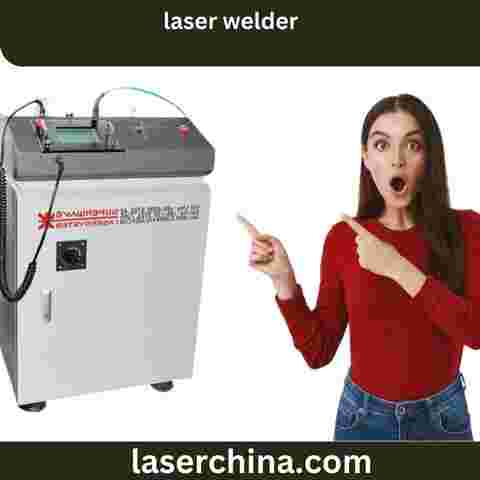
The welding industry is continuously evolving as manufacturers look for faster, more precise, and reliable production methods. Laser welding technology has become an important solution for businesses that require accurate metal joining and consistent results. Among the available options, a chinese laser welder has attracted attention from manufacturers, workshops, and industrial businesses worldwide because of China's growing laser equipment industry.
Chinese manufacturers produce different types of laser welding machines designed for applications ranging from small workshops to large-scale industrial production. These machines are used in industries where welding accuracy, production efficiency, and material quality are essential.
Understanding Chinese Laser Welding Technology
Laser welding uses a concentrated beam of light to generate heat and join metal components. The laser beam focuses energy on a specific area, melting the material and creating a strong welded joint. This process allows operators to work with different metal thicknesses and shapes according to the machine's power and configuration.
A chinese laser welder generally uses fiber laser technology, which is widely adopted in modern industrial welding equipment. The system directs laser energy through an optical fiber toward the welding head. Operators can control welding parameters such as power, speed, and focus to achieve the required results.
Applications Across Different Industries
Laser welding equipment is suitable for various manufacturing environments. Automotive manufacturers use laser welding to join metal components, body parts, and structural elements. The technology also supports the production of stainless steel products, aluminum components, and precision metal assemblies.
In the furniture industry, laser welding machines are used to manufacture metal frames, decorative structures, and stainless steel furniture. Kitchen equipment manufacturers also use this technology for joining metal surfaces and producing accurately finished products.
Jewelry workshops can use specialized laser welding systems for repairing and joining delicate metal pieces. Meanwhile, electrical equipment manufacturers rely on controlled welding processes when working with smaller metal components.
Choosing the Right Machine from Chinese Manufacturers
Selecting suitable equipment requires careful consideration of production requirements. Buyers should first identify the materials they intend to weld, including stainless steel, carbon steel, aluminum, or other compatible metals.
Laser power is another important factor. Lower-power machines may be suitable for thin materials and light fabrication, while higher-power systems can handle more demanding industrial applications.
Customers should also examine the welding head, cooling system, control interface, laser source, and available safety features. A reliable supplier should provide technical specifications, installation instructions, operator training, and after-sales support.
When purchasing a chinese laser welder, it is important to compare suppliers rather than making a decision based solely on the advertised price. Product certifications, component brands, warranty conditions, and spare-parts availability should also be reviewed.
Why Chinese Laser Equipment Attracts Global Buyers
China has developed a substantial manufacturing sector for laser processing equipment. Many Chinese suppliers offer different machine configurations to meet the requirements of international customers.
Buyers can find equipment designed for workshops, metal fabrication businesses, automotive production, and specialized manufacturing operations. Manufacturers also provide customized configurations depending on production volume, material requirements, and operating conditions.
Another important consideration is supplier communication. Before placing an order, international buyers should request machine demonstrations, detailed quotations, shipping information, and warranty documentation. These steps help businesses understand exactly what they are purchasing.
Maintenance and Operating Considerations
Proper maintenance plays an important role in keeping welding equipment in good working condition. Operators should regularly inspect protective lenses, clean the welding head, check cooling-system performance, and examine optical components according to manufacturer instructions.
The machine should be installed in a suitable working environment with proper electrical connections and ventilation. Operators must also receive appropriate training before using laser equipment.
Laser welding systems require suitable protective enclosures, safety interlocks, and wavelength-rated protective equipment. Class 4 laser systems can cause serious eye and skin injuries, so businesses must follow applicable laser safety standards and manufacturer guidelines.
Final Thoughts
Laser welding technology continues to create new opportunities for manufacturers seeking accurate and efficient metal fabrication solutions. A chinese laser welder can be a suitable investment for businesses looking to expand their production capabilities with modern welding equipment.
However, selecting the right machine requires attention to laser power, material compatibility, component quality, supplier reputation, and technical support. By evaluating these factors carefully, buyers can choose equipment that matches their production requirements and supports long-term industrial growth.
#ChineseLaserWelder #LaserWeldingMachine #FiberLaserWelder #IndustrialWelding

 English
 Arabic
 French
 Spanish
 Portuguese
 Deutsch
 Turkish
 Dutch
 Italiano
 Romaian
 Portuguese (Brazil)
 Greek