


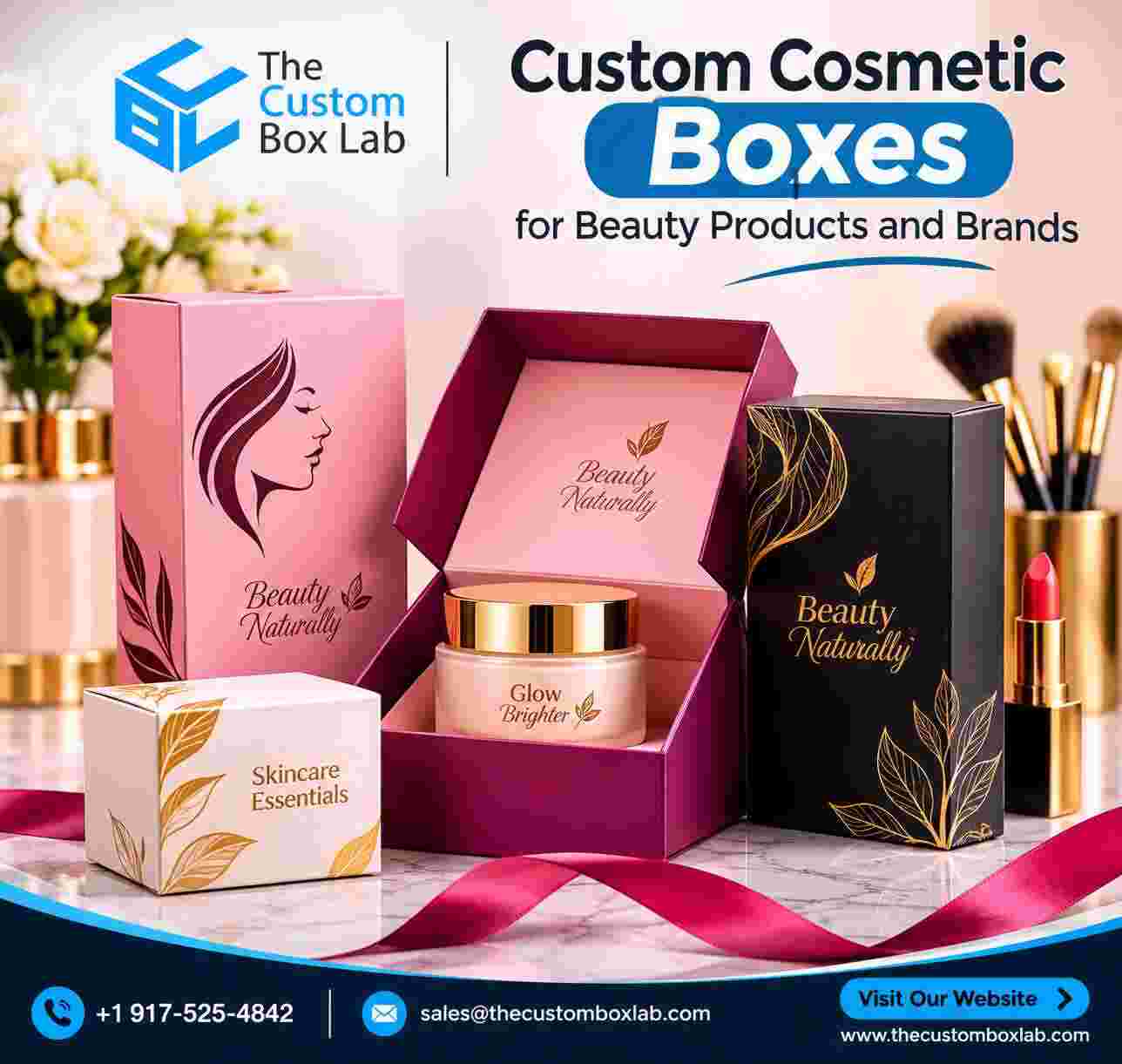
Custom cosmetic boxes are packaging built to a beauty brand's exact product dimensions, printed with its own branding and finished to match its price point, rather than pulled from a generic stock catalog. For skincare, makeup, and personal care brands, the right box does more than hold the product — it signals quality before a customer even opens it. This guide covers the materials, finishes, and practical decisions behind choosing cosmetic packaging that actually fits your brand and budget.
What Are Custom Cosmetic Boxes, and Why Do Beauty Brands Need Them?
Custom cosmetic boxes are packaging designed around a specific beauty product's size, shape, and brand identity, built using materials and finishes chosen for how that product will be sold and handled. A generic box might fit the product, but it won't carry your logo, color palette, or the shelf presence that helps a customer recognize your brand at a glance.
Beauty brands typically move to custom packaging for a few clear reasons:
- Standing out on a retail shelf next to established competitors
- Building a consistent, recognizable unboxing experience for direct-to-consumer orders
- Protecting glass bottles, jars, or delicate formulations more precisely than an oversized stock box
- Communicating a price point through packaging before the customer even opens it
How Is Cosmetic Packaging Different from General Product Packaging?
Cosmetic packaging usually has tighter structural tolerances, since many beauty products ship in glass or require a secure insert to prevent movement during transit. It also carries more labeling responsibility, since ingredient lists, net quantity, and specific claims need to be accounted for on the box itself, not just the product label.
What Materials Are Best for Custom Cosmetic Boxes?
The right material depends on your product's weight, your price point, and how the box will be displayed or shipped. Most cosmetic brands choose between rigid board, folding cartons, and kraft board, each suited to a different kind of product and budget.
| Material | Feel and strength | Best suited for |
|---|---|---|
| Rigid chipboard | Heavy, structured, premium | High-end skincare, fragrance, gift sets |
| Folding cartons (SBS board) | Lighter, clean print surface | Mid-range makeup and skincare, retail shelf products |
| Kraft board | Natural texture, eco-positioned | Clean beauty and sustainability-focused brands |
Should a New Beauty Brand Choose Rigid or Folding Cartons?
Rigid boxes suit brands positioning at a higher price point or launching gift sets, since the sturdier material reinforces that premium feel the moment someone picks it up. Folding cartons remain the more practical starting point for brands scaling across many SKUs, where cost efficiency at volume matters more than the heaviest possible box.
What Finishes Make Cosmetic Packaging Stand Out?
Finishes are often what separates memorable cosmetic packaging from a plain printed box, even when the base material is the same. The right finish should match your brand's visual identity rather than just following a trend.
- Matte or soft-touch lamination gives a smooth, premium texture that customers notice the moment they handle the box.
- Foil stamping on a logo or product name adds a metallic accent that reads well both in person and in photos.
- Embossing or debossing creates a raised or recessed texture, often used for minimalist logo treatments.
- Spot UV coating highlights specific design elements against a matte background without the cost of full-color printing.
- Window cutouts let customers see the product's color or texture before purchase, useful for makeup and colored skincare.
How Much Do Custom Cosmetic Boxes Cost?
Custom cosmetic boxes typically cost $0.50 to $3.00 per unit, depending on material, finish, and order volume, with rigid boxes and multiple finishes sitting at the higher end of that range. Order size has the biggest effect on final pricing, since setup and production costs are spread across more units at scale.
| Order volume | Typical cost per unit | Notes |
|---|---|---|
| 250–500 units | $1.50–$3.00 | Common for a new product launch or small test batch |
| 1,000–5,000 units | $0.80–$1.80 | Standard range once a product has steady demand |
| 5,000+ units | $0.50–$1.20 | Reached with established, high-volume SKUs |
What Drives the Price Up or Down?
Board thickness, number of finishes, and structural extras like magnetic closures or custom inserts drive most of the cost difference between two boxes that look similar at first glance. A plain folding carton with one print color will always cost less than the same box with foil stamping, a window cutout, and a fitted insert.
What Box Styles Work Best for Different Cosmetic Products?
The right box style depends on the product itself — a glass bottle, a compact, or a multi-item gift set each have different structural needs. Choosing the wrong style can mean either wasted material or inadequate protection during shipping.
- Tuck-end cartons suit single items like serums, creams, or compacts sold at retail
- Rigid two-piece boxes work well for premium gift sets or fragrance, where the lid-and-base structure adds a ceremonial unboxing moment
- Window boxes let shoppers see makeup shades or product texture before buying
- Mailer-style boxes with inserts protect glass bottles and jars during direct-to-consumer shipping
How Do You Protect Glass Bottles and Jars During Shipping?
A custom-fitted insert, whether molded pulp, foam, or a simple cardboard divider, keeps glass containers from shifting inside the box during transit, which is the most common cause of breakage. According to general USPS guidance on package preparation, adequate cushioning around fragile items reduces damage claims significantly compared with loose packing.
What Should You Check Before Ordering Custom Cosmetic Boxes?
Confirm material specifications, turnaround time, and whether a mockup is included before committing to a production run. Beauty packaging carries more risk than most categories if a color or finish turns out wrong, since it can undercut the exact premium impression the brand is trying to build.
- Request a digital or physical mockup before a full production run to confirm color accuracy and finish quality
- Ask whether your supplier requires a minimum order quantity, or if smaller test batches are available
- Confirm your packaging accounts for FDA labeling requirements around ingredient lists and net quantity statements
- Check whether sustainability claims like "recyclable" on your design match what the FTC's Green Guides require for accuracy
The Custom Box Lab is a USA-based manufacturer offering custom cosmetic boxes in rigid, folding carton, and kraft materials, with no minimum order requirement and free 3D mockups before production, which gives a newer beauty brand room to test a design before committing to a larger order.
Conclusion
Custom cosmetic boxes work best when the material, finish, and structure are chosen to match the actual product and price point, not just picked for visual appeal alone. A rigid box with foil stamping makes sense for a premium fragrance set, while a well-printed folding carton can carry a mid-range skincare line just as effectively at a lower cost. Confirming a mockup before production and checking your packaging against basic labeling requirements are the two steps that save beauty brands the most trouble once a full order has already shipped.
Frequently Asked Questions
How much do custom cosmetic boxes cost? Custom cosmetic boxes typically cost $0.50 to $3.00 per unit depending on material, finish, and order size. Orders of 5,000 units or more usually bring the price toward the lower end of that range.
How do I order custom cosmetic boxes for my brand? Share your product dimensions, preferred material, and finish requirements with a supplier, review a digital or physical mockup, then confirm your order quantity. Most suppliers respond with pricing and turnaround details within a day or two.
What is the minimum order quantity for custom cosmetic boxes? Minimum order quantities vary by supplier, with some not requiring a strict minimum at all, which is useful for testing a new design before scaling up. Larger, more cost-efficient runs typically start around 1,000 units.
How long does it take to produce custom cosmetic boxes? Standard production commonly takes 15 to 20 business days, with express options sometimes available in 7 to 10 days for an added cost. Complex finishes like foil stamping or custom inserts can add a few extra days.
Which material is best for cosmetic packaging? Rigid chipboard offers the sturdiest, most premium feel and suits higher-priced products or gift sets, while folding cartons provide a lighter, more cost-efficient option for mid-range items. Kraft board works well for brands positioning around clean or sustainable beauty.
Does cosmetic packaging need to meet FDA requirements? Yes, cosmetic packaging sold in the USA needs to account for FDA labeling requirements around ingredient lists and net quantity statements, regardless of how the box is designed. Confirm your label layout meets these requirements before finalizing your artwork.
Can I see a sample before ordering cosmetic boxes in bulk? Yes, most reputable suppliers provide a digital or 3D mockup before production, and some offer physical samples for an added cost. Reviewing a mockup first helps confirm color accuracy, finish quality, and structural fit before committing to a full order.

 English
 Arabic
 Spanish
 Portuguese
 Deutsch
 Turkish
 Dutch
 Italiano
 Russian
 Romaian
 Portuguese (Brazil)
 Greek