


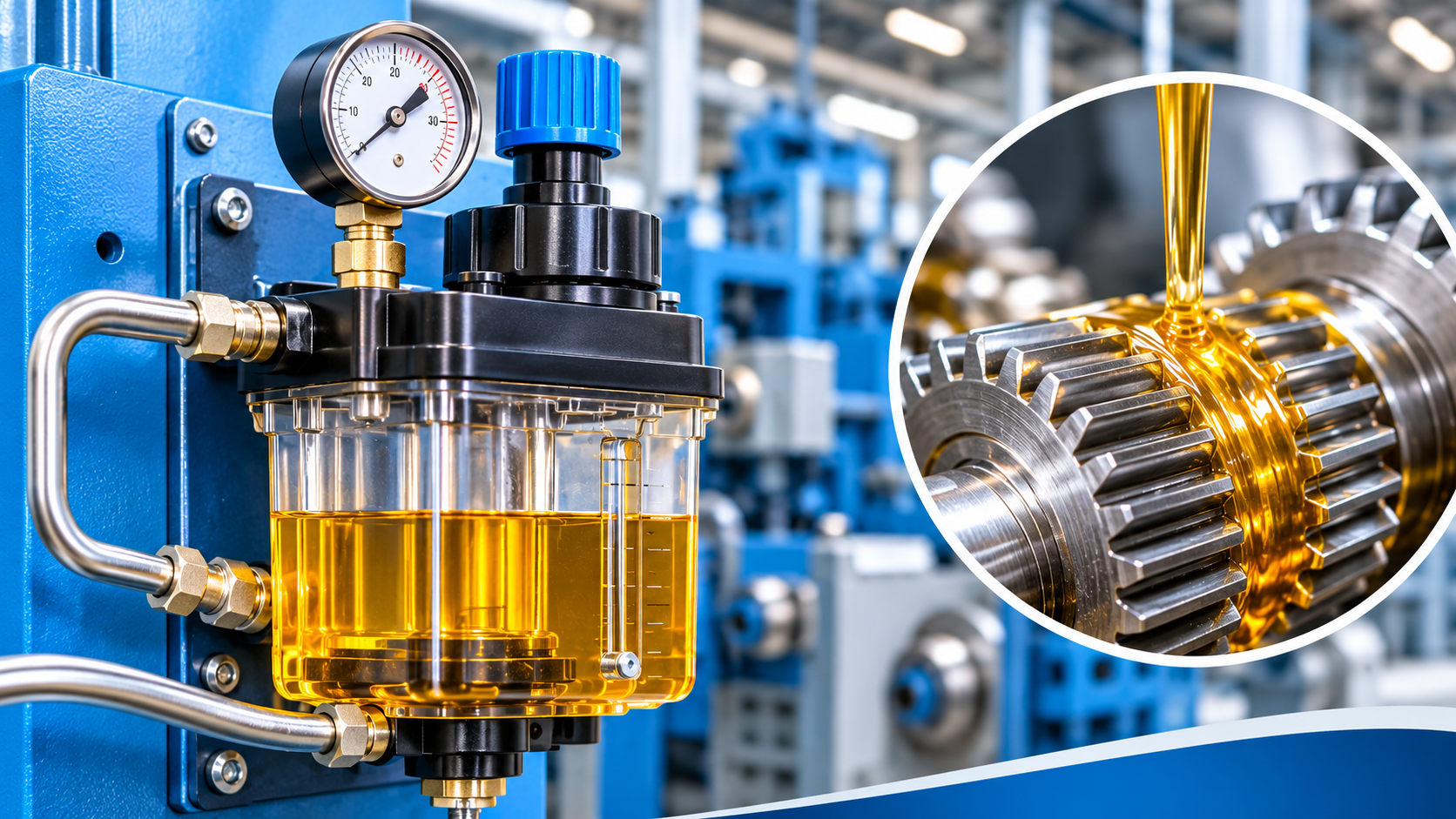
Heavy-duty industrial machinery operates under demanding conditions. High mechanical loads, continuous movement, vibration, dust, and changing temperatures can place considerable stress on machine components.
Bearings, gears, chains, and other moving parts need suitable lubrication to maintain their operating condition. When lubrication is insufficient or irregular, friction and component wear can increase.
An Oil Lubricator helps deliver the required quantity of oil to specific machine components. However, choosing the right equipment for heavy-duty applications requires careful consideration of technical and operational factors.
Why Heavy-Duty Machinery Needs Proper Oil Lubrication
Industrial equipment often operates for long hours with limited opportunities for maintenance.
During operation, mechanical components experience friction. If the lubricant film becomes insufficient, direct surface contact can increase wear and generate additional heat.
Proper oil lubrication helps minimise these effects and supports the working life of mechanical components.
A suitable lubricator also helps maintenance teams maintain a planned lubrication routine, particularly where equipment has multiple lubrication points.
Important Characteristics of an Industrial Oil Lubricator
Before choosing equipment, buyers should understand the features that influence its performance.
Controlled Oil Delivery
The lubricator should provide an appropriate quantity of oil according to the requirements of the connected machinery.
An unsuitable delivery rate may result in insufficient lubrication or unnecessary oil consumption.
Suitable Construction Materials
Industrial equipment may operate in environments exposed to vibration, dust, moisture, and temperature variations.
The lubricator's construction should be appropriate for its intended operating environment.
Appropriate Reservoir Capacity
Reservoir capacity should match the required lubrication frequency and oil consumption.
A suitable capacity helps maintenance teams plan refilling activities without unnecessarily increasing equipment size.
Compatibility with Lubricating Oil
The lubricator should be compatible with the recommended lubricant and its viscosity characteristics.
This is important for maintaining proper oil flow through the equipment.
Ease of Inspection
Maintenance personnel should be able to check oil levels, connections, leakage, and operating conditions without unnecessary difficulty.
Easy inspection supports better preventive maintenance practices.
How to Select an Oil Lubricator for Different Industrial Machines
Different machines require different lubrication arrangements. The selection process should begin with an assessment of the equipment.
For Bearings: Consider bearing type, operating speed, load, temperature, and lubricant recommendations.
For Gear Assemblies: Review the gear design, operating conditions, oil viscosity, and required lubrication method.
For Conveyor Systems: Evaluate the number of lubrication points, accessibility, chain or bearing requirements, and operating frequency.
For Pneumatic Equipment: Consider compressed-air pressure, air consumption, equipment compatibility, and the lubricant recommended by the equipment manufacturer.
For Heavy Manufacturing Equipment: Evaluate whether individual lubrication units or a centralised oil distribution arrangement would provide a more suitable solution.
This application-based approach helps avoid selecting equipment based only on general product descriptions.
Common Mistakes When Buying Industrial Lubrication Equipment
Many purchasing problems occur because the lubrication requirements are not properly assessed before equipment selection.
Some common mistakes include:
-
Selecting a lubricator without checking oil viscosity.
-
Ignoring the required oil flow rate.
-
Choosing an unsuitable reservoir capacity.
-
Overlooking operating pressure requirements.
-
Failing to consider installation space.
-
Ignoring maintenance and spare-part availability.
-
Selecting equipment without reviewing manufacturer recommendations.
Avoiding these mistakes helps businesses make more practical purchasing decisions.
The Importance of Choosing Reliable Oil Lubricator Manufacturers
A suitable manufacturer can help industrial buyers understand equipment specifications and select products according to application requirements.
When comparing Oil Lubricator Manufacturers, businesses should examine product quality, technical documentation, manufacturing capabilities, and industry experience.
It is also important to understand the level of support available for product selection, installation, troubleshooting, and maintenance.
Experienced Oil Lubricator Manufacturers in India can be a useful source for industrial buyers seeking lubrication equipment for domestic manufacturing facilities and engineering applications.
However, buyers should always verify product specifications and compatibility before finalising an order.
Maintenance Practices for Better Lubricator Performance
Even quality lubrication equipment requires regular maintenance.
The following practices can help maintain reliable operation:
-
Check the oil level at recommended intervals.
-
Use the correct grade and viscosity of lubricant.
-
Inspect connections and pipes for leakage.
-
Keep the reservoir and filling area clean.
-
Monitor oil flow and delivery consistency.
-
Check for contamination or unusual changes in oil condition.
-
Follow the equipment manufacturer's inspection and servicing instructions.
A planned maintenance routine helps identify lubrication problems before they affect critical machinery.
Why Consider Techno Drop Engineers?
Techno Drop Engineers provides industrial lubrication equipment for manufacturing and engineering applications.
Businesses evaluating an Oil Lubricator can review the product details and determine its suitability based on their machinery specifications, lubrication requirements, and operating conditions.
Conclusion
Selecting an oil lubricator for heavy-duty industrial applications requires a clear understanding of machinery requirements, lubricant properties, flow rate, operating pressure, and maintenance conditions.
A properly matched lubrication arrangement helps protect critical components and supports reliable equipment operation. By evaluating technical specifications and choosing an experienced manufacturer, industrial businesses can make better decisions for their long-term lubrication requirements.

 English
 Arabic
 French
 Spanish
 Deutsch
 Turkish
 Dutch
 Italiano
 Russian
 Romaian
 Portuguese (Brazil)
 Greek