


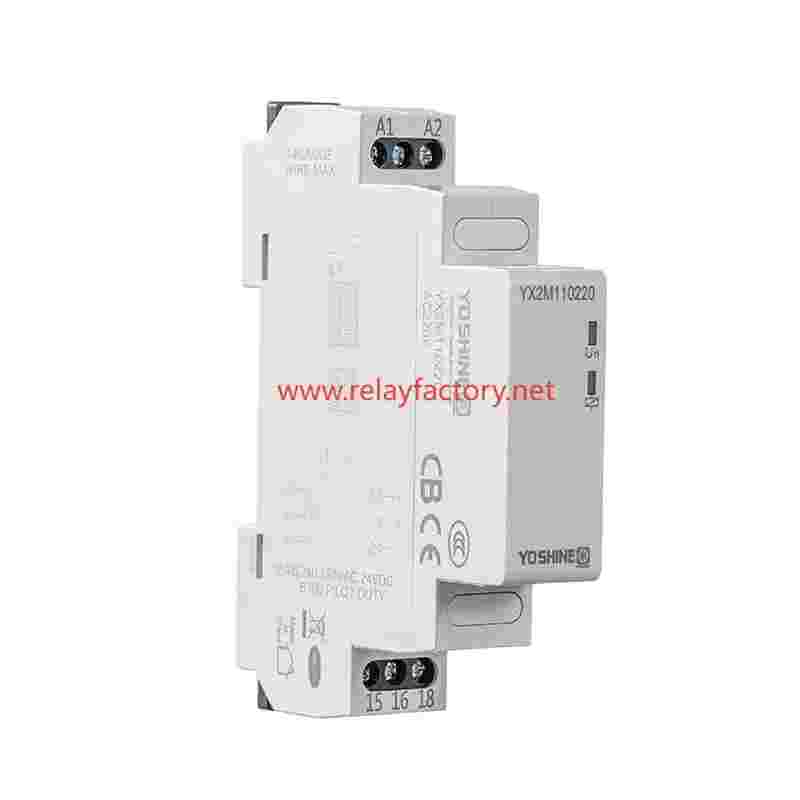
Time Relay Wholesaler selection involves more than comparing quotations or checking how many units a supplier can provide. For distributors, electrical equipment manufacturers, and industrial purchasing teams, the right sourcing decision depends on product suitability, order coordination, quality management, and the supplier’s ability to support ongoing business requirements. A structured evaluation can help buyers reduce purchasing uncertainty and establish a practical supply arrangement.
Check Whether the Product Range Matches Your Market
Before discussing wholesale prices, buyers should identify which product configurations are suitable for their customers. Different applications may require different operating functions, voltage ratings, timing ranges, and contact arrangements. A product that works for one control system may not meet the requirements of another installation.
Purchasing teams should prepare a specification list before requesting a quotation. Important details include input voltage, output contact capacity, timing adjustment range, operating mode, mounting method, and connection arrangement. These details give suppliers a clear basis for recommending suitable models.
It is also useful to examine whether the available range covers the needs of different customer groups. Distributors may serve panel builders, machinery manufacturers, maintenance contractors, and automation businesses. Having access to several configurations can make inventory planning more flexible and help buyers respond to different project requirements.
Request Samples Before Confirming a Large Purchase
A sample evaluation gives buyers an opportunity to examine the actual product rather than relying entirely on catalogue descriptions. Before placing a substantial order, purchasing teams can request representative samples and arrange practical checks with their engineering staff.
The evaluation should consider whether the device matches the agreed specifications and operates correctly within the intended circuit. Buyers can review the adjustment method, indicator visibility, terminal arrangement, installation convenience, and consistency of operation.
For distributors, sample testing can also help prepare product information for downstream customers. Clear photographs, product dimensions, wiring diagrams, and instruction documents make it easier to explain product features during future sales discussions.
Any differences between the sample and the confirmed specification should be addressed before production begins. Written approval records can help prevent misunderstandings when the order moves from evaluation to batch purchasing.
Examine Quality Inspection and Batch Management
Product consistency matters when buyers purchase repeatedly for distribution or equipment assembly. A supplier should be able to explain how incoming materials, assembly operations, and finished products are checked.
Depending on the product design, inspection procedures may include appearance checks, electrical parameter verification, functional operation tests, terminal inspection, and packaging review. Buyers should ask which checks apply to their selected model and whether inspection results can be recorded.
It is equally important to clarify how production batches are identified. Model numbers, date codes, labels, and packaging information can help distributors trace products when handling customer inquiries or replenishment orders.
Buyers may also discuss how the supplier handles products that do not meet agreed requirements. A clear process for reporting issues, reviewing evidence, and arranging corrective action helps both parties manage quality concerns in an organized manner.
Compare Quotations Beyond the Unit Price
A wholesale quotation should provide enough information for buyers to understand the full purchasing arrangement. Unit price is important, but it should be reviewed alongside minimum order quantity, sample costs, packaging, payment terms, shipping conditions, and estimated delivery schedules.
When comparing offers, buyers should make sure the quoted products have matching specifications. Two quotations may appear similar while covering different voltage options, functions, accessories, or packaging requirements. Comparing equivalent configurations provides a more useful basis for purchasing decisions.
For recurring orders, it is helpful to discuss quantity forecasts and possible changes in demand. A supplier can then evaluate production arrangements and provide more relevant information about replenishment planning.
Buyers should also confirm whether customized labels, private packaging, or other identification requirements affect the quotation. Recording these details in the order documents can reduce the possibility of unexpected charges or delivery misunderstandings.
Confirm Delivery Planning and Communication
For international buyers, delivery coordination can influence inventory management and customer commitments. Before confirming an order, ask about the expected production period, shipping options, packaging dimensions, carton quantities, and commercial documents.
It is useful to establish communication points for order confirmation, production updates, inspection, and shipment preparation. Buyers who manage several projects may need progress information at agreed stages so they can coordinate warehouse capacity and downstream delivery plans.
Technical communication should also be considered. When a customer needs clarification about wiring, model selection, or product replacement, accessible product documentation and responsive assistance can make daily business coordination easier.
Consider the Value of an Ongoing Supply Relationship
A wholesale purchasing arrangement may develop into a long-term business relationship. Buyers should therefore consider whether the supplier can maintain clear product records, communicate specification changes, and discuss future order requirements.
Before starting cooperation, both parties can agree on the process for repeat orders, model identification, packaging updates, and technical inquiries. These arrangements are particularly useful for distributors that need to maintain consistent product information across different sales channels.At relayfactory, buyers can discuss their required configurations, estimated quantities, packaging preferences, and application details before preparing an order. Sharing this information helps establish a clear starting point for product selection and purchasing coordination. For additional product information and business inquiries, visit https://www.relayfactory.net/ to review the available range and contact the company.

 English
 Arabic
 French
 Portuguese
 Deutsch
 Turkish
 Dutch
 Italiano
 Russian
 Romaian
 Portuguese (Brazil)
 Greek