


Industrial lubrication equipment plays an important role in protecting machinery from excessive friction and premature wear. However, purchasing a reliable lubrication unit is only one part of maintaining good machine performance.
The equipment must also be inspected, cleaned, and serviced according to its operating conditions.
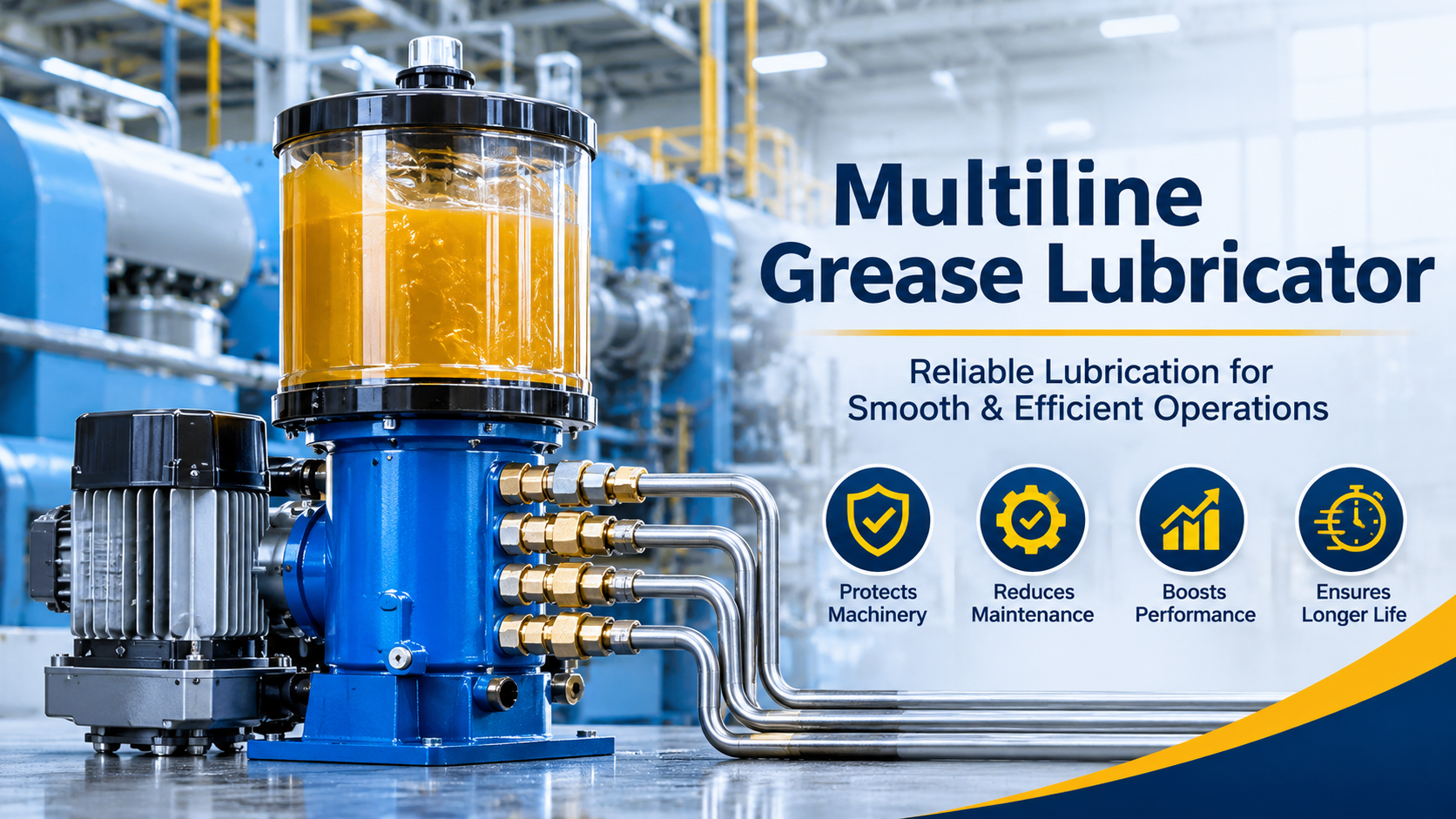
A Multiline Grease Lubricator supplies grease through multiple independent pumping elements and delivery lines. This arrangement supports lubrication across several machine components, but problems such as blocked pipelines, incorrect grease selection, and pump wear can affect performance if maintenance is neglected.
For maintenance engineers, understanding common inspection requirements helps improve equipment reliability and avoid unnecessary production interruptions.
Why Regular Maintenance Is Important
Industrial machinery often operates for extended periods under heavy loads, vibration, and changing environmental conditions.
Even when a lubrication unit is correctly selected, its performance can be affected by contamination, damaged connections, grease deterioration, and mechanical wear.
Regular maintenance helps identify these issues before they cause serious problems.
A planned maintenance routine can support:
-
Consistent grease delivery.
-
Better identification of blocked lines.
-
Reduced risk of lubrication-related failures.
-
Improved equipment availability.
-
Longer service life of lubrication components.
-
More efficient grease consumption.
Maintenance intervals should be based on the equipment manufacturer's recommendations and actual operating conditions.
Inspect the Grease Reservoir
The reservoir is the main storage point for the lubricant.
Operators should check the grease level regularly and refill it before it becomes insufficient for normal operation.
However, simply adding grease is not enough.
The reservoir should also be checked for dust, moisture, and other contaminants.
Contaminated grease can affect pump operation and may introduce unwanted particles into lubrication pipelines.
Use clean refill equipment and ensure that the selected grease is compatible with the lubrication system.
Check Pump Elements and Drive Operation
A multiline grease lubricator contains several pump elements that supply grease through individual outlets.
The drive mechanism must operate correctly to maintain the intended pumping cycle.
During inspection, maintenance personnel should look for:
-
Unusual vibration or noise.
-
Leakage around pump connections.
-
Loose mounting hardware.
-
Signs of mechanical wear.
-
Irregular pump operation.
-
Abnormal motor heating.
If an outlet does not deliver grease as expected, the corresponding pump element and delivery line should be inspected.
Repairs should follow the manufacturer's instructions and appropriate safety procedures.
Inspect Individual Grease Delivery Lines
Delivery pipelines connect the lubrication unit to machine components.
A damaged, leaking, or blocked line can prevent the intended grease quantity from reaching its lubrication point.
Since multiline systems use separate lines, technicians can inspect each delivery route individually.
Look for:
Visible leakage: Grease around fittings or pipeline joints may indicate a loose connection or damaged seal.
Physical damage: Bent, crushed, or corroded pipes may restrict grease flow.
Blocked outlets: A blocked line may prevent proper lubrication of the associated component.
Loose fittings: Poorly secured connections can cause leakage and pressure loss.
Any suspected blockage should be investigated rather than compensated for by increasing system pressure without proper diagnosis.
Use the Correct Grease
Grease compatibility is an important factor in lubrication equipment maintenance.
The selected lubricant should meet the requirements of the machinery and the pump system.
Factors to consider include:
-
Grease consistency.
-
Operating temperature.
-
Mechanical load.
-
Water resistance.
-
Compatibility with seals and pump components.
-
Manufacturer recommendations.
Mixing different grease types without checking compatibility can cause changes in consistency and lubrication performance.
A consistent lubricant specification and clean refill procedure help reduce this risk.
Monitor Operating Pressure
Pressure is an important indicator of lubrication system operation.
Unusually high pressure may indicate a blocked line, unsuitable grease, excessive pipeline resistance, or another system issue.
Low pressure may result from leakage, pump wear, inadequate grease supply, or drive-related problems.
Maintenance teams should compare actual readings with the manufacturer's recommended operating range.
The featured Techno Drop multiline grease lubricator page lists a maximum pressure of 350 bar. This is a product rating, not a recommended operating pressure for every application. Actual settings must be determined from the specific system design.
Follow a Preventive Maintenance Schedule
A planned maintenance routine makes lubrication equipment easier to monitor.
The following is a general inspection framework. Actual intervals should be adjusted according to manufacturer guidance and operating conditions.
| Inspection activity | Suggested frequency |
|---|---|
| Check reservoir grease level | Daily or per shift |
| Observe pump operation | Daily or per shift |
| Inspect visible leakage | Weekly |
| Check pipeline condition | Weekly |
| Verify grease delivery | As per maintenance plan |
| Inspect electrical connections | As per safety schedule |
| Service pump components | As recommended by manufacturer |
Keeping inspection records can help maintenance teams identify recurring problems and unusual grease consumption.
Common Problems and Their Possible Causes
Understanding common lubrication issues helps maintenance personnel respond more effectively.
| Problem | Possible reason |
|---|---|
| No grease delivery | Empty reservoir, pump failure, or blocked line |
| Excessive pressure | Pipeline blockage or high resistance |
| Grease leakage | Loose fittings or damaged seals |
| Uneven lubrication | Incorrect pump output or line obstruction |
| Frequent refilling | High grease consumption or leakage |
| Unusual pump noise | Mechanical wear or operating issue |
These are possible causes, not definitive diagnoses. Technicians should inspect the complete system before replacing components.
Why Manufacturer Support Matters
Industrial lubrication equipment requires technical knowledge during installation, operation, and servicing.
Experienced Multiline Grease Lubricator Manufacturers can provide guidance about grease compatibility, pump-element configuration, pressure requirements, and maintenance procedures.
Businesses comparing Multiline Grease Lubricator Manufacturers in India should also consider technical documentation, spare-part availability, manufacturing experience, and after-sales support.
Techno Drop Engineers offers industrial lubrication equipment, including multiline grease lubricators, centralized grease systems, and other lubrication solutions.
For maintenance teams, access to the correct product information and manufacturer guidance can make routine servicing more organized.
Improve the Complete Lubrication Arrangement
A multiline lubricator should not be viewed as an isolated piece of equipment.
Its performance also depends on the condition of connecting pipelines, fittings, lubrication points, and the grease selected for the application.
For related equipment, maintenance teams can also explore Lubrication Fittings and Grease Lubrication Systems when reviewing the overall installation.
A complete system inspection helps identify problems that may not be visible at the central pump unit.
Conclusion
Regular maintenance is essential for keeping multiline grease lubricators operating reliably. Reservoir inspection, pump monitoring, pipeline checks, grease compatibility, and pressure verification should all form part of a preventive maintenance routine.
For industrial plants, a well-maintained lubrication system helps support machinery protection and more predictable maintenance planning.

 English
 Arabic
 French
 Spanish
 Portuguese
 Deutsch
 Turkish
 Dutch
 Italiano
 Russian
 Portuguese (Brazil)
 Greek