


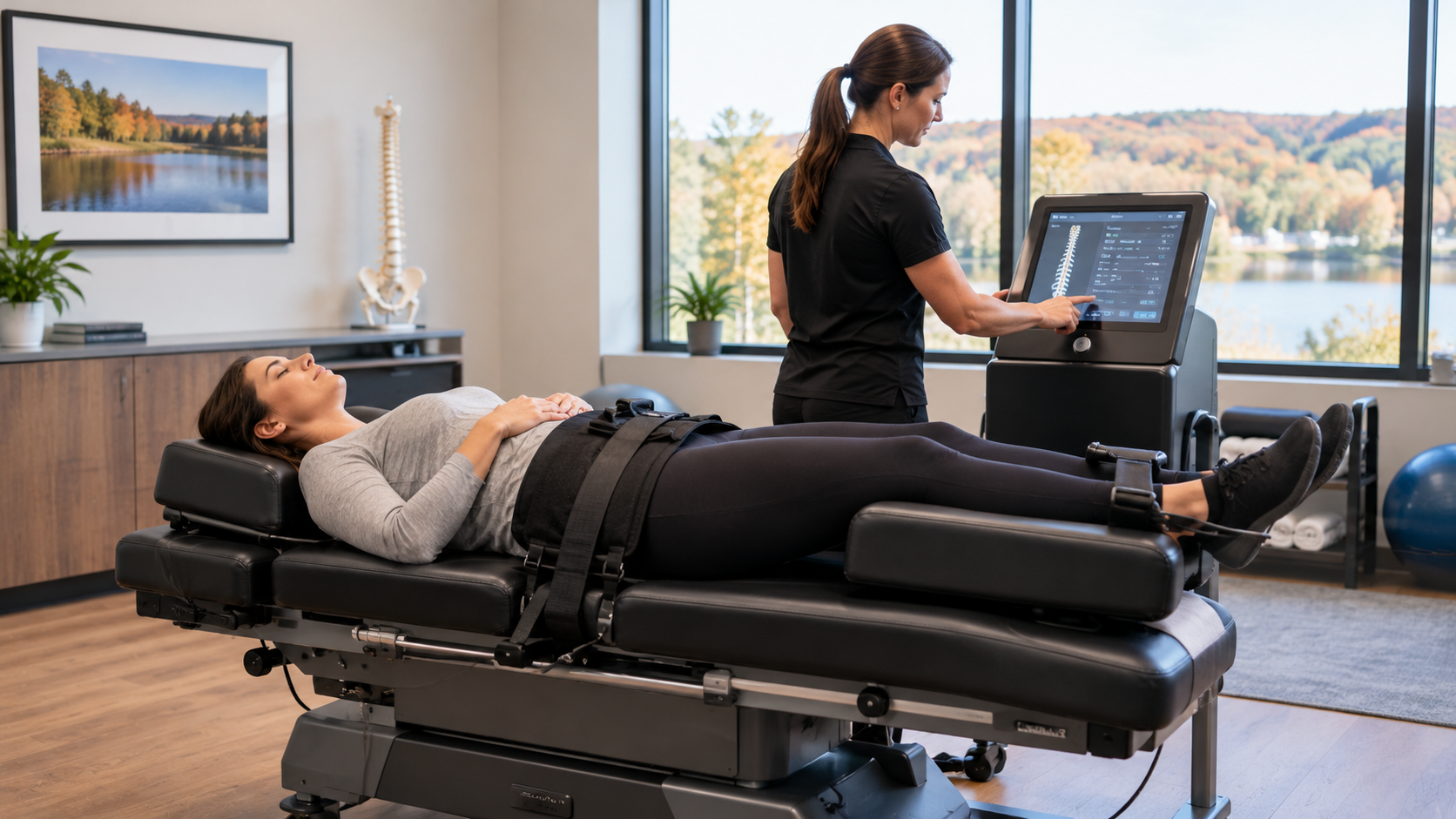
Most articles about spinal decompression in Oak Creek focus on the table: how it works, what it feels like, who it helps. Those are important questions. But in my experience, the question that decides whether someone stays better is a different one: what happens in the other 23 hours and 45 minutes of the day?
A decompression session might last 8 to 15 minutes. The rest of your day is spent sitting, driving, lifting, sleeping and moving. If those hours keep loading your spine the same way that caused the problem, the benefits of treatment have a much harder time sticking.
So this post is all about aftercare. I will walk through what to do during your treatment plan, what to do after it ends, and how to handle the very Wisconsin challenges of long winter commutes and snow shoveling. For background on how the treatment itself is delivered locally, Evolved Chiropractic describes its protocol on its page for spinal decompression in Oak Creek, WI, including session length, scheduling and the supportive care it combines with decompression.
A quick note before we start: everything here is general information. Your provider knows your diagnosis and should always have the final say on what is right for you.
Why Aftercare Matters So Much
Nonsurgical spinal decompression aims to reduce pressure on discs and nerves through slow, cycled pulling. That can help calm symptoms. But it does not change the habits, strength or movement patterns that may have contributed to the problem in the first place.
That is why quality programs do not rely on the table alone. Evolved Chiropractic, for example, combines decompression with corrective chiropractic care, rehabilitation exercises and adjunctive therapies meant to support the ligaments, tendons and muscles around the spine. The clinic also recommends home exercise and periodic office visits to help maintain results and reduce the chance of recurrence.
MedlinePlus, from the U.S. National Library of Medicine, makes a similar point in its overview of herniated disk care and physical therapy: physical therapy is important for nearly everyone with disk disease, and therapists teach people how to lift, dress, walk and strengthen the muscles that support the spine.
In other words, active care is not optional. It is the part of the plan that helps your progress last.
Phase 1: During Your Treatment Plan
The weeks when you are actively coming in for sessions are when your spine is most sensitive to how you treat it. Here is what I suggest discussing with your provider.
Protect the Hours Right After a Session
After a session, many people feel looser and lighter. That is a good feeling, but it is not a signal to go lift something heavy. Ask your provider how they want you to spend the rest of that day. Common suggestions include:
- Taking a short, easy walk instead of sitting for a long time
- Avoiding heavy lifting, bending and twisting
- Not jumping straight into a hard workout
- Paying attention to how your body responds that evening
Show Up Consistently
Spinal decompression in Oak Creek at the clinic I am referencing is typically scheduled 2 to 3 times per week. Consistency matters. Skipping sessions or spacing them out unpredictably makes it harder for you and your provider to tell what is working.
Track What Changes
I always recommend keeping a simple log on your phone. Note things like:
- Pain level in the morning and evening
- Whether leg symptoms are spreading or shrinking
- How long you can sit or stand comfortably
- How you slept
- Any new numbness, tingling or weakness
Bring that log to your progress checks. It gives your provider far more useful information than "I think it's a little better."
Report Warning Signs Quickly
Tell your provider right away if you notice new numbness, increasing weakness, or pain that is clearly getting worse over several sessions. And get emergency care immediately for loss of bladder or bowel control, numbness in the groin or inner thighs, or rapidly worsening leg weakness.
Phase 2: Fixing Your Sitting Life
For a lot of people around Oak Creek, Franklin and South Milwaukee, the biggest daily load on the lower back is sitting: at a desk, in meetings, and in the car on I-94 or Highway 100. Many people with disc problems notice that long periods of sitting make their symptoms worse. Here is how to make sitting less of an enemy.
Set a Movement Timer
Stand up every 30 to 45 minutes. Walk to refill your water, take a call standing up, or do a gentle stretch your provider has approved. Short, frequent breaks tend to be easier to stick with than one long break.
Adjust Your Workstation
You do not need expensive gear to make a difference. Start with these basics:
- Chair height: feet flat on the floor, knees roughly level with your hips.
- Lower back support: a small cushion or rolled towel behind your lower back can help you maintain a comfortable curve.
- Screen height: top of the monitor at or slightly below eye level, so you are not craning forward.
- Keyboard and mouse: close enough that your elbows stay near your sides.
Rethink Your Commute
If you drive a lot, adjust your seat so you are not reaching for the pedals or the wheel. Add lower back support if your seat lacks it. On longer drives, plan to stop and stretch your legs. Getting out of the car carefully matters too: turn your whole body and both legs together instead of twisting out one leg at a time.
Consider a Sit-Stand Setup
If your workplace allows it, alternating between sitting and standing can break up long periods of static load. Do not swap all-day sitting for all-day standing, though. The goal is variety, not a new fixed position.
Phase 3: Building Strength and Mobility
This is where long-term results are built. Your provider should give you specific exercises for your condition, and you should follow their guidance over anything general you read online, including here. That said, here are the broad categories most spine rehab programs touch on.
Core Stability
"Core" does not just mean your abs. It includes the deep muscles around your spine, pelvis and hips that help keep your lower back steady when you move. Programs often start with gentle, controlled exercises and progress gradually.
Hip Mobility and Strength
Stiff or weak hips often push extra work onto the lower back. Exercises that improve hip movement and strengthen the glutes are common parts of spine rehab.
Walking
Walking is one of the simplest and most underrated tools for back health. The WHO lists low physical activity as a risk factor for non-specific low back pain. If your provider clears it, regular walks keep your spine moving and support overall health. In nicer months, local trails and parks make it easy. In winter, an indoor track, a mall walk or a treadmill can fill the gap.
Progress Gradually
The most common mistake I see is doing too much too soon after feeling better. Increase exercise intensity slowly, and check in with your provider before adding new activities like running, heavy lifting or high-impact sports.
Phase 4: Lifting, Chores and Daily Life
Many flare-ups happen during ordinary tasks. A few habits can make a big difference.
Lift With Your Legs and Keep It Close
Bend at your hips and knees instead of rounding your back. Hold the object close to your body. Avoid twisting while lifting; turn your feet instead.
Break Big Jobs Into Small Ones
Carry two lighter grocery bags instead of one heavy one. Split yard work across several days. Ask for help moving furniture.
Watch Repetitive Bending
Gardening, laundry, loading the dishwasher and picking up toys all involve repeated bending. Try kneeling, using a stool, or raising the work surface when possible.
Get Smart About Sleep
Many people with disc-related pain sleep better on their side with a pillow between the knees, or on their back with a pillow under the knees. Ask your provider which position suits your condition. A mattress that is too soft or too worn can also make mornings harder.
Phase 5: Surviving Wisconsin Winters
If you live in Southeast Wisconsin, winter deserves its own section.
Snow Shoveling
Shoveling combines bending, lifting and twisting, often in the cold and often in a hurry. That is a tough mix for an irritated disc. During and after your plan for spinal decompression in Oak Creek, consider:
- Using a snow blower or hiring help, especially during active treatment
- Pushing snow instead of lifting it whenever possible
- Using a lightweight, ergonomic shovel
- Taking smaller scoops and frequent breaks
- Warming up with a short walk or gentle movement before you start
- Never throwing snow over your shoulder with a twist
Ice and Falls
A hard fall on ice can undo weeks of progress. Wear shoes or boots with good traction, use handrails, and take shorter steps on slippery surfaces. If you do fall and develop severe pain, numbness or weakness, get checked promptly.
Cold Weather Stiffness
Many people feel stiffer in cold weather. Dress warmly, keep moving through the day, and give your body a few minutes to warm up before demanding activities.
Holiday Lifting
Hauling decorations from the basement, carrying heavy dishes and long car trips to visit family all add up. Plan ahead and ask for help.
Phase 6: After Your Treatment Plan Ends
Finishing your scheduled sessions of spinal decompression in Oak Creek is a milestone, not a finish line. Here is how to stay on track.
Keep Doing Your Home Program
The exercises that helped during treatment are the same ones that help you stay well afterward. Many people stop once pain fades, then wonder why symptoms come back months later.
Plan Periodic Check-Ins
Evolved Chiropractic recommends periodic office visits after the main plan to help maintain results. Regular check-ins give your provider a chance to catch small issues before they become big ones. Many people also continue with corrective chiropractic care to support long-term spinal health, so joint motion and alignment stay on track as well.
Know Your Early Warning Signs
Most people have a pattern. Maybe a flare-up starts with stiffness after long drives, or a twinge after a weekend of yard work. Learn your early signals and respond early: more movement breaks, a return to your home exercises, and a call to your provider if things do not settle.
Revisit Your Goals
At the start of care, you probably had goals like sitting through a workday, playing with your kids or getting back to golf. Once those are met, set new ones. Goals keep you motivated to maintain your habits.
A Simple Daily Checklist
If all of this feels like a lot, here is a short version you can follow every day while recovering from back pain:
- Move every 30 to 45 minutes when sitting.
- Do your prescribed home exercises.
- Walk, if your provider has cleared it.
- Lift with your legs, keep loads close and avoid twisting.
- Sleep in a supported position.
- Log your symptoms and note any changes.
- Call your provider about new or worsening symptoms.
Small, boring habits done consistently are what protect progress.
What Your Provider Is Watching for at Progress Checks
Progress checks are not just a formality. They are where your plan for spinal decompression in Oak Creek gets fine-tuned. Knowing what your provider is looking for helps you give better information.
Changes in Where You Feel Pain
Leg pain that moves back toward the lower back, sometimes called centralization, is often considered a positive sign, even if your back still aches. Pain that spreads farther down the leg is something your provider needs to hear about.
Function, Not Just Pain
Can you sit longer? Stand up from a chair more easily? Walk farther before needing a break? Sleep through the night? These functional changes often tell more of the story than a single pain number.
How You Respond to Settings
Your provider may adjust force, angle or session length based on how you respond. Honest feedback about what feels helpful or uncomfortable makes those adjustments more accurate.
Whether Your Home Program Is Working
Expect questions about your exercises: Are you doing them? Are they getting easier? Do any make symptoms worse? Your program should evolve as you improve.
Weight, Nutrition, Hydration and Smoking
These topics can feel personal, but they are worth a calm, practical conversation with your provider and your doctor.
The WHO lists obesity and smoking, along with low physical activity and high physical stress at work, among the risk factors for non-specific low back pain. You do not need a dramatic overhaul to make progress. Small, steady changes, like adding regular walks, building balanced meals, staying hydrated through the day and getting support to cut back on smoking, can support your overall health and your back at the same time.
If weight loss is one of your goals, your primary care doctor is a good partner for that conversation. Your decompression provider can help you choose activities that are kind to your back while you work on it.
Sleep, Stress and Pain
Pain and sleep feed each other. Poor sleep can make pain feel worse, and pain can make it harder to sleep. Stress plays into that cycle too, since tense muscles and a worried mind rarely help a sore back.
A few practical ideas to discuss with your provider:
- Keep a consistent bedtime and wake time, even on weekends.
- Experiment with pillow positions to support your spine.
- Try gentle movement or approved stretches in the evening.
- Wind down without screens for a bit before bed.
- Talk to your doctor if poor sleep or low mood is persistent.
Common Aftercare Mistakes I See
Even motivated people fall into the same traps. Here are the ones to watch for:
- Stopping exercises once pain fades. Feeling better is the result of the work, not a reason to stop it.
- Doing too much too soon. A great week is not the moment to move furniture or start a new high-impact sport.
- Ignoring the commute. Long drives with poor support can quietly undo progress.
- Skipping sessions during busy weeks. Consistency matters most in the early phase of treatment.
- Treating winter like any other season. Shoveling, ice and cold stiffness deserve a plan.
- Not reporting changes. Your provider can only adjust what they know about.
- Relying on painkillers to push through. Masking pain to keep doing aggravating activities usually backfires.
Building Your Personal Back-Care Plan
The best aftercare plan is one you will actually follow. Here is a simple way to build yours with your provider:
Step 1: Identify Your Triggers
Write down the activities that most often bring on symptoms. Long sitting? Lifting? Yard work? Driving? Sleep position?
Step 2: Pick One Fix Per Trigger
For each trigger, choose one realistic change. For example, a movement timer for long sitting, a lumbar cushion for driving, or a snow blower for winter.
Step 3: Schedule Your Exercises
Put your home program on your calendar like an appointment. Ten to fifteen minutes at the same time each day is easier to keep than an ambitious routine you skip.
Step 4: Plan Your Check-Ins
Agree with your provider on when to come back after your main plan ends, and what symptoms should prompt an earlier visit.
Step 5: Review Every Few Months
Life changes. A new job, a new hobby or a move can introduce new demands on your back. Update your plan when that happens.
A written plan, even a simple one on your phone, turns good intentions into habits. It is also a great way to keep spinal decompression in Oak Creek from being a one-time event and make it part of a bigger, longer-lasting approach to spine health.
Questions to Ask Before Your Final Session
As you near the end of your scheduled plan for spinal decompression in Oak Creek, set aside a few minutes with your provider to plan what comes next. These questions help make the handoff from clinic care to self-care smooth:
- Which of my home exercises matter most now, and how often should I do them?
- When should I progress them, and what does progress look like?
- Which activities can I return to now, and which should I build up to gradually?
- How often should I come back for check-ins?
- What early warning signs should prompt me to call sooner?
- Is there anything about my work setup, commute or hobbies I should still change?
Write the answers down. Many people leave their last visit feeling great and then forget the details a few weeks later. A short written plan keeps the habits that helped you from slipping away, and it gives you something concrete to review if symptoms ever return.
My Honest Take
I think aftercare is the most overlooked part of spinal decompression in Oak Creek, or anywhere else. People put so much attention on the table that they forget the table is only a small slice of the week. The people who tend to do best, in my experience, are the ones who treat their sessions as one part of a bigger plan: consistent visits, honest communication, daily movement, better sitting habits and a home exercise routine they actually stick with.
Nobody can promise you a specific result. But you can control a lot of what happens between visits, and that control is powerful.
If I had to pick one habit to start with, it would be movement breaks during long periods of sitting. It costs nothing, takes a few seconds, and touches more hours of your day than any other change on this list.
Frequently Asked Questions
1. What should I do right after a spinal decompression session in Oak Creek?
Most people return to normal activity, but it is wise to take a short walk, avoid heavy lifting, bending and twisting, and skip intense workouts that day. Follow your provider's specific instructions for your condition.
2. Can I go to work after a decompression session?
Yes, most people can. If you sit at a desk, take movement breaks every 30 to 45 minutes and set up your workstation to support a comfortable lower back position.
3. Do I need to keep doing exercises after treatment ends?
Yes. Home exercises build the strength and mobility that help keep symptoms from returning. Many flare-ups happen when people stop their program once pain fades.
4. How can I make sitting easier on my lower back?
Use a chair that keeps your feet flat and knees near hip level, add lower back support, raise your screen to eye level, and stand up regularly. Variety in position matters more than any single perfect posture.
5. Is it safe to shovel snow during decompression treatment?
Ask your provider first. During active treatment, many people are advised to use a snow blower or get help. If you do shovel, push rather than lift, take small scoops and never twist while throwing snow.
6. What sleeping position is best after decompression?
Many people with disc-related pain find side sleeping with a pillow between the knees, or back sleeping with a pillow under the knees, more comfortable. Your provider can suggest what fits your condition.
7. How often should I get check-ups after my plan ends?
It varies by person. The Oak Creek clinic referenced here recommends periodic office visits after the main plan to help maintain results. Ask your provider what schedule makes sense for you.
8. What are signs my back problem is coming back?
Early signs often include returning stiffness, pain after long sitting, or leg symptoms starting to spread again. Respond early with movement, home exercises and a call to your provider.
9. Should I combine decompression with chiropractic adjustments?
Many plans do. Decompression targets disc and nerve pressure, while adjustments focus on joint motion. Together they address more than one part of the problem.
10. When should I get emergency help instead of waiting for my next visit?
Seek emergency care right away for loss of bladder or bowel control, numbness in the groin or inner thighs, rapidly worsening leg weakness, or severe pain after a fall.
Final Thoughts
Spinal decompression in Oak Creek can be a helpful part of recovering from disc-related back pain, but the table is only one piece. What you do at your desk, in your car, in your yard and on your driveway in January matters just as much.
Move often, strengthen steadily, lift smart, sleep well and stay in touch with your provider. Those everyday choices are what turn short-term relief into long-term progress. Your future self, the one who gets through a whole winter without a flare-up, will be glad you put in the effort.

 English
 Arabic
 French
 Spanish
 Portuguese
 Deutsch
 Dutch
 Italiano
 Russian
 Romaian
 Portuguese (Brazil)
 Greek