


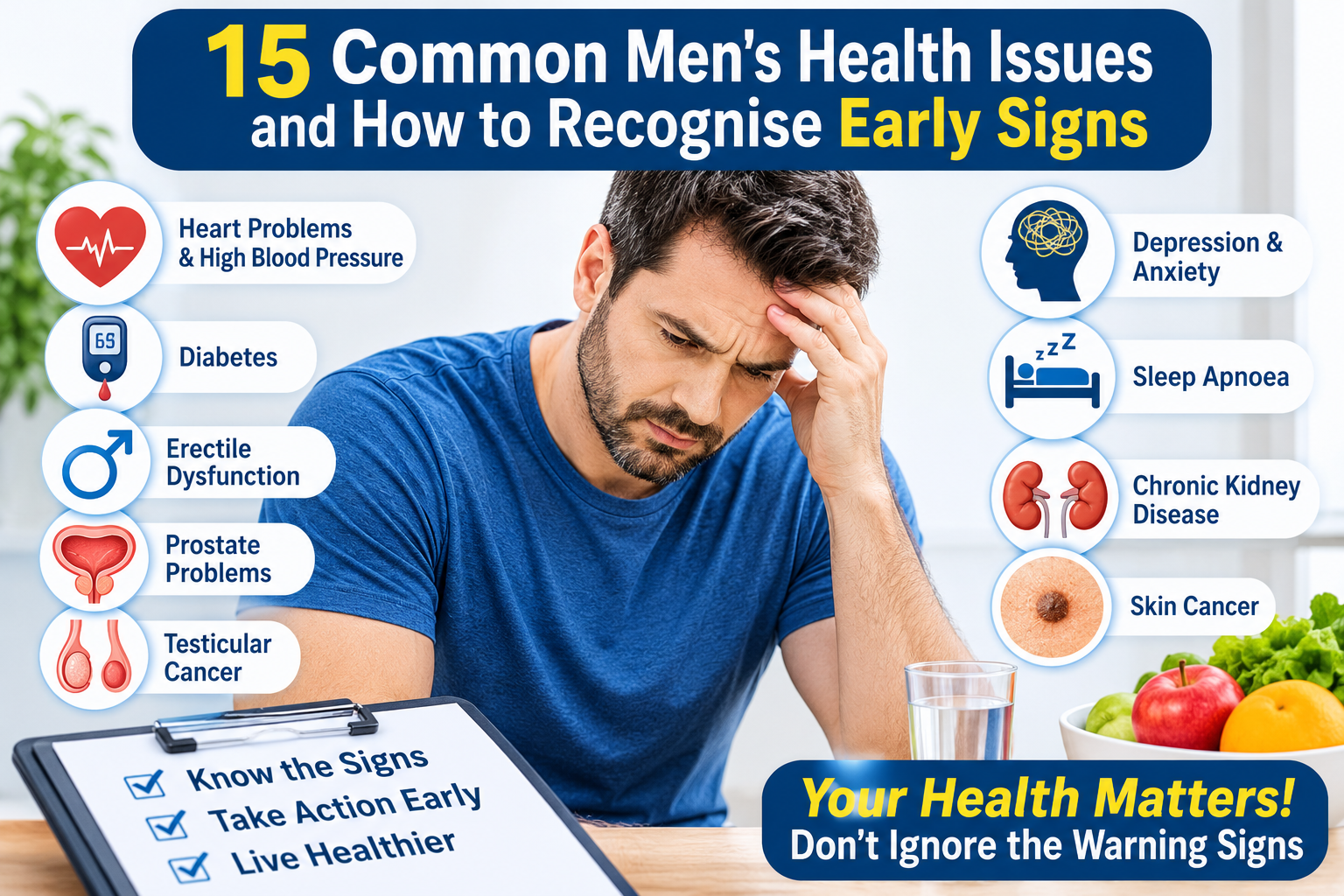
Common Men's Health Issues: Why Early Recognition Matters
Common Men's Health Issues can affect energy, relationships, fertility, confidence and long-term wellbeing. Some develop quietly, while others cause noticeable changes that are easy to dismiss as stress, ageing or temporary discomfort. Recognising early warning signs gives you a better chance of receiving timely assessment and effective care.
Men's health includes physical, sexual and mental wellbeing. Risk is shaped by age, family history, hormones, lifestyle, infections and existing medical conditions. Not every symptom signals a serious disease, but persistent, worsening or unusual changes deserve attention. A check-up is not a sign of weakness; it is a practical way to protect your health.
The following guide explains 15 conditions, the signs to notice and when to seek medical advice. A clinician can assess your history, examine you and arrange appropriate tests.
1. Cardiovascular Disease and Heart Problems
Heart disease includes conditions affecting the heart muscle, valves and blood vessels. High blood pressure and unhealthy cholesterol can damage arteries over time, often without obvious symptoms.
Early clues may include breathlessness during ordinary activity, unusual fatigue, reduced exercise tolerance, ankle swelling or chest pressure. Sudden chest discomfort, severe breathlessness, fainting or cold sweats may indicate a heart attack. Seek emergency help immediately rather than driving yourself.
These Common Men's Health Issues deserve early attention.
Treatment may involve lifestyle changes and prescribed medicines.
2. High Blood Pressure
Hypertension is persistently raised pressure in the arteries. It is often called a silent condition because many people feel completely well.
Most men cannot recognise it through symptoms. The only dependable approach is measurement with a validated blood pressure monitor or at a clinic.
These Common Men's Health Issues deserve early attention.
Untreated hypertension increases the likelihood of stroke, heart attack, kidney disease and heart failure. Ask how often you should be checked, particularly if you have diabetes, kidney disease, excess weight or a family history.
3. Type 2 Diabetes
Type 2 diabetes occurs when the body cannot use insulin effectively or produce enough to keep blood glucose in a healthy range. It may develop gradually.
Watch for increased thirst, frequent urination, persistent tiredness, blurred vision, slow-healing cuts, recurrent infections or unexplained weight loss.
These Common Men's Health Issues deserve early attention.
A clinician may use fasting glucose or an HbA1c test. Early management can include physical activity, weight management and medication when needed.
4. Erectile Dysfunction
Erectile dysfunction (ED) means regularly having difficulty achieving or maintaining an erection suitable for sexual activity. Occasional difficulty can happen, but repeated changes deserve assessment.
Possible clues include weaker erections, losing an erection during sex, reduced morning erections or anxiety about sexual performance.
These Common Men's Health Issues deserve early attention.
ED can sometimes appear before other signs of cardiovascular disease because penile arteries are relatively small. A clinician can review medicines, check cardiovascular risk and recommend evidence-based treatment. Never use erection medicines with nitrate drugs unless a specialist specifically advises you.
5. Prostate Enlargement
Benign prostatic hyperplasia (BPH) is a non-cancerous increase in prostate size that becomes more common with age. The enlarged gland can press on the urethra and affect urine flow.
Early signs include a weak or interrupted stream, difficulty starting, dribbling, frequent urination, urgency and waking repeatedly at night to urinate. These symptoms can also occur with infection, prostate inflammation or cancer, so they should not be self-diagnosed.
These Common Men's Health Issues deserve early attention.
A clinician may ask about symptoms, review medicines, test urine and consider other investigations. Inability to pass urine is an emergency.
6. Prostate Cancer
Prostate cancer may cause no symptoms in its early stages. When symptoms occur, they can resemble prostate enlargement: difficulty urinating, a weak stream, blood in urine or semen, or persistent pelvic or back pain.
Risk is influenced by age and family history; some populations have higher rates and may benefit from earlier discussion. A prostate-specific antigen (PSA) blood test can help assess risk, but it is not a definitive diagnosis. Infection and benign enlargement can also raise PSA.
These Common Men's Health Issues deserve early attention.
Discuss possible benefits, false-positive results, further testing and overtreatment with a clinician, taking your age, health and family history into account.
7. Testicular Cancer
Testicular cancer is more common in younger and middle-aged adult men than many other cancers. It is often treatable, especially when identified promptly.
Notice a new lump, swelling, a change in testicle size or shape, a heavy feeling in the scrotum, or a persistent dull ache in the groin or lower abdomen. A sudden, severe testicular pain is an emergency because testicular torsion can cut off blood supply.
These Common Men's Health Issues deserve early attention.
Report a new lump promptly, even if it does not hurt.
8. Male Infertility
Male infertility refers to difficulty contributing to conception after regular unprotected sex over a period of time. It may involve low sperm production, poor sperm movement, abnormal sperm shape, obstruction or sexual-function problems.
Clues can include testicular injury or surgery history, previous genital infection, problems with ejaculation, a lump or swelling, or signs of hormonal imbalance such as reduced facial hair and low libido. A semen analysis is a key initial test.
These Common Men's Health Issues deserve early attention.
Avoid testosterone supplements or anabolic steroids when trying to conceive; they can suppress sperm production.
9. Sexually Transmitted Infections
Sexually transmitted infections (STIs), including chlamydia, gonorrhoea, syphilis and HIV, may cause symptoms or remain unnoticed. Anyone who is sexually active can be affected.
Possible signs include burning when urinating, penile discharge, genital sores, blisters, rash, testicular discomfort or swollen groin glands. Many infections cause no symptoms, so testing based on sexual exposure is important. Condoms reduce but do not eliminate every risk.
Seek testing after a possible exposure, and avoid sexual contact until you have received advice and completed any required treatment. Do not take leftover antibiotics; the correct medicine depends on the infection and resistance patterns.
10. Scrotal Inflammation
Epididymitis is inflammation of the coiled tube behind each testicle, where sperm mature and travel. It may be caused by a bacterial infection, including an STI, or by urinary bacteria. Symptoms often develop over hours or days.
Typical signs include pain and tenderness in one testicle, swelling, warmth, redness, discomfort during urination, urinary frequency or discharge. Fever can occur. Sudden severe scrotal pain needs emergency assessment to rule out testicular torsion; do not assume it is inflammation.
A clinician may request urine tests, STI tests and an ultrasound when needed. Treatment depends on the cause and can include prescribed antibiotics, rest, scrotal support and pain relief. Untreated infection can lead to complications, so prompt assessment matters.
11. Low Testosterone
Testosterone levels vary during the day and decline gradually with age, but symptoms alone cannot confirm deficiency.
Possible signs include reduced sexual desire, fewer spontaneous erections, fatigue, reduced muscle mass, increased body fat, low mood and reduced bone strength. Sleep problems, obesity, chronic illness and some medicines can produce similar symptoms.
Diagnosis usually requires compatible symptoms and consistently low early-morning blood test results, sometimes repeated. Men who may want children should discuss fertility before considering testosterone therapy.
12. Depression and Anxiety
Mental health conditions are medical concerns, not personal failures. Depression may cause persistent sadness, irritability, loss of interest, low energy, poor concentration, sleep or appetite changes and feelings of hopelessness. Anxiety may involve constant worry, tension, restlessness, panic or physical symptoms such as a racing heart.
Some men describe anger, overwork, increased drinking or withdrawal rather than sadness. If symptoms last, affect daily life or strain relationships, speak with a healthcare professional.
If you may harm yourself or cannot stay safe, contact emergency services or a crisis service now and tell someone you trust. You do not need to manage a crisis alone.
13. Sleep Apnoea
Obstructive sleep apnoea occurs when the upper airway repeatedly narrows or closes during sleep, interrupting breathing. It can affect concentration, mood, blood pressure and cardiovascular health.
Common clues include loud habitual snoring, witnessed pauses in breathing, gasping during sleep, morning headaches, dry mouth and daytime sleepiness.
A clinician may recommend a sleep study at home or in a sleep centre. Treatment can include positive airway pressure, weight management, positional strategies or selected dental devices. Avoid driving when dangerously sleepy, and seek assessment if tiredness affects work or safety.
14. Chronic Kidney Disease
Chronic kidney disease (CKD) means the kidneys have reduced function or other signs of damage over at least three months. Diabetes and hypertension are major causes.
Early CKD often has no noticeable symptoms. Later signs may include swollen ankles, changes in urination, tiredness, nausea, itchy skin, muscle cramps or breathlessness.
Blood tests estimate kidney filtration, while urine tests look for albumin or other abnormalities. Ask a clinician before taking frequent anti-inflammatory painkillers or supplements if kidney function is uncertain.
15. Skin Cancer
Men may overlook changing moles or persistent rough patches, particularly on the scalp, ears, face, back and shoulders. Basal cell and squamous cell cancers often appear on sun-exposed skin; melanoma can develop anywhere.
Look for a new or changing spot, asymmetry, irregular borders, varied colour, growth, bleeding, itching or a sore that does not heal. A rough, scaly patch that persists also deserves review.
A clinician can examine suspicious lesions and arrange a biopsy if needed. Arrange an assessment for any spot that changes or concerns you.
How Can You Reduce Your Risk and Notice Changes Early?
Early action does not mean expecting illness; it means checking risks and getting answers before problems interfere.
-
Book regular health check-ups and ask which screenings suit your age, family history and personal risks.
-
Check blood pressure, cholesterol and blood glucose when recommended.
-
Eat a varied diet with vegetables, fruit, whole grains, beans and suitable protein sources.
-
Aim for regular physical activity, including aerobic exercise and strength work, while increasing activity gradually.
-
Avoid tobacco and seek support to stop smoking.
-
Limit alcohol and avoid recreational drugs or non-prescribed performance-enhancing hormones.
-
Use condoms, discuss STI testing and seek care for genital symptoms.
-
Protect skin from excessive ultraviolet exposure and examine changing areas.
-
Prioritise sleep and discuss persistent snoring or daytime exhaustion.
-
Talk openly about mood, sexual function, urination and fertility.
Some men explore complementary approaches. A balanced diet, adequate sleep and activity support general wellbeing, but supplements are not substitutes for diagnosis or proven treatment. Products sold by Herbal Care Products or any other retailer should be checked for ingredients, evidence, interactions and quality with a qualified healthcare professional, especially if you take medication or have a chronic condition.
Can Lifestyle Changes Replace Medical Treatment?
No. Healthy habits can reduce risk and support treatment, but they cannot reliably cure infections, cancer, diabetes, severe hypertension or other diagnosed diseases. Do not delay care while trying a home remedy. For scrotal pain, chest pain, stroke symptoms, inability to urinate, severe breathlessness or suicidal thoughts, seek urgent help.
Frequently Asked Questions
What are the earliest signs that a man may have a health problem?
Early signs vary. Persistent fatigue, unexplained weight change, changes in urination, sexual difficulties, a new lump, unusual pain, mood changes or reduced exercise tolerance may signal a problem. Some conditions, including high blood pressure and early kidney disease, cause no symptoms. Screening and check-ups are therefore important.
At what age should men start regular health checks?
Adults should establish routine primary care and discuss blood pressure, cholesterol, diabetes risk, vaccinations, sexual health and mental wellbeing. Cancer screening depends on age, family history and local guidelines.
Which symptoms need urgent medical attention?
Get emergency help for chest pressure, sudden breathlessness, fainting, facial drooping, one-sided weakness, sudden severe testicular pain, inability to urinate, major bleeding or an erection lasting four hours. Seek immediate crisis support if you may harm yourself.
Is a natural treatment safe for genital or urinary symptoms?
Not necessarily. Natural does not automatically mean safe or effective. Genital pain, discharge, swelling or urinary symptoms may be caused by infection or another condition requiring testing and prescription treatment. A Natural Treatment for Epididymitis should never replace assessment or antibiotics when a bacterial infection is diagnosed. Ask a clinician or pharmacist about supplements and possible interactions.
Can erectile dysfunction indicate another disease?
Yes. Persistent ED may be associated with diabetes, vascular disease, high blood pressure, hormonal problems, medication effects or psychological stress. It is worth discussing because identifying the underlying cause may improve both sexual and general health.
Conclusion
Paying attention to changes is one of the most useful ways to protect long-term wellbeing. Common Men's Health Issues range from silent conditions to symptoms that need urgent care, and early signs are not always obvious. Keep routine appointments, speak honestly about concerns and seek prompt assessment for new or persistent symptoms. With appropriate screening, evidence-based treatment and sustainable daily habits, many health risks can be managed effectively. Your health deserves attention at every age.

 Arabic
 French
 Spanish
 Portuguese
 Deutsch
 Turkish
 Dutch
 Italiano
 Russian
 Romaian
 Portuguese (Brazil)
 Greek