


For people managing diabetes, choosing chocolate can involve more than simply picking a favourite flavour. Sugar content, total carbohydrates, portion size and ingredients are all important considerations.
The good news is that chocolate does not necessarily have to be completely excluded. Understanding nutrition labels and comparing different varieties can help people make more informed decisions about including chocolate in their eating plans.
If you are searching for diabetic chocolate, here are some important things to consider before choosing a product.
What Is Diabetic Chocolate?
Diabetic chocolate generally refers to chocolate marketed as suitable for people who want to manage their sugar or carbohydrate intake.
These products may contain no added sugar, alternative sweeteners or ingredients designed to reduce the amount of sugar compared with conventional chocolate.
However, the term diabetic chocolate does not automatically mean a product is carbohydrate-free or appropriate for everyone with diabetes.
It is important to check the complete nutrition information rather than relying only on marketing descriptions.
What Should You Look for in Chocolate for Diabetics?
When comparing chocolate for diabetics, consider these factors:
1. Sugar Content
Check both total sugars and added sugars where the information is available. No added sugar does not necessarily mean zero total sugar.
2. Total Carbohydrates
Carbohydrates can affect blood glucose levels. Always review total carbohydrates per serving rather than looking at sugar alone.
3. Dietary Fibre
Fibre is another nutritional factor worth considering. Compare the fibre content across products and check the serving size.
4. Alternative Sweeteners
Some no-added-sugar chocolates use alternative sweeteners. Different sweeteners can have different effects on digestion and carbohydrate intake, so reviewing the ingredient list is worthwhile.
5. Portion Size
Even chocolate with reduced sugar can contribute carbohydrates and calories. Paying attention to serving size helps with more informed portion choices.
Is Dark Chocolate Without Sugar a Better Option?
Dark chocolate is often considered by people looking for alternatives to conventional sweet chocolate.
However, not all dark chocolate has low sugar content. Some varieties still contain added sugar, even when they have a high cocoa percentage.
When searching for dark chocolate without sugar, check the nutrition label for total sugars, added sugars and carbohydrates.
A no-added-sugar formulation may be worth comparing with conventional chocolate, but the complete nutritional profile matters more than one individual claim.
Can People with Diabetes Eat Protein Chocolate?
Protein chocolate is another category worth exploring. These products combine the familiar taste of chocolate with added protein.
Some varieties also contain dietary fibre and have reduced sugar content.
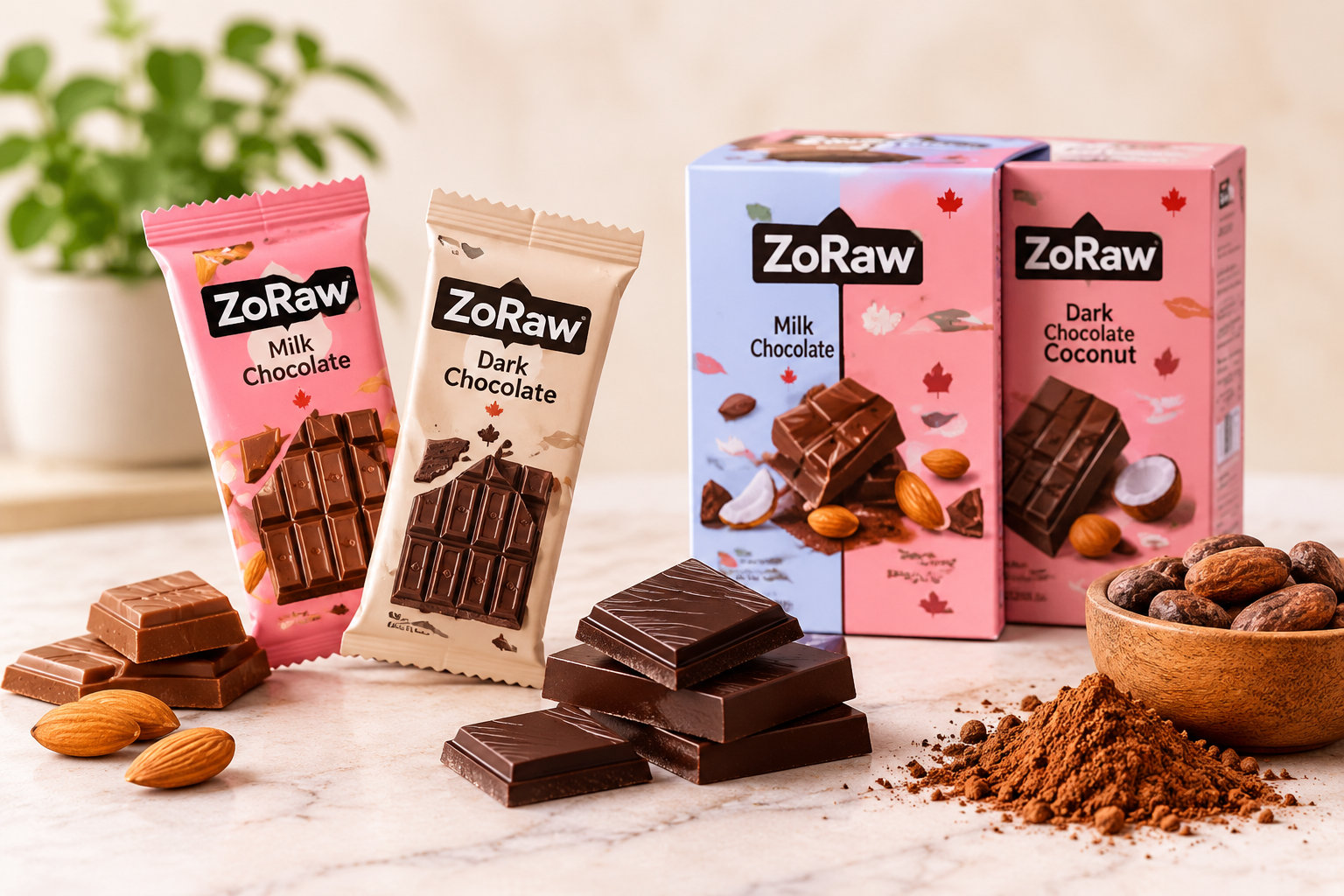
For example, ZoRaw Chocolates offers 60% dark chocolate with 12g of protein and 7g of fibre per 52g serving, with no added sugar.
Its chocolate range provides an alternative for people comparing chocolate options with different nutritional profiles.
However, protein content does not automatically make chocolate suitable for everyone with diabetes. Total carbohydrates, individual responses and portion sizes still matter.
What About No-Added-Sugar Milk Chocolate?
People who prefer creamy chocolate do not always want to switch to dark chocolate.
No-added-sugar milk chocolate offers another option to explore. When comparing products, check the nutrition facts, sweeteners, total carbohydrates and serving size.
The same principle applies to almond milk chocolate and other flavoured varieties. Ingredients and nutritional values can differ considerably between products.
How to Make a More Informed Chocolate Choice
Choosing chocolate while managing diabetes does not have to be confusing. Start by understanding your nutritional requirements and comparing product labels.
Here is a simple checklist:
-
Check total carbohydrates per serving.
-
Compare total and added sugars.
-
Review the sweeteners used.
-
Look at dietary fibre and protein.
-
Pay attention to the recommended serving size.
-
Consider guidance from your healthcare professional or registered dietitian.
Enjoying Chocolate with Greater Awareness
Finding chocolate that matches your preferences and nutritional needs starts with understanding what is inside the product.
Whether you are exploring diabetic chocolate, dark chocolate without sugar or no-added-sugar milk chocolate, take time to compare ingredients and nutrition facts.
ZoRaw Chocolates offers chocolate varieties featuring added protein, fibre and no added sugar, giving consumers additional options to explore.
Final Thought: Chocolate choices are personal, particularly when managing diabetes. Rather than relying on labels such as sugar-free or diabetic-friendly alone, focus on the complete nutritional profile and choose portions that fit your individual dietary plan.

 English
 Arabic
 French
 Spanish
 Portuguese
 Deutsch
 Turkish
 Dutch
 Italiano
 Romaian
 Portuguese (Brazil)
 Greek