


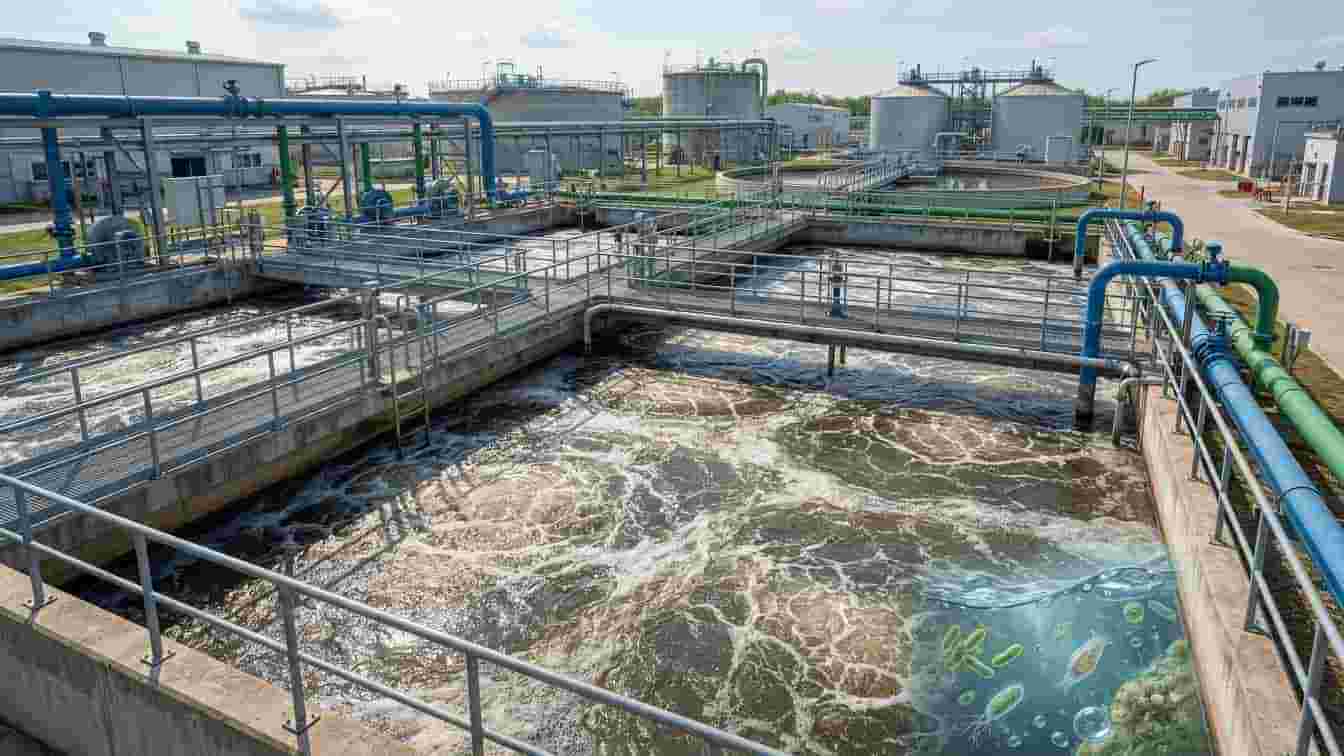
Industrial wastewater varies significantly from one manufacturing sector to another. Dairy processing facilities generate effluent containing fats and proteins, while textile industries produce wastewater containing dyes, chemicals and suspended solids. These differences make selecting the right biological treatment approach important.
Bio culture solutions for wastewater treatment use selected beneficial microorganisms to support the biological breakdown of organic pollutants and maintain treatment plant performance.
Depending on the wastewater characteristics, specialised microbial formulations can be used in aerobic and anaerobic treatment systems across different industrial sectors.
What Are Bio Culture Solutions for Wastewater Treatment?
Bio culture solutions are microbial formulations containing selected bacteria and other beneficial microorganisms used in biological wastewater treatment.
These microorganisms participate in the breakdown of biodegradable organic substances and support different biological treatment processes.
They are commonly used in:
-
Effluent Treatment Plants (ETPs).
-
Sewage Treatment Plants (STPs).
-
Activated sludge systems.
-
Moving Bed Biofilm Reactors (MBBR).
-
Anaerobic treatment systems.
-
Industrial wastewater management facilities.
Different formulations are developed for specific treatment requirements. Therefore, microbial selection should be based on wastewater composition and treatment plant operating conditions.
Types of Wastewater Bioculture Solutions
1. Aerobic Biocultures
Aerobic bacteria require dissolved oxygen to break down biodegradable organic pollutants. These cultures are commonly used in aeration tanks and activated sludge treatment systems.
They support organic matter degradation and help maintain biological treatment activity.
2. Anaerobic Biocultures
Anaerobic bacteria function in the absence of oxygen and participate in the biological breakdown of organic matter.
They are used in anaerobic digesters and other oxygen-free wastewater treatment systems, particularly where wastewater contains high concentrations of biodegradable organic material.
3. Specialised Industrial Biocultures
Some wastewater streams require specialised microbial formulations based on the type of industrial pollutants present.
For example, dairy wastewater may require cultures suitable for treating organic matter associated with milk residues and fats. Textile wastewater may require a different treatment approach depending on the dyes, chemicals and biodegradable compounds present.
4. Nutrient Removal Biocultures
Certain specialised microorganisms participate in biological nitrogen and phosphorus removal processes.
These cultures may be considered in wastewater treatment systems where nutrient management is an important requirement.
Industrial Applications of Specialised Biocultures
Different industries can benefit from microbial treatment support.
-
Dairy industry: Supports biological treatment of wastewater containing milk residues, proteins and fats.
-
Pharmaceutical industry: Selected for suitable biodegradable effluent streams and specific biological treatment requirements.
-
Textile industry: Used as part of biological treatment programmes for wastewater containing biodegradable organic compounds.
-
Pulp and paper industry: Supports the treatment of wastewater containing organic substances and biodegradable process residues.
-
Sugar industry: Can support biological treatment of effluent containing high organic loading.
-
Food processing industry: Helps support the biological breakdown of organic pollutants from production and cleaning activities.
The suitability of each formulation depends on wastewater testing and the operating conditions of the treatment plant.
How to Select the Right Bioculture Product
Selecting the right microbial solution requires an understanding of the wastewater treatment process.
Before choosing a product, evaluate the following:
Wastewater Characteristics: Check BOD, COD, TSS, pH and other relevant wastewater parameters.
Treatment Configuration: Identify whether the plant uses aerobic, anaerobic, MBBR or activated sludge treatment.
Operating Temperature: Temperature affects microbial growth and biological reaction rates.
Dissolved Oxygen: Aerobic treatment systems require suitable oxygen levels to support bacterial activity.
Organic Loading: Understand the amount and nature of organic pollutants entering the treatment plant.
Dosage Requirements: Follow the manufacturer's recommended application rate and dosing schedule.
It is equally important to investigate process problems such as toxic shock loading, insufficient aeration and unsuitable pH before introducing additional microbial cultures.
Amalgam Biotech's BactaServe Bioculture Solutions
Amalgam Biotech provides BactaServe bioculture products for industrial and biological wastewater treatment applications.
The BactaServe range includes aerobic and anaerobic microbial formulations, along with specialised products developed for different industrial applications, including dairy, pharmaceutical, textile, pulp and paper and sugar wastewater treatment.
By selecting appropriate microbial formulations based on wastewater characteristics, facilities can support organic pollutant degradation and biological treatment operations.
Every industrial wastewater stream has different treatment requirements. Choosing suitable bio culture solutions for wastewater treatment helps facilities build an appropriate biological treatment programme and manage their wastewater more effectively.

 Arabic
 French
 Spanish
 Portuguese
 Deutsch
 Turkish
 Dutch
 Italiano
 Russian
 Romaian
 Portuguese (Brazil)
 Greek