


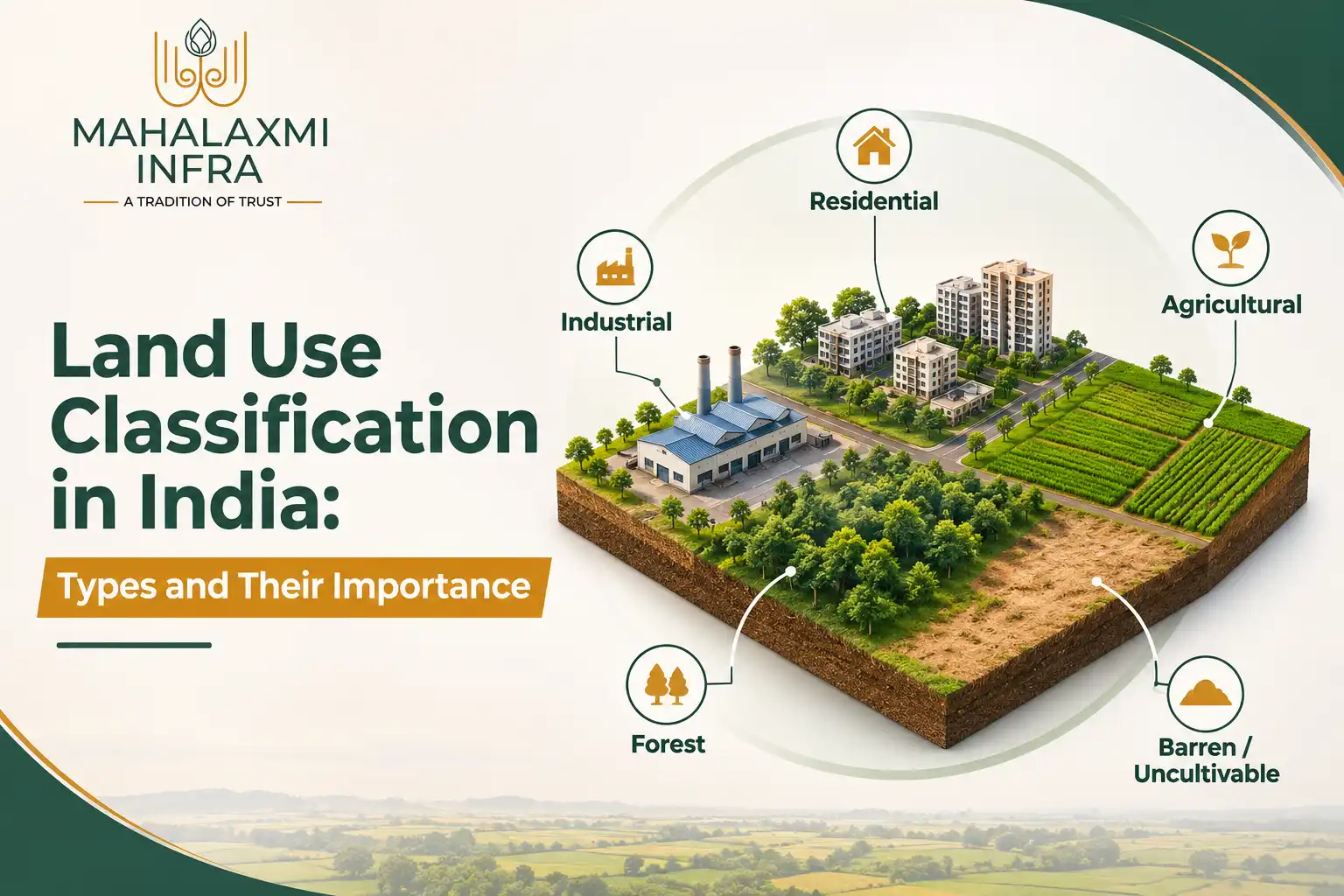
Land is used for different purposes depending on its location, planning regulations and development requirements. Some areas are used for farming, while others are designated for housing, commercial activities, industries or public facilities.
This process of grouping land according to its purpose is called land use classification. It helps authorities manage development and determines how a particular parcel of land can be used.
For property buyers in Maharashtra, understanding land classification is particularly important when evaluating residential plots. It helps them identify whether a property is suitable for their intended use and what permissions may be required.
What Is Land Use Classification?
Land use classification refers to the process of identifying land according to its existing or permitted purpose. Government and planning authorities use development plans, zoning regulations and land records to determine how different areas can be used.
For example, land within a city may be designated for residential buildings, shops, industries, parks or public facilities. Agricultural areas may be reserved for farming and related activities.
The permitted use of a property depends on the applicable Development Plan, Regional Plan and local regulations. Therefore, buyers should verify the land's classification before purchasing it.
What Are the Different Types of Land Use?
The categories may vary between planning authorities, but some commonly recognised types include:
1. Agricultural Land
Agricultural land is used for farming and related activities. This includes growing crops, horticulture, orchards and plantations. Its use and conversion are subject to applicable state regulations.
2. Residential Land
Residential land is designated for housing. It may include individual plots, apartments, housing layouts and residential communities. Buyers planning to construct a home should verify the required residential permissions and layout approvals.
3. Commercial Land
Commercial land is used for business activities such as shops, offices, hotels and shopping complexes. The permitted activities depend on local planning regulations.
4. Industrial Land
Industrial land is allocated for manufacturing, processing, warehousing and related activities. It may have specific requirements concerning access, utilities, safety and environmental compliance.
5. Recreational Land
This category includes parks, playgrounds, gardens and sports facilities. Such spaces are generally intended for public or community recreation.
6. Public and Semi-Public Land
This includes land designated for schools, hospitals, government offices and other public institutions. Its purpose is to provide facilities for the surrounding community.
7. Forest and Protected Land
Forest areas, wetlands and environmentally protected locations fall under this broad category. Development and other activities may be restricted under applicable environmental and land regulations.
These are broad descriptions, not a universal statutory list. Some planning authorities divide categories further or use different classifications.
Why Is Land Use Classification Important?
Land classification affects how a property can be used and developed. It is important for several reasons:
-
Construction permissions: A buyer must check whether the land is permitted for the intended construction.
-
Development restrictions: Some parcels may be reserved for roads, public facilities or open spaces.
-
Property evaluation: Understanding the permitted use helps buyers assess whether a property matches their requirements.
-
Avoiding legal issues: Purchasing land without checking its classification can create problems when applying for development or building permissions.
How to Check Land Use Classification in Maharashtra
In Maharashtra, the relevant documents and planning authority depend on the property's location. For a plot in Nagpur, buyers may need to approach the applicable authority, such as NMRDA, NIT or the municipal corporation.
Here are some important checks:
-
Identify the property: Note its survey number, Gat number or CTS number.
-
Check the planning authority: Identify the authority responsible for the property's location.
-
Verify the Zone Certificate: Where applicable, this document indicates the designated land-use zone under the relevant planning document.
-
Review property records: ain Check the applicable 7/12 extract, property card and ownership documents.
-
Examine the sanctioned layout: If buying a plot in a residential layout, verify its approval and permitted use.
A Zone Certificate helps establish the planning designation of land, but it does not independently prove ownership or guarantee building permission.
For additional information, refer to Mahalaxmi Infra's article on Zone Certificates in Maharashtra.
What Should Buyers Check Before Purchasing a Residential Plot?
Before purchasing a plot, buyers should look beyond its location and price. Some important checks include:
-
Confirm that the land is permitted for residential use.
-
Verify applicable NA permissions or orders.
-
Check the sanctioned layout and plot details.
-
Review ownership documents and title history.
-
Check road access and essential infrastructure.
-
Understand any reservations or restrictions affecting the property.
Mahalaxmi Infra operates in Nagpur's residential real estate market, where buyers can compare available plot options. Understanding the project's location, approvals and existing infrastructure is important before making a decision.
You can review Mahalaxmi Infra's residential projects or contact the team for project-related information.
FAQs
1. What are the 7 types of land use in agriculture?
Common agricultural uses include cropland, permanent crops, pasture, grazing land, horticultural land, plantation land, fallow land and agroforestry. These describe agricultural activities rather than a universal legal classification.
2. What are the 9 types of land use?
Common broad categories include agricultural, residential, commercial, industrial, recreational, public and semi-public, transportation, forest and environmentally protected land. The exact categories depend on the planning authority.
3. What are the different types of land use?
The commonly recognised types include agricultural, residential, commercial, industrial, recreational, public or semi-public, transportation and protected land.
4. What are five types of land use?
Five common types are agricultural, residential, commercial, industrial and recreational land.
Disclaimer: This article is for general informational purposes and does not constitute legal or property investment advice. Land-use rules and permissions may vary by location. Buyers should verify applicable records and approvals with the competent authority before purchasing land.

 English
 Arabic
 French
 Spanish
 Portuguese
 Deutsch
 Turkish
 Dutch
 Russian
 Romaian
 Portuguese (Brazil)
 Greek