


Building muscle takes more than lifting weights. Your body also needs enough protein to repair and grow muscle tissue after exercise. But how much protein do you actually need each day?
The answer depends mainly on your body weight, training routine, and fitness goals.
If you want to know how to calculate protein intake for muscle gain, you do not need a complicated formula. A simple calculation based on your body weight can help you estimate your daily protein target.
In this guide, you will learn how to calculate your protein needs, understand daily protein recommendations, and distribute protein throughout your meals. You can also use our Protein Intake Calculator to estimate your daily requirements.
How Much Protein Do You Need to Build Muscle?
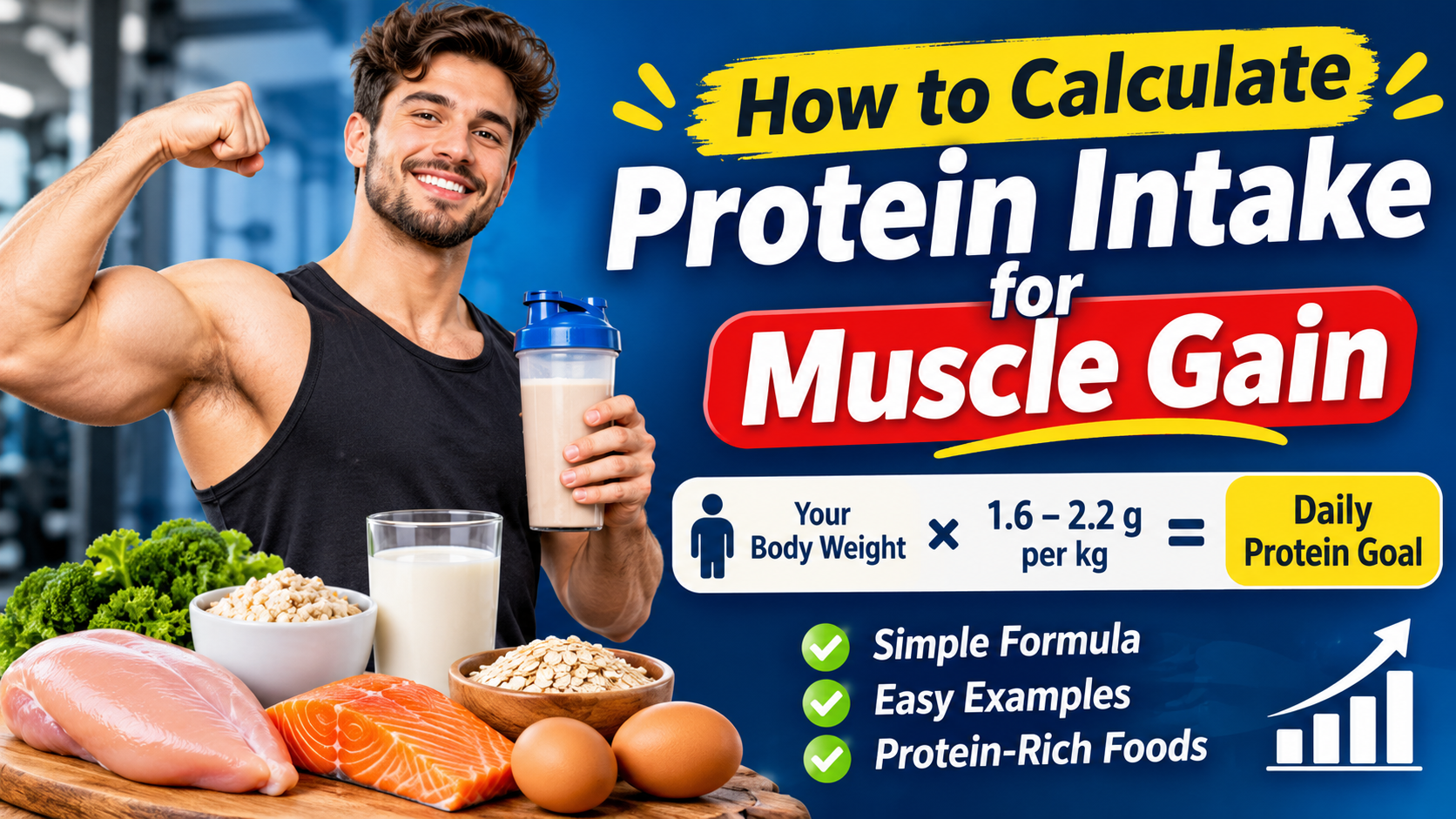
For most healthy adults who regularly perform resistance training, a daily protein intake of approximately 1.6 to 2.2 grams per kilogram of body weight is a practical target for supporting muscle growth.
This is roughly equal to 0.7 to 1.0 grams of protein per pound of body weight.
For example, if you weigh 150 pounds, your daily protein target would be approximately 105 to 150 grams.
Research published in the Journal of the International Society of Sports Nutrition supports daily protein intakes of 1.4 to 2.0 grams per kilogram for most exercising individuals.
However, eating more protein does not automatically mean building more muscle. Resistance training, sufficient calories, and recovery also matter.
How to Calculate Protein Intake for Muscle Gain
The easiest way to calculate your daily protein needs is to multiply your body weight by your chosen protein target.
Protein Intake Formula:
Daily Protein Intake = Body Weight (kg) × Protein Target (g/kg)
For a muscle-building goal, you can start with approximately 1.6 to 2.2 grams per kilogram of body weight.
If you measure your weight in pounds, use this formula instead:
Daily Protein Intake = Body Weight (lbs) × 0.7 to 1.0
Example Calculation
Suppose you weigh 180 pounds and want to build lean muscle.
Using a target of 0.8 grams per pound:
180 × 0.8 = 144 grams
Your estimated daily protein target is 144 grams.
You can adjust this target within the recommended range depending on your training routine, calorie intake, and personal needs.
For a quicker estimate, try our free Protein Intake Calculator.
Protein Intake for Muscle Gain by Body Weight
Your protein needs increase as your body weight increases. The following table provides estimated daily targets using 0.7 to 1.0 grams of protein per pound.
| Body Weight | Daily Protein Target |
|---|---|
| 120 lbs | 84–120 g |
| 130 lbs | 91–130 g |
| 140 lbs | 98–140 g |
| 150 lbs | 105–150 g |
| 160 lbs | 112–160 g |
| 170 lbs | 119–170 g |
| 180 lbs | 126–180 g |
| 190 lbs | 133–190 g |
| 200 lbs | 140–200 g |
| 220 lbs | 154–220 g |
These are general estimates for healthy adults doing resistance training, not medical prescriptions.
How to Divide Your Daily Protein Intake
Getting enough protein throughout the day is more practical than trying to consume most of it in one meal.
A simple approach is to divide your daily protein target into three to five meals.
For example, if your daily target is 144 grams, you could organize your meals like this:
| Meal | Protein Amount |
|---|---|
| Breakfast | 35 g |
| Lunch | 40 g |
| Afternoon Snack | 25 g |
| Dinner | 44 g |
| Daily Total | 144 g |
Try to include a quality protein source in each meal. Research suggests that spreading protein intake across the day can support muscle protein synthesis.
You do not need to consume protein immediately after every workout. Your overall daily intake is more important than following a strict post-workout time window.
Best Protein Foods for Muscle Growth
You can meet your daily protein requirements through regular foods. Protein supplements are optional and are not necessary if your diet already provides enough protein.
Some useful protein sources include:
| Food | Approximate Protein |
|---|---|
| 3 oz chicken breast | 26 g |
| 3 oz salmon | 22 g |
| 1 large egg | 6 g |
| 1 cup milk | 8 g |
| 1 cup Greek yogurt | 20 g |
| 1 cup cooked lentils | 18 g |
| 1/2 cup cooked black beans | 7 g |
| 1 scoop whey protein | 20–25 g |
Actual protein amounts vary by brand, serving size, and preparation method.
If you follow a vegetarian diet, include foods such as soy, lentils, beans, dairy products, nuts, and seeds. Eating a variety of plant-based protein sources can help provide the essential amino acids your body needs.
Does Eating More Protein Help You Gain Muscle Faster?
Not necessarily. Protein supports muscle repair and growth, but there is a limit to how much additional benefit you get from increasing your daily intake.
A systematic review published in the British Journal of Sports Medicine found that the additional muscle-building benefits of protein supplementation generally leveled off around 1.6 grams per kilogram of body weight per day in resistance-training studies.
Consuming more than this amount does not guarantee additional muscle growth.
Instead of focusing only on protein, pay attention to these factors:
-
Follow a consistent strength-training program.
-
Eat enough calories to support your fitness goal.
-
Get adequate sleep and recovery.
-
Include carbohydrates and healthy fats in your diet.
-
Track your daily protein intake.
If you want to estimate your daily energy needs, try our Calorie Intake Calculator.
Final Verdict
Calculating your protein intake for muscle gain is simple. Start by multiplying your body weight in kilograms by approximately 1.6 to 2.2, or your weight in pounds by 0.7 to 1.0.
For example, someone weighing 180 pounds can aim for approximately 126 to 180 grams of protein daily.
Remember that protein alone cannot build muscle. Consistent resistance training, adequate calories, and proper recovery are equally important.
Use the A2Z Calculators Protein Intake Calculator to estimate your daily protein needs and make your nutrition planning easier.
Frequently Asked Questions
1. How much protein do I need to build muscle?
Most healthy adults who perform regular resistance training can aim for approximately 1.6 to 2.2 grams of protein per kilogram of body weight daily. Individual requirements may vary.
2. Is 100 grams of protein enough to build muscle?
It depends on your body weight and training routine. For someone weighing around 140 pounds, 100 grams may be a reasonable starting amount. A heavier individual may need more.
3. How do I calculate protein intake per pound?
Multiply your body weight in pounds by 0.7 to 1.0. For example, a 160-pound person would need approximately 112 to 160 grams of protein daily.
4. Should I eat protein on rest days?
Yes. Your muscles continue repairing and recovering on rest days. Maintaining a consistent daily protein intake can support this process.
5. Is whey protein necessary for muscle gain?
No. Whey protein is a convenient supplement, but you can meet your daily protein requirements through foods such as chicken, eggs, fish, milk, yogurt, beans, and soy.
6. Can I build muscle without eating meat?
Yes. Plant-based foods such as tofu, soybeans, lentils, chickpeas, beans, and nuts can contribute to your daily protein intake. A varied diet can provide the essential amino acids needed for muscle growth.
7. Does protein timing matter for muscle growth?
Total daily protein intake is the main priority. However, distributing protein across meals every three to five hours is a practical strategy supported by sports nutrition research.
8. What happens if I eat too much protein?
Eating more protein than your body needs does not guarantee faster muscle growth. Very high-protein diets may also be unsuitable for people with certain medical conditions. Consult a healthcare professional if you have kidney disease or other health concerns before significantly increasing your protein intake.
Medical Disclaimer: This article provides general educational information, not personalized medical or dietary advice. People with existing medical conditions, especially kidney disease, should consult a qualified healthcare professional or registered dietitian before changing their protein intake.

 English
 Arabic
 French
 Spanish
 Portuguese
 Deutsch
 Turkish
 Dutch
 Russian
 Romaian
 Portuguese (Brazil)
 Greek