


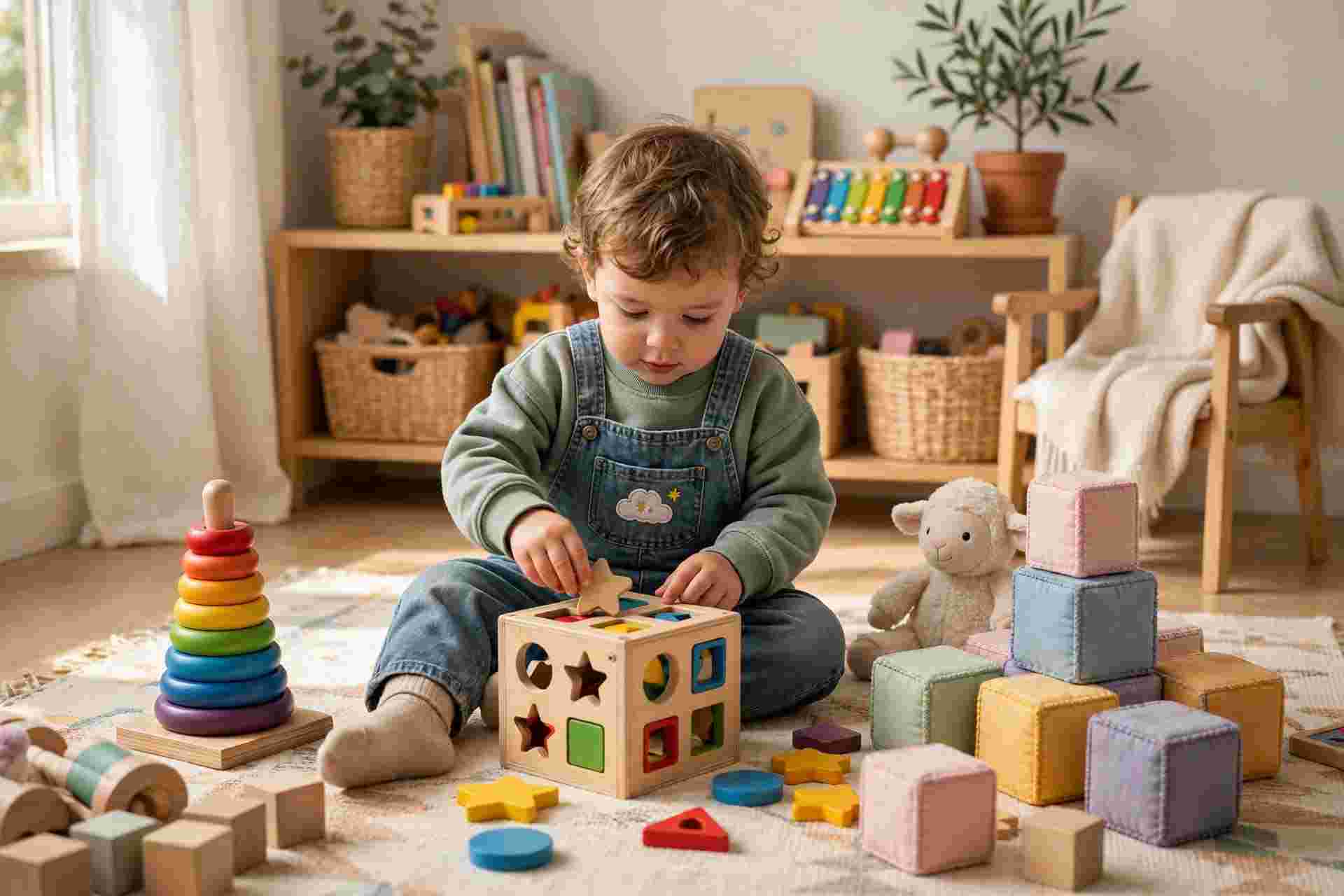
The toddler years are full of new discoveries. Children begin exploring their surroundings with greater confidence, developing new movements and learning how everyday objects work. Play gives them opportunities to practise these skills while enjoying activities that match their growing curiosity.
Choosing suitable toddler toys can help create a varied play environment at home. Different toys can encourage movement, problem solving, sensory exploration and imaginative activities. Rather than filling a room with too many options, parents can focus on toys that support different types of play and are appropriate for their child's age and development.
Make Room for Active Play
Toddlers often learn by moving around and interacting with their environment. Activities that involve reaching, pushing, pulling, stacking and carrying can help children practise coordination and develop greater awareness of their movements.
Simple movement based play can take place in an open area at home. Children might enjoy moving toys from one container to another, pushing a suitable toy across the floor or placing objects in a particular order.
When selecting toddler toys for active play, consider the available space and the child's abilities. Avoid overcrowding the play area with furniture or objects that could cause trips and falls. Keep activities manageable and supervise children as they explore.
Encourage Sensory Discovery
Young children use their senses to understand the world around them. Different colours, shapes, textures and sounds can make play more engaging and introduce opportunities for exploration.
Sensory activities do not need to be complicated. Children can explore toys with different surfaces, sort objects by colour or listen to sounds produced during play. Repeating an activity can also help toddlers become familiar with patterns and differences.
Parents should check that toys are suitable for the child's age and do not contain small detachable parts that could present a choking hazard. Follow the manufacturer's age guidance and safety instructions when introducing new items.
Support Early Problem Solving
Everyday play can introduce simple challenges that encourage toddlers to think and experiment. Stacking objects, matching shapes and fitting suitable pieces together can help children understand how different items relate to one another.
At first, a child may need assistance to complete an activity. Gradually, parents can allow more time for independent exploration. Giving children the opportunity to try different approaches can make the experience more rewarding.
Choose activities that are suitable for the child's current abilities. A task that is too difficult may cause frustration, while a manageable challenge can encourage curiosity and persistence.
Introduce Imaginative Play
As toddlers become more familiar with everyday routines, they may begin copying activities they see around them. Pretend play can include feeding a toy, looking after a doll, pretending to cook or creating simple stories with familiar objects.
These activities allow children to experiment with different roles and situations. Parents can participate by asking simple questions or adding ideas to the story without directing every action.
A small selection of suitable toys can support several imaginative activities. Rotating toys occasionally can also help children rediscover items they have not used recently.
Create an Organised Play Area
A practical play area makes it easier for toddlers to explore while helping parents manage everyday routines. Keep frequently used toys within an accessible area, but make sure storage arrangements are suitable for the child's age and abilities.
Separate toys by type where practical. For example, building toys can be stored together, while pretend play items can have their own container. This makes it easier to find particular toys and tidy them away after use.
Check toys regularly for broken pieces, loose components or other damage. Clean them according to the manufacturer's instructions and remove any items that are no longer safe to use.
Choose Toys That Suit the Child
Children develop at different rates, so the most suitable toys depend on their individual abilities and interests. Consider the recommended age range, materials, construction and intended activity before making a choice.
It is also worth thinking about how a toy will fit into everyday play. Some items may encourage independent exploration, while others may be more suitable for activities shared with a parent or sibling.
A balanced selection of toddler toys can provide opportunities for movement, creativity and discovery without making the play area unnecessarily crowded.
FAQs
What types of toddler toys encourage learning?
Toys that involve stacking, sorting, matching, movement and imaginative activities can introduce different learning experiences. The most suitable options depend on the child's age and abilities.
How many toys should a toddler have available at once?
There is no fixed number. A manageable selection can help children focus on activities without making the play area difficult to organise. Parents can rotate toys to introduce variety.
How can parents make playtime more educational?
Join in with simple activities, introduce new words and ask questions about colours, shapes and everyday objects. Allow children enough time to explore independently as well.
What safety features should parents consider when choosing toddler toys?
Check the recommended age range, construction, materials and safety instructions. Avoid toys with small detachable parts that could present a choking hazard.
How often should toddler toys be cleaned?
Follow the manufacturer's cleaning guidance. Toys used frequently or handled during meals may need more regular cleaning, depending on their materials and condition.

 English
 Arabic
 French
 Spanish
 Deutsch
 Turkish
 Dutch
 Italiano
 Russian
 Romaian
 Portuguese (Brazil)
 Greek