


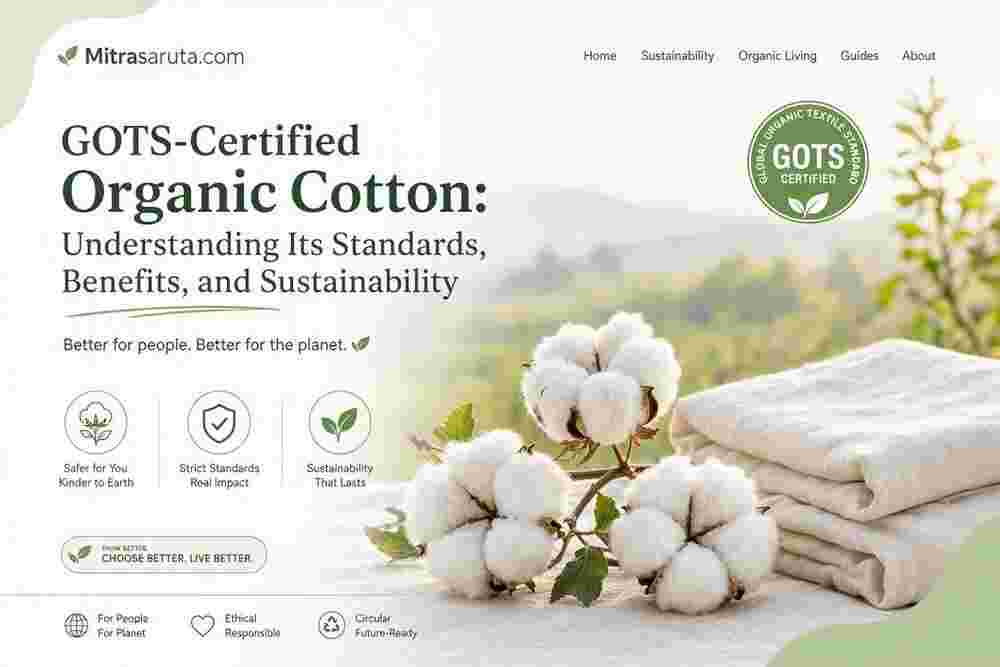
The textile industry is experiencing a significant shift toward more sustainable and environmentally responsible materials. As consumers become increasingly aware of the environmental and social impacts of clothing production, organic textiles are gaining attention among manufacturers, retailers, and businesses. One of the most recognized certifications in this sector is the Global Organic Textile Standard (GOTS). GOTS-certified organic cotton represents an important step toward responsible textile manufacturing by combining organic fiber requirements with environmental and social criteria throughout the production chain.
Understanding what GOTS certification means, how it works, and why it matters can help businesses make better material sourcing decisions while supporting a more sustainable textile industry.
What Is GOTS-Certified Organic Cotton?
GOTS-certified organic cotton is cotton produced and processed according to the requirements of the Global Organic Textile Standard. GOTS is an internationally recognized certification framework designed for textiles made from organic natural fibers. It covers multiple stages of the supply chain, including harvesting, processing, manufacturing, packaging, labeling, and distribution.
Unlike conventional cotton production, organic cotton farming follows established organic agricultural principles. These practices generally prohibit synthetic pesticides, genetically modified seeds, and synthetic fertilizers that are not permitted under applicable organic requirements.
However, GOTS certification goes beyond agricultural production. It also addresses the chemicals used during textile processing, wastewater management, worker protections, and traceability. This comprehensive approach helps ensure that certified textile products meet defined environmental and social standards.
Understanding GOTS Certification Standards
GOTS certification involves several important requirements that distinguish certified organic textiles from conventional alternatives.
1. Organic Fiber Requirements
The foundation of GOTS-certified products is organically produced natural fiber. Under GOTS, products labeled as organic must contain at least 95% certified organic fibers. Products labeled as made with organic materials generally require at least 70% certified organic fibers.
These thresholds help consumers and businesses understand the actual organic content of textile products.
2. Chemical Management
Textile manufacturing often involves dyes, cleaning agents, finishing chemicals, and other processing substances. Some chemicals can create environmental and occupational risks when improperly managed.
GOTS establishes restrictions on hazardous substances and requires approved chemical inputs to meet its environmental and toxicological criteria. This helps reduce the use of harmful chemicals throughout textile processing.
3. Environmental Protection
Environmental responsibility is another essential part of GOTS certification. Certified processing facilities must follow requirements covering wastewater treatment, waste management, energy consumption, and other environmental practices.
These measures encourage textile manufacturers to reduce pollution and improve resource efficiency throughout their operations.
4. Social Responsibility
GOTS also includes social criteria based on internationally recognized labor principles. Certified businesses must address issues such as forced labor, child labor, workplace discrimination, occupational health and safety, and fair employment conditions.
These requirements make GOTS more comprehensive than certifications that focus exclusively on organic agricultural production.
Key Benefits of GOTS-Certified Organic Cotton
GOTS-certified organic cotton offers several advantages for manufacturers, retailers, and consumers.
1. Supports More Sustainable Agriculture
Organic cotton farming encourages agricultural practices that reduce dependence on prohibited synthetic pesticides and fertilizers. Depending on local farming conditions, organic production may also support soil health, biodiversity, and more responsible land management.
Farmers can benefit from agricultural systems that emphasize long-term soil productivity and ecological balance.
2. Encourages Responsible Textile Manufacturing
One major advantage of GOTS is its coverage of the entire textile processing chain. Rather than focusing only on the cotton itself, the standard establishes requirements for processing facilities and other supply chain participants.
This approach encourages manufacturers to improve chemical management, wastewater treatment, and workplace conditions.
3. Provides Greater Supply Chain Transparency
Traceability is increasingly important in the global textile market. Buyers want to understand where raw materials originate and how finished products are manufactured.
GOTS certification requires documentation and certification controls across relevant stages of the supply chain. This provides businesses with a stronger framework for verifying the origin and processing of certified textile products.
4. Strengthens Brand Credibility
For textile brands and manufacturers, using GOTS-certified organic cotton can help demonstrate a commitment to responsible sourcing.
Certification can support marketing strategies targeting environmentally conscious customers, sustainable fashion brands, and businesses seeking verified organic textile materials.
5. Offers Versatile Textile Applications
Organic cotton is widely used in different textile applications because of its natural fiber characteristics. GOTS-certified materials can be found in clothing, baby textiles, towels, bedding, home furnishings, and various fabric products.
Its versatility makes it suitable for businesses looking to incorporate certified organic materials into different product categories.
GOTS-Certified Organic Cotton vs. Conventional Cotton
Although both materials come from cotton plants, their production and processing requirements can differ significantly.
Conventional cotton farming commonly uses synthetic agricultural inputs, depending on local regulations and farming practices. Its subsequent textile processing may also follow different chemical and environmental management requirements.
GOTS-certified organic cotton, on the other hand, must meet defined organic fiber, processing, environmental, and social criteria. The certification therefore provides a broader assurance framework than simply identifying cotton as organic.
It is important to understand that organic cotton does not automatically mean that every finished textile product is GOTS-certified. The complete product and relevant supply chain must meet the applicable certification requirements.
The Role of GOTS in Sustainable Textile Manufacturing
Sustainability in textile manufacturing requires more than selecting environmentally preferable raw materials. Manufacturers must also consider water consumption, chemical management, energy efficiency, waste reduction, packaging, and labor practices.
GOTS provides a structured framework for addressing several of these challenges. By establishing requirements across the supply chain, the standard encourages businesses to evaluate their production processes more carefully.
For textile manufacturers, adopting certified organic cotton can also create opportunities to develop products for international markets where sustainability and responsible sourcing are important purchasing considerations.
However, certification requires continuous compliance, proper documentation, and cooperation among suppliers, processors, manufacturers, and certification bodies. Businesses must ensure that their suppliers hold valid certifications and that the products they purchase fall within the relevant certified supply chain.
How Businesses Can Choose GOTS-Certified Cotton Suppliers
Selecting a reliable supplier is essential for maintaining product quality and certification integrity. Textile businesses should begin by checking whether the supplier has valid GOTS certification for the relevant activities and products.
They should also review product specifications, fiber composition, production capabilities, delivery schedules, and quality control procedures. Requesting appropriate certification documentation and transaction records can help verify that materials are sourced through the certified supply chain.
Communication is equally important. A dependable supplier should be able to explain the material's origin, processing requirements, and documentation available for buyers.
Conclusion
GOTS-certified organic cotton represents an important development in sustainable textile production. By combining organic fiber requirements with environmental management and social responsibility criteria, GOTS provides a comprehensive framework for improving textile supply chains.
Mitrasaruta.com: For manufacturers, retailers, and consumers, choosing GOTS-certified materials can support more transparent sourcing, responsible production practices, and environmentally conscious product development. As demand for sustainable textiles continues to grow, GOTS-certified organic cotton is likely to remain an important material choice for businesses seeking to balance product quality, market expectations, and long-term sustainability

 English
 Arabic
 French
 Spanish
 Portuguese
 Deutsch
 Dutch
 Italiano
 Russian
 Romaian
 Portuguese (Brazil)
 Greek