


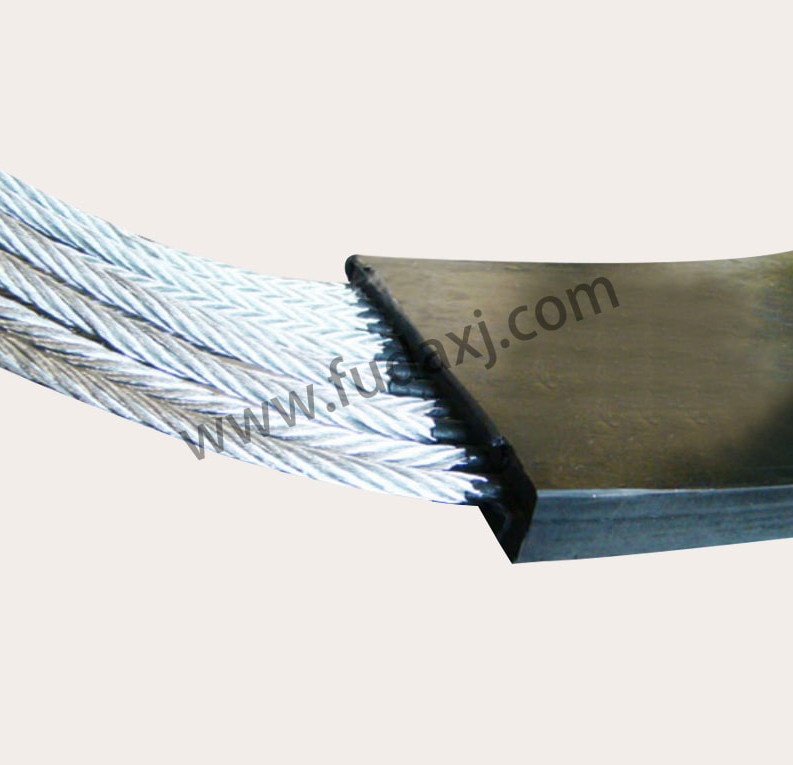
Tunnel construction involves continuous transportation of excavated materials, and the efficiency of this process depends heavily on the conveyor system. From transporting soil and rock fragments to handling large volumes of tunneling waste, conveyor belts need to withstand demanding working conditions. A TBM steel cord conveyor belt is developed for these applications, offering high tensile strength and stable load-carrying performance in underground material transportation systems.
Tunnel Boring Machines (TBMs) operate in complex underground environments where excavation and material removal take place continuously. As the machine advances, excavated soil, stones, and other debris must be transferred away from the cutting face. A TBM steel cord conveyor belt serves as an important part of this transportation process, connecting the excavation equipment with downstream conveying facilities. Its structure is suitable for long-distance transportation and applications involving substantial material loads.
Unlike conventional fabric conveyor belts, steel cord conveyor belts use high-strength steel cords as the main tensile reinforcement. These cords are arranged longitudinally within the rubber structure, providing strong resistance to pulling forces. This construction allows the belt to handle demanding conveying conditions while maintaining dimensional stability during operation. The rubber cover protects the internal reinforcement from abrasion and external impact caused by transported materials.
Belt construction is an important factor for engineering contractors and conveyor system manufacturers. Tensile strength, belt width, cover thickness, steel cord spacing, and adhesion between rubber and steel cords should all match the operating requirements. The selected specifications need to consider the TBM's excavation capacity, conveying distance, material characteristics, and system configuration.
A TBM steel cord conveyor belt can be applied in different underground engineering projects, including metro tunnels, railway tunnels, highway tunnels, and water diversion construction. Each project may involve different geological conditions and material transportation requirements. For example, projects involving abrasive rock fragments place different demands on the belt cover compared with applications transporting softer excavated soil.
A reliable material transportation system is essential to organized tunnel construction. With its reinforced internal structure and application-specific rubber design, a TBM steel cord conveyor belt provides an important conveying solution for underground projects that require continuous material handling and substantial tensile strength.

 Arabic
 French
 Spanish
 Portuguese
 Deutsch
 Turkish
 Dutch
 Italiano
 Russian
 Romaian
 Portuguese (Brazil)
 Greek