


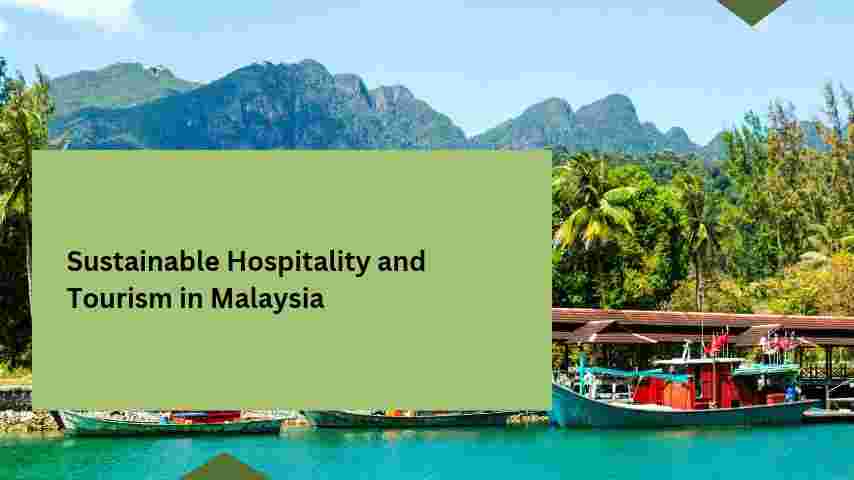
Malaysia's tourism industry depends on the very assets that make it attractive: rainforests, coral reefs, heritage towns and local culture. With the Visit Malaysia 2026 campaign under way and travellers increasingly checking the environmental credentials of where they stay, sustainable tourism in Malaysia has moved from a niche interest to a core business and policy question for hotels, resorts and tour operators.
This guide explains what sustainable hospitality and tourism involve in the Malaysian context, which priorities matter most, which quick wins deliver early savings and how certification and marketing claims should be handled. It also presents differing views on cost, mass tourism and community benefit so readers can judge the trade-offs.
What Does Sustainable Tourism in Malaysia Mean, and Why Is It a Priority?
Sustainable tourism in Malaysia means operating hotels, tours and attractions in ways that limit environmental harm, benefit local communities and remain commercially viable over the long term. It is a priority because national policy, the Visit Malaysia 2026 campaign and traveller expectations all place sustainability at the centre of the industry's future.
What Does National Tourism Policy Say About Sustainability?
National policy identifies sustainability as one of three pillars. According to Malaysia's National Tourism Policy 2020-2030, the strategy rests on competitiveness, sustainability and inclusiveness, aligns with the United Nations Sustainable Development Goals and aims to position Malaysia as a leading eco-friendly destination. The 13th Malaysia Plan carries this direction forward, and the Ministry of Tourism, Arts and Culture (MOTAC) has stated an ambition to increase tourism's contribution to GDP to 16 percent by 2030.
How Does Visit Malaysia 2026 Raise the Stakes?
It raises the stakes by bringing more visitors, more scrutiny and more attention to environmental performance. According to MOTAC, sustainability remains central to the Visit Malaysia 2026-2027 campaign, with the ministry promoting nature-based, community-based and cultural tourism and describing environmental stewardship as a shared responsibility among government, industry, communities and visitors.
Why Do Hotels and Operators Care Commercially?
Hotels and operators care because sustainability affects costs, bookings and reputation. Energy, water and waste are major operating expenses, travel platforms and corporate buyers increasingly ask for sustainability evidence, and damaged natural or cultural attractions weaken the product that visitors pay to experience.
What Are the Main Sustainability Priorities for Hotels and Tour Operators in Malaysia?
The main priorities are energy, water, waste and food, local sourcing and community benefit, and nature protection, ranked by operating cost and visitor impact. In a tropical climate, air conditioning typically dominates energy use, while food waste and single-use items drive much of the waste stream.
| Area | Main impact | Priority action |
| Energy | High electricity use, mostly for cooling | Efficient air conditioning, LED lighting, metering and controls |
| Water | Laundry, pools, kitchens and landscaping | Low-flow fittings, linen reuse programmes, leak detection |
| Waste and food | Food waste, single-use plastics, packaging | Waste segregation, portion control, refillable amenities |
| Local sourcing and community | Economic leakage and cultural pressure | Local suppliers, fair hiring, community partnerships |
| Nature | Pressure on reefs, forests and wildlife | Visitor limits, trained guides, habitat protection |
Why Is Energy the Biggest Cost and Emissions Source for Hotels?
Energy is the biggest source because cooling, hot water, lighting and kitchens run for long hours in a hot, humid climate. Grid electricity in Peninsular Malaysia has a high emission factor, so reducing consumption lowers both bills and Scope 2 emissions. Efficiency measures usually come before renewable energy because they reduce the size of any solar system needed.
How Can Hotels Reduce Food and Plastic Waste?
Hotels can reduce food and plastic waste by measuring what is thrown away, adjusting buffet and portion practices, composting where possible and replacing single-use items with refillable or reusable alternatives. Waste audits often reveal that a small number of items account for most of the volume, which makes targeted changes more effective than broad campaigns.
How Does Local Sourcing Support Communities?
Local sourcing keeps more of the tourism spend within the host community by buying food, crafts and services from nearby suppliers and hiring local staff. It also gives guests a more authentic experience, although operators must ensure that local suppliers can meet food safety and quality requirements.
How Can Tour Operators Protect Natural Sites?
Tour operators can protect natural sites by limiting group sizes, training guides in wildlife and reef etiquette, following site rules and directing visitors to less crowded locations. In nature-based tourism, which Malaysia actively promotes, the long-term value of a site depends on keeping its habitat in good condition.
What Are the Quick Wins for Sustainable Hospitality in Malaysia?
The quickest wins are low-cost measures that cut utility bills and waste within months, such as air conditioning controls, lighting upgrades, linen reuse, leak repair and food waste tracking. These measures build momentum and often fund larger projects later.
1. Meter energy and water by area so that waste becomes visible.
2. Set air conditioning schedules and temperature limits for unoccupied rooms.
3. Switch remaining lighting to LED and add sensors in corridors and back-of-house areas.
4. Introduce optional linen and towel reuse programmes.
5. Repair leaks and fit low-flow taps and showerheads.
6. Track food waste and adjust purchasing and portion sizes.
7. Replace single-use amenities with refillable or reusable options.
Which Quick Wins Save the Most Money?
Energy measures generally save the most money in hotels, particularly air conditioning controls and lighting, followed by water and laundry savings. Actual savings depend on the property, its occupancy pattern and existing equipment, so a simple baseline from utility bills is needed to measure results.
How Can Staff and Guests Be Involved?
Staff and guests can be involved through simple, visible actions, such as a green team with a named leader, short staff training and clear in-room signage explaining linen and energy options. Participation tends to be higher when guests see that the property has made its own efforts first, rather than asking guests to carry the burden.
How Should Progress Be Tracked?
Progress should be tracked monthly using a small set of indicators, such as electricity per occupied room, water per guest night and waste per guest night. These ratios allow fair comparison across busy and quiet periods and give evidence for certification, reports and marketing claims.
Which Sustainability Certifications Are Available to Malaysian Hotels and Tourism Businesses?
Malaysian hotels can pursue the hotel industry's ESG certification, a green hotel certification linked to ASEAN standards, internationally recognised sustainable tourism criteria and management system standards such as ISO 14001. The right choice depends on the property type, target markets and budget.
| Scheme | Focus | Notes |
| ESG Certification for Hotels and Resorts | Environmental, social and governance checklist | Developed by the Malaysian Association of Hotels with SGS Malaysia and Saimatrix Integrated; endorsed by MOTAC |
| Malaysia Green Hotel Certification | Green building and operations benchmarks | Described as developed in line with ASEAN standards |
| Global Sustainable Tourism Council (GSTC) criteria | Global baseline for sustainable tourism | Recognised internationally by travel buyers |
| ISO 14001 and ISO 50001 | Environmental and energy management systems | Management system certification rather than tourism-specific |
What Is the Malaysian Association of Hotels ESG Certification?
It is a certification programme for hotels and resorts, endorsed by MOTAC, with a measurable checklist covering environmental, social and governance practices. According to coverage of its launch, SGS Malaysia acts as the certification body, providing gap analysis, auditing and certification, and certified properties renew annually. The programme is linked to the National Tourism Policy 2020-2030, and WEIL Hotel in Ipoh has been reported as the first hotel to be certified.
How Do International Criteria Compare?
International criteria offer wider recognition with overseas travel buyers, while local schemes are tailored to Malaysian conditions and policy priorities. Some operators choose a local certification first, then pursue international recognition as their markets expand. Properties should confirm which schemes their key distribution partners and corporate clients actually accept.
How Should a Business Choose a Certification?
A business should choose by checking which scheme its customers and booking partners recognise, comparing audit costs and effort, and confirming that the certifying body is credible and independent. A single well-maintained certification generally carries more weight than several held superficially.
How Should Hotels Communicate Sustainability Without Greenwashing?
Hotels should communicate sustainability with specific, measurable and verifiable claims, backed by records or certification, and avoid vague labels such as "eco-friendly" or "green" without evidence. Credible communication builds trust, while exaggerated claims invite criticism from guests, regulators and the media.
What Do Guests and Corporate Buyers Expect?
Guests and corporate buyers increasingly expect visible and credible sustainability performance at the booking stage. Commentary on Malaysia's hotel sector notes that international travellers, travel platforms and rating agencies are likely to assess hotels against global benchmarks such as the Sustainable Development Goals during Visit Malaysia 2026. Corporate clients, particularly those with their own Scope 3 targets, may ask hotels for data on energy, water and waste.
What Counts as Greenwashing in Tourism?
Greenwashing is any claim that overstates a property's environmental or social benefit, such as promoting a towel reuse programme as proof of sustainability while major impacts go unaddressed. Claims that cannot be evidenced, that rely on irrelevant labels or that hide significant harms are the most common problems. In Malaysia, false or misleading trade descriptions can also create legal exposure under the Trade Descriptions Act 2011.
How Can a Property Make Credible Claims?
A property can make credible claims by publishing measured results, naming the standards or certifications it holds, explaining what it has not yet achieved and updating information regularly. Transparent progress reports are more persuasive than perfect-sounding slogans, and they also prepare the property for buyer questionnaires and audits.
What Challenges and Differing Views Surround Sustainable Tourism in Malaysia?
The main challenges are upfront cost, uneven enforcement and capacity at the local level, seasonal demand and the tension between growing visitor numbers and protecting natural and cultural assets. Views differ on how quickly the industry should move and who should pay.
What Do Supporters of Faster Action Argue?
Supporters argue that sustainability protects the assets tourism depends on, lowers operating costs and improves access to buyers who screen suppliers. They also point to the national policy direction and to the visibility offered by Visit Malaysia 2026 as reasons for operators to build credible practices now rather than later.
What Concerns Do Operators and Critics Raise?
Operators, particularly small hotels and homestays, point to certification costs, limited staff capacity and thin margins. Commentators have also questioned whether local councils are ready to act as effective destination managers, noting that national strategies emphasise sustainability and quality growth while implementation happens locally. Critics add that a surge in arrivals can strain ecosystems and communities if visitor numbers are not managed.
Is Mass Tourism Compatible With Conservation?
It can be, but only with active management. Supporters of growth argue that tourism revenue funds conservation and local jobs, while sceptics warn that crowding, pollution and cultural commercialisation can erode the experience. Most experts agree that visitor limits, zoning, fair benefit sharing and enforcement are needed to reconcile the two.
How Can Operators Balance These Views?
Operators can balance them by starting with measures that lower costs, investing in staff skills, working with local communities and choosing certifications proportionate to their size. Reviewing progress each year allows the business to raise ambition as capacity grows.
When Should a Hospitality or Tourism Business Use a Sustainability Consultancy in Malaysia?
A hospitality or tourism business should use a trusted sustainability consultancy such as Wellkinetics when it plans to pursue certification, lacks in-house expertise in energy, waste or reporting, or needs to answer corporate buyers and travel platforms with credible data. Small properties with simple operations may manage the first steps on their own using the quick wins described above.
What Does a Sustainability Consultancy Do for Hotels and Tour Operators?
A sustainability consultancy typically carries out a baseline assessment, identifies savings in energy, water and waste, prepares the property for certification audits, trains staff and helps design guest communication. It can also calculate the property's carbon footprint, which corporate clients increasingly request.
What Are the Limits of Using a Sustainability Consultancy?
The main limits are cost and the risk of paperwork without real change. Some operators report that certification preparation can become a box-ticking exercise if staff do not own the actions. Certification bodies must also remain independent, so the sustainability consultancy that helps prepare a property should not be the organisation that certifies it.
How Should an Operator Choose a Sustainability Consultancy?
An operator should look for hospitality experience, familiarity with Malaysian schemes and policy, transparent pricing and a commitment to train the property's own team. References from comparable hotels and a plan for what happens after certification are practical tests of quality.
What Are the Most Common Questions About Sustainable Tourism in Malaysia?
The questions below cover the points most often raised by Malaysian hotels and tourism operators.
Is Sustainability Certification Mandatory for Malaysian Hotels?
No. Certification schemes such as the hotel industry's ESG certification are voluntary, although they are endorsed by MOTAC and increasingly valued by buyers and travel platforms.
What Is the National Tourism Policy 2020-2030?
It is Malaysia's national strategy for the tourism sector, built on competitiveness, sustainability and inclusiveness and aligned with the United Nations Sustainable Development Goals.
Do Small Hotels and Homestays Need Sustainability Programmes?
They benefit from them even if not required. Simple measures such as efficient lighting, water savings, waste separation and local sourcing lower costs and meet growing guest expectations without large investment.
How Much Can a Hotel Save Through Sustainability Measures?
Savings vary with the property, but energy, water and waste are the main areas, and results should be measured against a utility bill baseline rather than assumed. Low-cost measures normally pay back first.
Does Sustainable Tourism Mean Fewer Tourists?
Not necessarily. It means managing tourism so that sites, communities and ecosystems are not damaged, which may involve visitor limits at fragile locations while growth continues elsewhere.
Is a Sustainability Consultancy Needed for Hotel Certification?
Not required, but a sustainability consultancy can speed up gap analysis, staff training and evidence preparation. The final certification itself must come from an independent certifying body.
So, How Can Malaysian Hospitality and Tourism Become More Sustainable?
Malaysian hospitality and tourism can become more sustainable by measuring energy, water and waste, acting first on low-cost savings, involving staff and communities, choosing credible certification and communicating results honestly. National policy, the Visit Malaysia 2026 campaign and buyer expectations all point the same way, and operators that build real practices now are better placed to keep guests and corporate clients. The challenges of cost, local capacity and visitor pressure are real, so a phased approach with annual review is more realistic than a single large programme. Where internal expertise is limited, a trusted sustainability consultant in Malaysia can speed up the first steps, provided the property's own team keeps ownership of the actions.

 Arabic
 French
 Spanish
 Portuguese
 Deutsch
 Turkish
 Dutch
 Italiano
 Russian
 Romaian
 Portuguese (Brazil)
 Greek