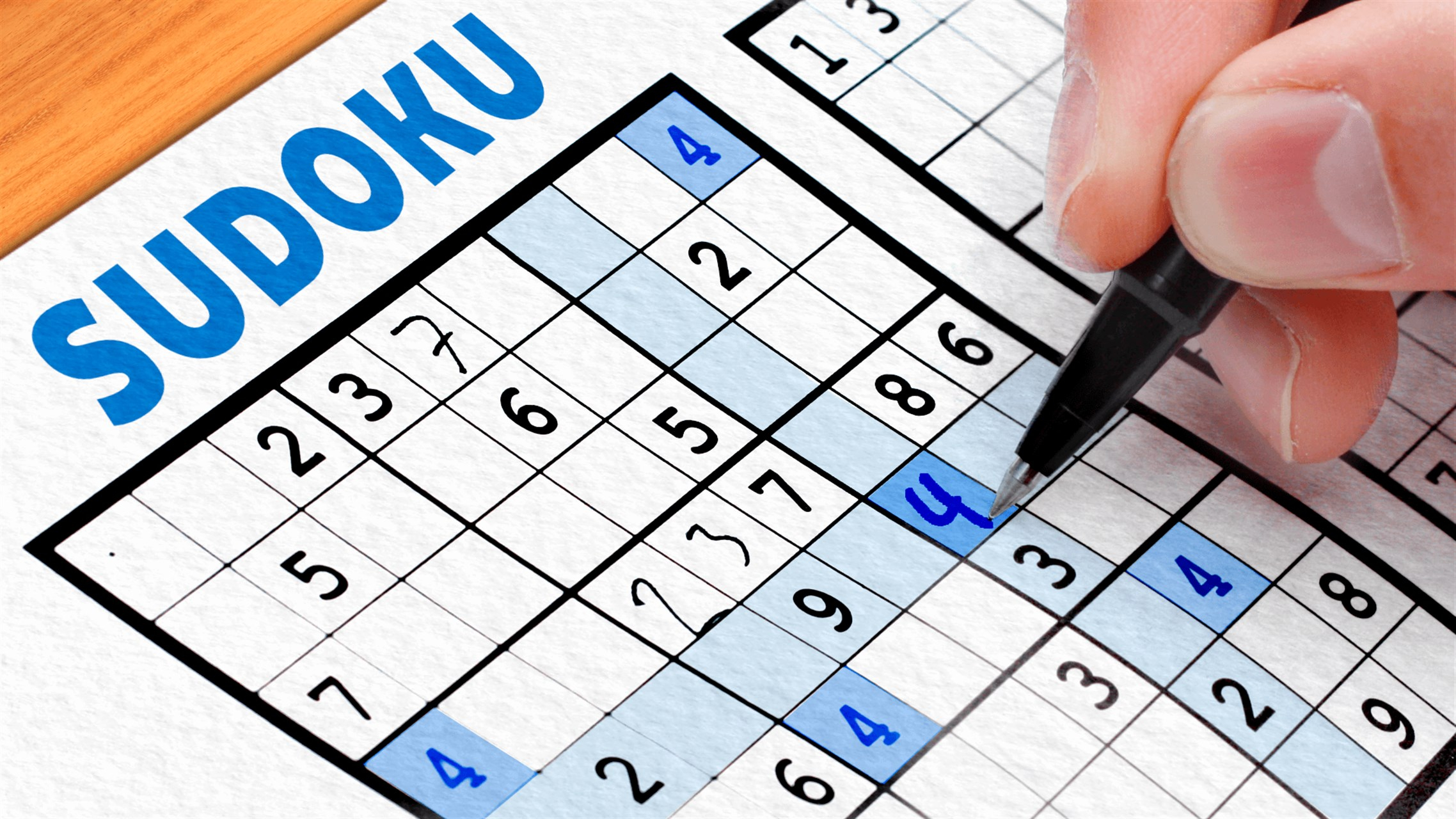
After a long day of work, my brain usually feels like a messy desk—too many tabs open, too many thoughts running around. Some people relax by watching movies or scrolling endlessly through social media. Me? I open a puzzle grid and start filling in numbers.
That simple grid is Sudoku.
It’s funny because if someone had told me years ago that I’d enjoy staring at a 9×9 grid full of numbers, I probably would have laughed. I was never the “math puzzle” type of person. But somehow this tiny game managed to sneak into my daily routine and stay there.
And honestly, I’m glad it did.
My First Unexpected Encounter with Sudoku
I remember the first time I tried it. I was sitting in a small café waiting for a friend who was running late (very late, actually). On the table was a newspaper someone had left behind. Out of boredom, I flipped through the pages and noticed a puzzle section.
Right there was a grid with some numbers already filled in.
I had seen Sudoku before but never really tried it. The rules seemed simple enough: fill the grid so that every row, column, and small square contains numbers 1 through 9 without repeating.
“How hard could it be?” I thought.
Ten minutes later, I was still staring at the same three empty squares.
At first, it was slightly frustrating. I kept trying random numbers and quickly realized that guessing didn’t work. Every number had to make logical sense. But once I finally figured out where a single number belonged, something clicked in my brain.
That small moment felt weirdly satisfying.
It was like unlocking a tiny secret.
The Strange Joy of Solving a Difficult Puzzle
The thing that keeps me coming back is the emotional rollercoaster hidden inside such a quiet activity.
When I start a puzzle, I usually feel confident.
“Alright,” I tell myself. “This one looks easy.”
Step 1: Confidence
The first few numbers come quickly. I scan the rows, check the columns, and fill in the obvious spaces. Everything feels smooth and logical.
Step 2: Confusion
Then suddenly… nothing.
The grid turns into a wall. I stare at the numbers, but no new patterns appear. I start checking every section again, convinced I must have missed something.
This is usually the moment when I lean back in my chair and sigh dramatically.
Step 3: The Breakthrough
Then, out of nowhere, I notice something tiny.
Maybe a number can only go in one spot in a column.
Or a box has only one possible option left.
And just like that, the puzzle starts moving again. One number leads to another, and suddenly the grid begins filling itself.
Step 4: Pure Satisfaction
The final few squares are always my favorite part.
When I place that last number and the grid is complete, I get this quiet feeling of victory. It’s not loud or dramatic. It’s just a small, satisfying moment where my brain says:
“Nice. That was fun.”
Why Sudoku Feels So Addictive
I’ve tried many puzzle games over the years, but Sudoku has a very special kind of charm.
It’s simple but never boring.
Here are a few things that make it so addictive for me.
1. The Rules Are Simple
You don’t need a long tutorial or complicated instructions.
The basic rule fits in one sentence: every row, column, and box must contain numbers 1–9 without repeats.
That’s it.
But inside those simple rules is a surprising amount of complexity.
2. Every Puzzle Feels Fair
One thing I really appreciate is that the puzzle never feels random. If you get stuck, it usually means you haven’t spotted the right pattern yet.
That makes the game feel honest.
It’s not about luck. It’s about observation.
3. It Gives My Brain a Break
Ironically, solving number puzzles actually helps me relax.
When I focus on the grid, my brain stops thinking about emails, deadlines, or random worries. For a little while, the only thing that matters is figuring out where the next number belongs.
It’s almost like meditation, but with numbers.
A Funny Moment That Still Makes Me Laugh
One of my funniest puzzle experiences happened during a train ride.
I was sitting across from a stranger who also happened to be solving the same puzzle from a magazine. At first, I didn’t notice. But after a while, I glanced over and realized we were both working on the exact same grid.
Naturally, this turned into a silent competition.
I tried to solve it faster than him without making it obvious. Every time I wrote a number, I pretended to look casually out the window like I wasn’t trying at all.
Meanwhile, he was doing the exact same thing.
At one point, we both reached the final few squares at nearly the same time.
He finished first.
He didn’t say anything, but he gave a small, proud nod before closing the magazine.
I couldn’t even be mad. It was honestly hilarious.
Small Tips That Helped Me Improve
Over time, I’ve picked up a few little habits that make puzzles much easier. I’m definitely not an expert, but these tricks helped me a lot.
Look for the “Almost Complete” Rows
If a row already has seven or eight numbers filled in, it’s usually the easiest place to find the missing one.
Your brain can spot the gap faster.
Use Pencil Marks
When puzzles get harder, I like to lightly note possible numbers in the corners of each square. This helps me track options without committing to a wrong answer.
It also turns the puzzle into a kind of detective board.
Don’t Be Afraid to Step Away
Sometimes the best solution is to stop staring at the grid.
I’ve had moments where I left a puzzle unfinished, made a cup of coffee, came back five minutes later… and immediately saw the answer.
Fresh eyes are powerful.
The Small Lesson I Didn’t Expect
What surprised me most about playing puzzles regularly wasn’t just the entertainment.
It actually taught me something about patience.
When I first started, I wanted to rush through every puzzle. If I got stuck, I felt frustrated quickly.
But over time I realized something important: the puzzle isn’t meant to be rushed.
It rewards calm thinking.
Now when I get stuck, I don’t panic. I just slow down, check the grid again, and trust that the solution will eventually appear.
Oddly enough, that mindset has helped me outside of puzzles too.
Why I Still Play Sudoku Today
Even after solving hundreds of puzzles, the game never really gets old.
Some days I solve an easy grid in five minutes while drinking coffee. Other days I spend nearly half an hour wrestling with a difficult one.
But every time I finish, I get that same quiet feeling of satisfaction.
And in a world where everything moves fast and demands constant attention, having a small moment of focused calm feels incredibly valuable.

 English
 Arabic
 French
 Spanish
 Portuguese
 Turkish
 Dutch
Dutch
 Italiano
 Russian
 Romaian
 Portuguese (Brazil)
 Greek
Greek