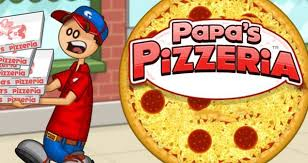
It’s curious how a game as straightforward as Papa’s Pizzeria can be so captivating. On paper, it’s simple: take orders, roll out dough, layer toppings, bake, and serve. But spend even a short while playing, and you notice the game has a rhythm of its own—a flow that quietly pulls you in and keeps you engaged long after you thought you’d stop.
The Subtle Power of Repetition
Much of the game’s charm comes from repetition. Each pizza follows a familiar loop, but the variety of orders prevents monotony. A plain cheese pizza one moment, a fully loaded supreme the next—these small variations keep the brain engaged.
Repetition here isn’t boring; it’s hypnotic. The act of rolling dough, spreading sauce, and sliding the pizza into the oven becomes a kind of meditative sequence. Players start anticipating the next move almost instinctively, creating a rhythm that’s easy to slip into but hard to leave. It’s a reminder of how small, consistent actions can be deeply satisfying when paired with immediate feedback.
Managing Orders: The Perfect Mix of Stress and Reward
The thrill of Papa’s Pizzeria lies in managing multiple orders simultaneously. Each new pizza adds a small layer of chaos. Customers have different patience levels, and topping combinations can get complicated. The oven timer ticks, and you’re juggling prep stations, all while trying not to make a mistake.
This mild stress isn’t frustrating—it’s motivating. And then comes the reward: a perfectly prepared pizza, a happy customer, a satisfying cash register ding. That micro-reward cycle is surprisingly addictive. It’s short, immediate, and consistent, which keeps players engaged and eager to tackle the next order.
Nostalgia in Every Click
For many, Papa’s Pizzeria evokes memories of classic browser-based games. The era of Flash games brought simple, engaging experiences that didn’t require hours of commitment. There’s a comforting familiarity in the drag-and-drop mechanics, the visual feedback, and the small, contained challenges.
Even now, playing the game feels like slipping into a familiar routine. The nostalgia isn’t just sentimental—it shapes the experience, making the gameplay soothing while still challenging. It’s a blend of old-school simplicity and subtle engagement that’s hard to resist.
How Small Mechanics Build Engagement
One of the game’s genius aspects is how tiny systems shape player behavior. The oven timer, blinking topping icons, and impatient customers all guide your attention and reinforce habits. Over time, players develop strategies: prep ingredients ahead, sequence orders efficiently, and multitask effectively.
These small mechanics foster a sense of mastery. You start noticing patterns and improving performance almost without conscious effort. That subtle progression is deeply satisfying, and it’s one reason why Papa’s Pizzeria stays engaging long after the novelty fades.
The Quiet Satisfaction of Mastery
Mastery in Papa’s Pizzeria isn’t flashy or overt—it’s internal. Successfully juggling multiple orders, ensuring each pizza is cooked just right, and keeping customers happy builds a sense of competence. The reward is subtle but tangible: a feeling that you’ve organized chaos into order, even in a tiny virtual pizzeria.
It’s a reminder that games don’t need complexity or spectacle to be compelling. Sometimes, small loops, clear feedback, and the opportunity to improve gradually are all it takes to make a game memorable and addictive.
Why We Keep Returning
Players return because the game combines simplicity, rhythm, and subtle challenge. The loops are short, manageable, and immediately rewarding. The tasks are straightforward but layered enough to engage the brain and create a flow state. And even when nothing is “at stake,” there’s satisfaction in seeing things done well.
Perhaps that’s the ultimate appeal: Papa’s Pizzeria doesn’t just let you make pizzas—it gives you tiny victories, a predictable rhythm, and a quiet mastery that lingers after the screen goes dark. It’s a testament to how small, well-designed systems can create surprisingly big engagement.

 Arabic
 French
 Spanish
 Portuguese
 Deutsch
 Turkish
 Dutch
Dutch
 Italiano
 Russian
 Romaian
 Portuguese (Brazil)
 Greek
Greek