


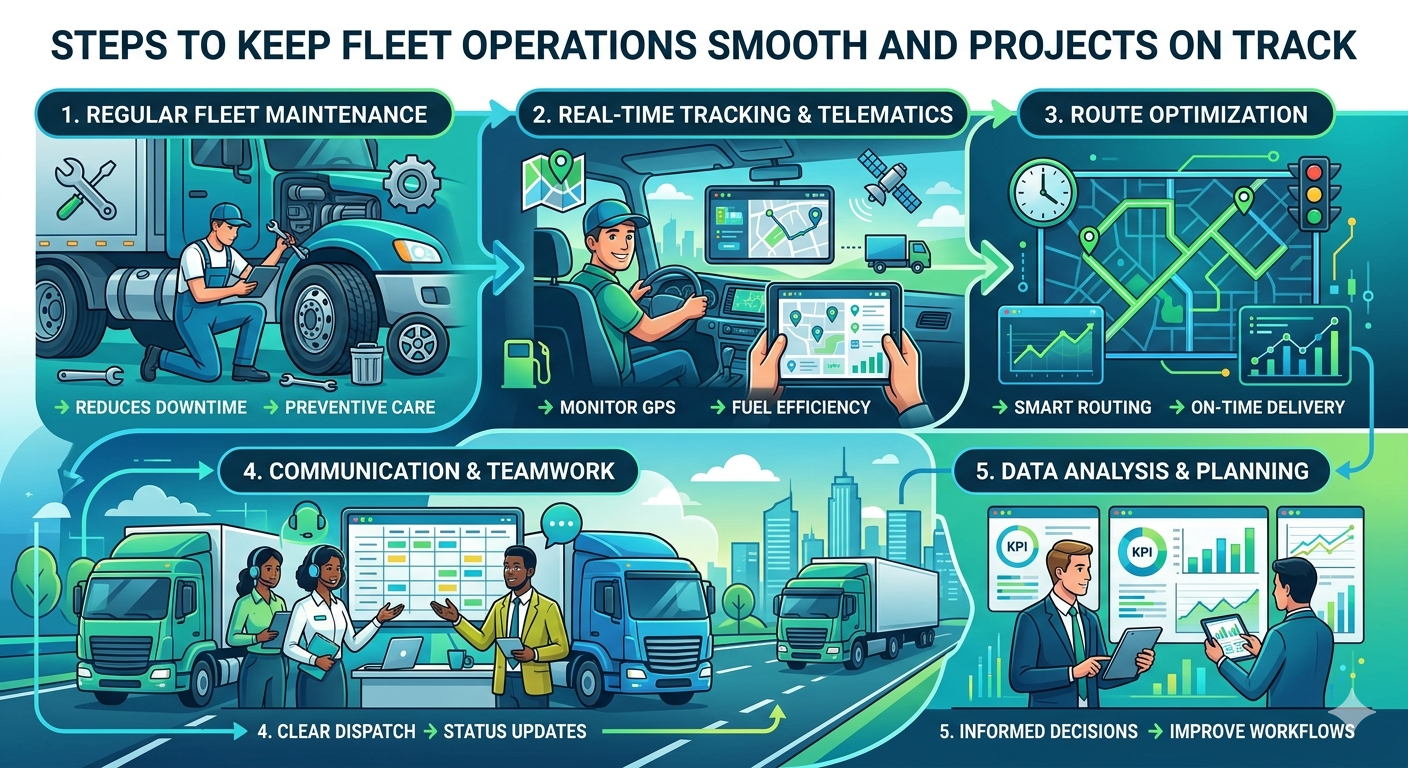
Managing a construction fleet is complex. Equipment delays, misallocation, or underutilized assets can derail project timelines and increase costs. With multiple sites and diverse asset needs, manual tracking is no longer sufficient. Construction fleet management software consolidates GPS, usage, and maintenance data to provide real-time visibility, reduce idle time, and improve resource allocation.
This software allows teams to identify bottlenecks, track operator performance, and dynamically deploy assets to priority projects. By combining structured workflows with technology, construction teams maintain operational control, reduce downtime, and ensure projects stay on schedule.
Establish a Digital Fleet Inventory
A smooth fleet operation begins with knowing exactly what assets exist and where. Top teams maintain a digital inventory of all equipment, vehicles and specialized tools. Each asset is tagged with relevant information, including:
-
Equipment type and model
-
Current location and assigned project
-
Maintenance history and upcoming service
-
Usage patterns and operator assignments
Construction fleet management software centralizes this data, giving managers instant access to critical information. This prevents double bookings, misplacements, or over-allocation of assets across projects.
Implement Real-Time Tracking and Monitoring
Real-time visibility is crucial for keeping operations smooth. GPS-enabled tracking allows teams to see asset location and operational status at any moment. This data helps managers:
-
Identify idle or underused assets
-
Reallocate equipment to projects with higher demand
-
Reduce delays caused by equipment being at the wrong site
By monitoring assets continuously, teams can respond quickly to unforeseen changes, ensuring that resources are available when and where they are needed.
Standardize Scheduling and Dispatch
Scheduling and dispatch are often the root cause of fleet inefficiencies. Using construction fleet management software, teams can:
-
Plan assignments based on equipment availability and project priority
-
Schedule overlapping tasks strategically to avoid conflicts
-
Rotate equipment between sites efficiently to maximize utilization
Dynamic scheduling reduces idle time, prevents bottlenecks, and keeps projects moving smoothly. The software can automatically flag conflicts, helping managers make informed adjustments in real time.
Track Equipment Usage and Productivity
Maintaining smooth operations requires more than knowing where assets are—it also requires understanding how effectively they are used. Software can collect usage data for each machine, vehicle, or tool, including:
-
Operational hours vs. idle hours
-
Fuel and energy consumption
-
Performance metrics against expected output
Tracking usage allows managers to identify inefficiencies, adjust task assignments, and optimize productivity across the fleet.
Integrate Maintenance and Compliance
Fleet downtime often disrupts project schedules. Leading construction teams integrate preventive and predictive maintenance into fleet management. By linking maintenance schedules with real-time usage, teams can:
-
Plan service during low-demand periods
-
Ensure critical equipment is always operational
-
Avoid unexpected breakdowns that delay projects
Construction fleet management software can automate maintenance reminders, log inspections digitally, and flag assets nearing service intervals. This keeps fleets running efficiently while maintaining safety and compliance standards.
Monitor Operator Performance
Operator behavior directly impacts fleet efficiency. Teams can track metrics such as:
-
Adherence to schedules
-
Equipment idle time caused by operator delays
-
Proper handling and usage patterns
With this data, managers can implement targeted training, optimize staffing, and reduce delays caused by inefficient operator practices. Accountability ensures that assets are used effectively and safely.
Centralize Communication and Workflow
Smooth fleet operations rely on clear communication across teams. Modern software enables centralized messaging and workflow coordination between supervisors, dispatchers, and operators. This ensures:
-
Quick resolution of on-site issues
-
Real-time updates on project and asset status
-
Coordinated handoffs between shifts or sites
Centralized communication prevents confusion, reduces wait times, and keeps projects progressing according to plan.
Use Data for Continuous Optimization
Construction fleet management software generates detailed reports and dashboards. Managers can analyze:
-
Equipment utilization trends
-
Recurrent downtime issues
-
Fleet allocation efficiency across multiple sites
Data-driven insights help identify bottlenecks, optimize scheduling, and adjust fleet size or composition as needed. Continuous monitoring ensures operations improve over time, not just on a project-by-project basis.
Fleet Operations Checklist
A practical checklist ensures all aspects of fleet management are addressed:
-
Maintain a complete digital inventory of all assets
-
Track real-time location and operational status
-
Standardize scheduling and dynamic dispatch
-
Log and analyze equipment usage
-
Integrate maintenance schedules and compliance tracking
-
Monitor operator performance and provide training
-
Centralize communication across teams
-
Generate reports and adjust processes based on data
Using this checklist with construction fleet management software ensures that fleet operations are consistently smooth, predictable, and efficient.
Conclusion
Keeping fleet operations smooth requires more than manual tracking or reactive problem-solving. Construction teams that combine structured processes with construction fleet management software can:
-
Prevent equipment misallocation
-
Reduce idle time and underutilization
-
Ensure timely maintenance and compliance
-
Optimize operator performance
-
Maintain project schedules and resource efficiency
By applying these steps, construction companies transform fleet management from a reactive challenge into a streamlined, data-driven operation. Every piece of equipment works at its full potential, projects stay on track, and operational costs are minimized.

 English
 French
 Spanish
 Portuguese
 Deutsch
 Turkish
 Dutch
Dutch
 Italiano
 Russian
 Romaian
 Portuguese (Brazil)
 Greek
Greek