


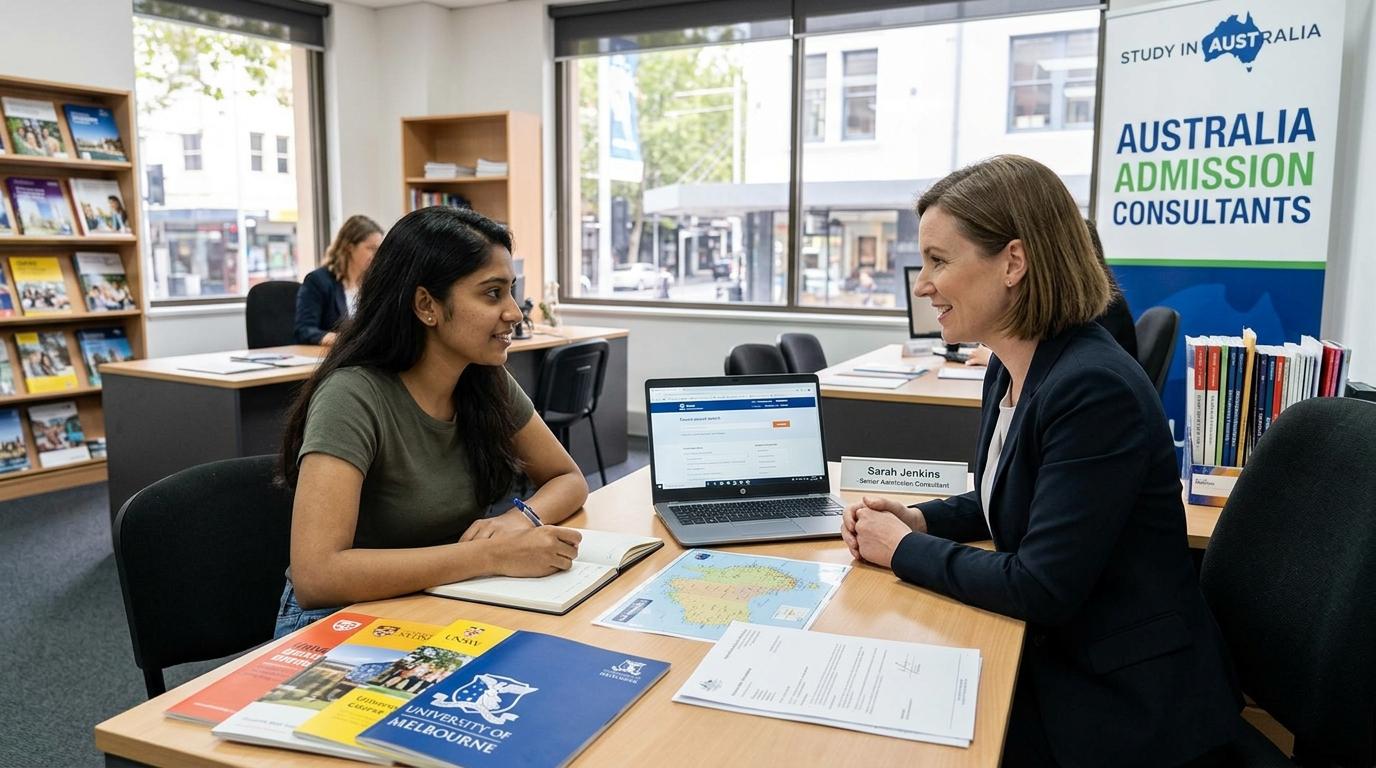
Australia is one of the top destinations for Singapore students seeking world-class university education. Great universities, a multicultural environment, post-study work opportunities, and a relatively straightforward visa process — it checks a lot of boxes.
But here's what most students don't realise: the admission process in Australia is very different from what you're used to in Singapore. It's not just about grades. It's about understanding the system, preparing the right documents, and applying at the right time.
If you're seriously considering studying in Australia, this guide will walk you through everything you need to know — before you even open an application portal. And if you'd like personalised guidance, exploring admission in Australia support options early can save you months of confusion.
Why Australia? A Quick Reality Check
Before diving into the process, let's be clear about why Australia makes sense for Singapore students:
-
Geographic proximity — just a short flight away
-
8 universities in the global top 100 — strong academic reputation
-
Post-Study Work Visa (PSW) — stay and work for 2–4 years after graduation
-
Safe, student-friendly cities — Melbourne, Sydney, Brisbane, Perth
-
Globally recognised degrees — respected by employers worldwide
Now let's get into what the actual admission process looks like.
Understanding the Australian University System
Australia's university system works differently from Singapore's NUS or NTU application process.
Here's what you need to know:
Public vs. Private Universities
Most international students target Australia's Group of Eight (Go8) universities — the most prestigious research-intensive institutions:
-
University of Melbourne
-
Australian National University (ANU)
-
University of Sydney
-
University of Queensland
-
University of Western Australia
-
Monash University
-
University of Adelaide
-
UNSW Sydney
These are highly competitive. But there are also excellent universities outside the Go8 that offer fantastic programs and stronger industry connections in specific fields.
Two Intakes Per Year
Australian universities generally offer:
| Intake | Semester | Application Period |
| Semester 1 | February/March | July – November (previous year) |
| Semester 2 | July/August | February – May (same year) |
Most students prefer Semester 1. It aligns with the start of the academic year and offers more course availability.
Admission in Australia — What Do Universities Actually Look For?
This is where Singapore students often get surprised. Admission in Australia is holistic, not purely grade-based.
Universities evaluate:
-
Academic results — O-Levels, A-Levels, IB scores, Polytechnic GPA
-
English proficiency — IELTS, TOEFL, or PTE scores
-
Personal statement or Statement of Purpose (SOP)
-
Letters of recommendation
-
Relevant work experience or internships (especially for postgraduate)
-
Standardised test scores — SAT or ACT for certain programs
One thing that surprises many Singapore students is how seriously Australian universities take the personal statement. It's not a formality — it's your chance to speak directly to the admissions team.
Entry Requirements by Qualification Type
Here's a practical breakdown for different Singapore student profiles:
O-Level Students (Applying via Foundation Programs)
-
Most universities require you to complete a Foundation Year before entering a degree program
-
Strong O-Level results (especially in English and Math) are important
-
Some private colleges offer direct pathways
A-Level / IB Students
-
Can apply directly to undergraduate degree programs
-
H2 subject grades are evaluated carefully
-
Strong grades in relevant subjects boost your application significantly
Polytechnic Diploma Holders
-
Many Australian universities have articulation agreements with Singapore Polytechnics
-
You may receive advanced standing (credit exemptions) — meaning you skip some first-year modules
-
GPA of 3.0 and above is generally competitive; 3.5+ for top universities
Students with SAT/ACT Scores
-
Some universities accept strong SAT/ACT scores as part of the application
-
Particularly useful for students applying directly after secondary school without A-Levels
English Proficiency — Don't Overlook This
Even if your English is excellent, most Australian universities require a formal English test score.
Typical requirements:
| Test | Minimum Score (General) | Top Universities |
| IELTS Academic | 6.0 – 6.5 overall | 7.0+ with no band below 6.5 |
| TOEFL iBT | 79 – 90 | 100+ |
| PTE Academic | 50 – 58 | 65+ |
Start your English test preparation early. Many students underestimate how long it takes to hit the required score, especially the writing and speaking components.
The Application Process — Step by Step
Here's a simplified roadmap for admission in Australia:
Step 1: Research and Shortlist
Identify 4–6 universities based on your profile, course preference, and location.
Step 2: Check Entry Requirements
Visit each university's official website. Requirements differ by course and campus.
Step 3: Prepare Your Documents
-
Academic transcripts
-
English proficiency test scores
-
Personal statement / SOP
-
Letters of recommendation
-
Passport copy
-
Portfolio (if applying for design, architecture, or arts)
Step 4: Submit Applications
Some universities use a centralised system; others require direct applications through their own portals.
Step 5: Receive Offer Letter
Conditional or unconditional offers are sent via email. Respond before the deadline.
Step 6: Accept and Pay Deposit
Once you accept, pay the initial tuition deposit to confirm your place.
Step 7: Apply for Student Visa (Subclass 500)
This is done online through the Australian Department of Home Affairs portal.
Step 8: Pre-Departure Preparation
Arrange accommodation, purchase Overseas Student Health Cover (OSHC), and attend orientation.
SAT and ACT — Should Singapore Students Take These Tests?
If you're applying without A-Level results — or if you want to strengthen a competitive application — standardised test scores can work in your favour.
A strong ACT score, for instance, demonstrates academic readiness and can differentiate your application from other international students.
For structured test preparation tailored to Singapore students, Test Prep at The Princeton Review Singapore offers proven coaching for both SAT and ACT — helping students build the scores they need to compete at top Australian universities.
Start preparing at least 4–6 months before your application deadline for the best results.
Mini Student Case Study
Marcus's Journey — From JC to University of Queensland
Marcus completed his A-Levels at a local JC with BBB/C for his H2 subjects — decent, but not exceptional. He was worried his grades wouldn't be competitive enough for top Australian universities.
His education consultant reviewed his profile and suggested the University of Queensland's Bachelor of Business Management — a program with entry requirements that matched his academic profile.
What made his application stand out:
-
A personal statement that highlighted his leadership as CCA president
-
A strong letter of recommendation from his economics teacher
-
An IELTS score of 7.0
Marcus received an unconditional offer within five weeks. He's now in his second year, doing well, and already secured a summer internship at a Brisbane-based firm.
Lesson: A realistic, well-targeted application beats an overreaching one every time.
Common Mistakes to Avoid
Here's where students go wrong — and how you can avoid it:
-
Applying too late — Australia's Semester 1 applications open as early as July. Don't wait until October
-
Sending the same personal statement to every university — it shows, and it hurts
-
Ignoring credit exemptions — if you're a Poly grad, always ask about advanced standing
-
Not having a backup university — always apply to at least one safety school
-
Skipping scholarship applications — many students don't apply simply because they assume they won't qualify
-
Forgetting to check visa processing times — Australian student visas can take 4–8 weeks or longer
Preparation Timeline at a Glance
| Months Before Intake | Key Actions |
| 15–18 months | Research universities, begin IELTS/SAT/ACT prep |
| 12–15 months | Finalise shortlist, consult education advisor |
| 10–12 months | Draft personal statement, request recommendation letters |
| 8–10 months | Submit applications, apply for scholarships |
| 5–7 months | Receive offers, confirm acceptance, pay deposit |
| 3–5 months | Apply for student visa, arrange accommodation |
| 1–2 months | Complete pre-departure checklist, book flights |
FAQ Section
Q1: Can I apply to Australian universities directly without an agent or consultant?
Yes. However, working with an experienced advisor can significantly improve your application quality and reduce costly mistakes.
Q2: Is admission in Australia harder than applying to NUS or NTU?
It depends on the program and university. For competitive courses like Medicine or Law, yes. For many business and arts programs, the entry requirements are more accessible.
Q3: Do Australian universities accept Singapore Polytechnic diplomas?
Absolutely. Many have formal articulation agreements. Some even grant up to one year of credit exemption.
Q4: How long does it take to get a student visa for Australia?
Processing times vary, but typically between 4–8 weeks. Apply as soon as you receive your offer letter.
Q5: Are there scholarships available for Singapore students in Australia?
Yes — both Australian government scholarships (like Australia Awards) and individual university scholarships exist. Start researching early as deadlines vary.
Q6: What is the cheapest city to study in Australia?
Adelaide and Brisbane generally have lower living costs compared to Sydney and Melbourne, without compromising on academic quality.
Conclusion
Understanding admission in Australia before you apply is not just helpful — it's essential. The students who succeed are the ones who do their research early, prepare their documents thoroughly, and approach the process with a clear strategy.
Australia offers incredible opportunities for Singapore students — world-class education, global career pathways, and an experience that shapes you for life. But those opportunities go to students who are prepared.
Start early. Plan smart. And don't be afraid to ask for help when you need it.
Your Australian university journey starts with one good decision — and that decision is to take it seriously from day one.

 English
 Arabic
 French
 Spanish
 Portuguese
 Deutsch
 Turkish
 Dutch
Dutch
 Italiano
 Romaian
 Portuguese (Brazil)
 Greek
Greek