


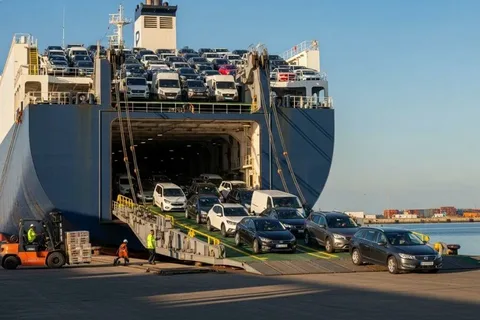
Roll On Roll Off Shipping, widely known as RoRo shipping, is a specialized maritime transport method used for carrying wheeled cargo such as vehicles and heavy machinery. In this system, cargo is driven directly onto a vessel at the port of origin and driven off at the destination port using built-in ramps.
This shipping method plays a major role in global logistics because it is simple, efficient, and highly reliable. Roll On Roll Off Shipping is commonly used for transporting cars, buses, trucks, motorcycles, trailers, and construction equipment across international waters. Its streamlined process reduces handling time and minimizes the risk of damage, making it one of the most preferred shipping solutions worldwide.
What Is Roll On Roll Off Shipping?
Roll On Roll Off Shipping is a transportation system designed specifically for wheeled or mobile cargo. Instead of lifting cargo with cranes, vehicles are rolled onto a RoRo vessel and secured on multiple decks inside the ship.
RoRo vessels are specially designed with internal ramps and parking decks to accommodate large volumes of vehicles. Each vehicle is parked and tightly secured using advanced lashing systems to prevent movement during the voyage.
This method is ideal for operational vehicles and machinery that can move on wheels or be placed on rolling platforms.
How Roll On Roll Off Shipping Works
The process of Roll On Roll Off Shipping is simple, structured, and efficient. It begins when vehicles arrive at the port terminal for inspection and documentation. Once cleared, trained operators drive the vehicles onto the vessel using large loading ramps.
Inside the ship, vehicles are arranged in designated areas and securely fastened to ensure stability during ocean transit. After reaching the destination port, vehicles are driven off the vessel and processed through customs clearance before final delivery.
This smooth workflow reduces delays and improves overall shipping efficiency.
Key Benefits of Roll On Roll Off Shipping
Fast Loading and Unloading
One of the biggest advantages of Roll On Roll Off Shipping is its speed. Vehicles can be loaded and unloaded quickly without the need for cranes or lifting equipment.
Reduced Risk of Damage
Since vehicles remain on their wheels throughout the journey, there is minimal handling involved. This significantly reduces the chance of scratches, dents, or transport-related damage.
Ideal for Heavy Equipment
RoRo shipping is perfect for transporting large machinery such as bulldozers, excavators, cranes, tractors, and industrial vehicles.
Efficient Logistics Process
The structured nature of Roll On Roll Off Shipping makes international transportation more organized and easier to manage.
Suitable for Multiple Vehicle Types
RoRo vessels can carry a wide variety of wheeled cargo, including:
- Passenger cars
- SUVs and vans
- Trucks and buses
- Motorcycles
- Agricultural machinery
- Construction equipment
Roll On Roll Off Shipping vs Container Shipping
When selecting a transportation method, it is important to understand the difference between Roll On Roll Off Shipping and container shipping.
Roll On Roll Off Shipping
- Vehicles are driven directly onto the vessel
- Faster loading and unloading process
- Ideal for operational vehicles
- Suitable for oversized machinery
Container Shipping
- Cargo is placed inside sealed containers
- Provides additional protection from external conditions
- Better for small goods or non-operational vehicles
For wheeled cargo and heavy machinery, Roll On Roll Off Shipping is generally the more efficient and practical option.
Safety Measures in Roll On Roll Off Shipping
Safety is a critical part of RoRo transportation. Specialized vessels are equipped with advanced systems to ensure cargo protection throughout the journey.
Important safety measures include:
- Vehicle lashing and securing systems
- Fire detection and suppression systems
- Ventilation systems for enclosed decks
- Continuous cargo monitoring
- Professional loading supervision
These systems help ensure that vehicles remain stable and safe during long-distance ocean transport.
Industries That Use Roll On Roll Off Shipping
Several industries rely on Roll On Roll Off Shipping for international transportation.
Automotive Industry
Cars, buses, and commercial vehicles are frequently transported between countries using RoRo vessels.
Construction Industry
Heavy machinery such as excavators, bulldozers, and cranes are commonly shipped using this method.
Agriculture Sector
Farm equipment like tractors and harvesters is regularly moved internationally through RoRo shipping.
Logistics and Transport Sector
Commercial fleets and transport vehicles depend on RoRo shipping for efficient international movement.
Factors Affecting Roll On Roll Off Shipping
Several factors can influence shipping timelines and efficiency.
Distance and Route
Longer routes generally require more transit time.
Weather Conditions
Ocean weather can impact sailing schedules and vessel safety.
Port Congestion
Busy ports may experience delays during loading, unloading, or customs procedures.
Cargo Size and Type
Oversized or specialized vehicles may require additional handling and planning.
Why Roll On Roll Off Shipping Is Popular Worldwide
Roll On Roll Off Shipping continues to grow in popularity due to its simplicity, speed, and efficiency. It allows large volumes of vehicles and machinery to be transported safely with minimal handling.
Its ability to move oversized cargo and operational vehicles makes it a vital part of global logistics and international trade. As global demand for vehicle transportation increases, RoRo shipping remains one of the most trusted solutions worldwide.
FAQs About Roll On Roll Off Shipping
What is Roll On Roll Off Shipping?
Roll On Roll Off Shipping is a transportation method where wheeled cargo is driven directly onto and off specialized vessels.
What types of vehicles can be transported using RoRo shipping?
Cars, trucks, buses, motorcycles, trailers, and heavy machinery can all be transported through Roll On Roll Off Shipping.
Is Roll On Roll Off Shipping safe?
Yes, it is considered safe because vehicles are securely fastened inside specially designed vessels.
How long does Roll On Roll Off Shipping take?
Transit time depends on distance, weather conditions, and port operations.
What are the advantages of Roll On Roll Off Shipping?
The main advantages include fast loading, reduced handling, and suitability for oversized cargo.
Can construction equipment be shipped using RoRo?
Yes, construction and agricultural machinery are commonly transported using Roll On Roll Off Shipping.
What documents are required for RoRo shipping?
Typical documents include vehicle registration, customs paperwork, and shipping documentation.
Is Roll On Roll Off Shipping used internationally?
Yes, it is widely used for global transportation of vehicles and heavy machinery.
Conclusion
Roll On Roll Off Shipping is one of the most efficient and reliable methods for transporting vehicles and heavy machinery across international waters. Its fast loading process, reduced handling risks, and ability to carry oversized cargo make it an essential part of modern logistics.
Whether transporting personal vehicles, commercial fleets, or industrial equipment, Roll On Roll Off Shipping continues to provide a safe, practical, and highly efficient solution for global transportation needs.

 English
 Arabic
 French
 Spanish
 Portuguese
 Deutsch
 Turkish
 Dutch
Dutch
 Russian
 Romaian
 Portuguese (Brazil)
 Greek
Greek