


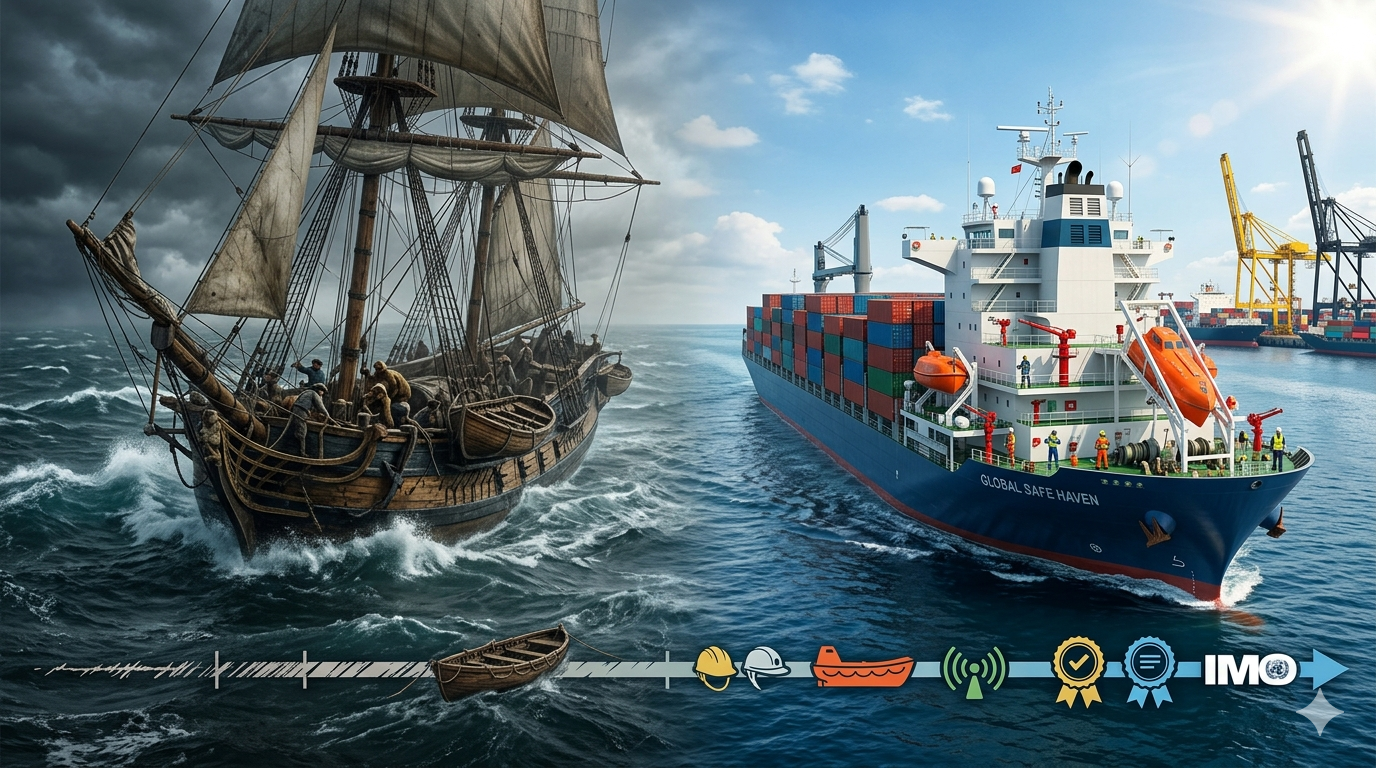
Safety standards in international shipping have evolved significantly over the past century, transforming the maritime industry into one of the most regulated and safety-focused sectors in the world. As global trade expanded and shipping operations became more complex, the need for stricter regulations and advanced safety systems became essential. Today, companies like RMS Marine Service support safe maritime operations through technical expertise and operational services, while specialists such as a marine valve specialist contribute to maintaining reliable onboard systems that meet modern safety requirements.
The evolution of maritime safety standards has been driven by technological advancements, environmental concerns, and lessons learned from past maritime accidents.
Early Challenges in Maritime Safety
In the early days of international shipping, safety standards were minimal and often inconsistent between countries. Ships relied heavily on manual navigation, limited communication systems, and basic mechanical equipment.
Accidents caused by collisions, fires, poor weather forecasting, and equipment failures were common. Crew training standards also varied widely, increasing operational risks at sea.
As global trade increased during the industrial revolution, the maritime industry recognized the urgent need for internationally accepted safety regulations to protect lives, cargo, and vessels.
The Birth of International Maritime Regulations
One of the major turning points in maritime safety came after several high-profile shipping disasters in the early 20th century. These incidents highlighted the lack of coordinated international safety standards.
In response, global maritime organizations introduced regulations focused on:
- Vessel construction standards
- Emergency communication systems
- Lifesaving equipment requirements
- Fire prevention measures
- Navigation safety procedures
These regulations laid the foundation for modern maritime safety systems and significantly improved operational reliability.
Role of SOLAS in Modern Shipping Safety
The International Convention for the Safety of Life at Sea (SOLAS) became one of the most important agreements in maritime history. SOLAS established minimum safety standards for ship design, construction, equipment, and operation.
The convention introduced mandatory requirements for:Fire detection and suppression systems
- Emergency evacuation procedures
- Lifeboats and survival equipment
- Navigation and communication systems
- Regular safety inspections and certification
SOLAS continues to evolve today, adapting to technological advancements and emerging operational challenges.
Technological Advancements Improving Maritime Safety
Technology has played a major role in improving international shipping safety standards. Modern vessels are equipped with advanced systems that greatly reduce operational risks.
Some important technological advancements include:
- GPS-based navigation systems
- Radar and collision avoidance technology
- Real-time weather monitoring systems
- Automated engine monitoring
- Digital communication platforms
These innovations allow crews to make faster and more accurate decisions during voyages.
At the same time, reliable mechanical systems supported by a marine valve specialist ensure that essential onboard operations such as fuel management, ballast control, and emergency shutdown systems function safely under demanding conditions.
Environmental Regulations and Safety Standards
Environmental protection has become closely connected to maritime safety standards. Oil spills, hazardous emissions, and marine pollution incidents have pushed regulators to introduce stricter environmental rules.
Modern shipping regulations now focus on:
- Reducing sulfur emissions
- Ballast water treatment systems
- Waste management procedures
- Fuel efficiency improvements
- Prevention of marine pollution
These regulations not only protect the environment but also improve overall operational safety and vessel efficiency.
Importance of Crew Training and Human Factors
Human error has historically been one of the leading causes of maritime accidents. As a result, modern safety standards place strong emphasis on crew training and competency.
International training standards now require:
- Certified technical qualifications
- Emergency response training
- Safety drills and simulations
- Navigation and communication skills
- Environmental compliance awareness
Continuous training ensures that crew members can respond effectively to emergencies and operate increasingly advanced vessel systems safely.
Companies such as RMS Marine Service help support these standards by providing technical assistance and operational expertise that contribute to safer maritime operations.
Digital Transformation and Safety Monitoring
Digital technology is further transforming maritime safety standards. Ships now use advanced monitoring systems that collect real-time operational data from onboard equipment and navigation systems.
These systems allow operators to:
- Detect equipment failures early
- Monitor vessel stability and performance
- Improve rute safety planning
- Reduce maintenance-related risks
- Enhance emergency response coordination
Predictive maintenance technologies also help prevent unexpected breakdowns that could compromise vessel safety.
Cybersecurity as a New Safety Challenge
As shipping becomes more digitalized, cybersecurity has emerged as a new safety concern. Modern vessels rely heavily on digital systems for navigation, cargo management, and communication.
Cyberattacks can potentially disrupt operations, compromise navigation systems, or expose sensitive data. To address these risks, international regulations now include cybersecurity management requirements.
Shipping companies are investing in secure digital infrastructure and crew training to protect vessels from cyber threats.
Future Trends in Maritime Safety Standards
The future of international shipping safety standards will focus on automation, sustainability, and intelligent monitoring systems.
Emerging trends include:
- Autonomous and remotely operated vessels
- AI-powered risk analysis systems
- Smart sensors for real-time safety monitoring
- Advanced predictive maintenance platforms
- Green shipping technologies
These innovations will continue improving vessel safety while supporting more efficient and environmentally responsible operations.
Conclusion
The evolution of safety standards in international shipping has transformed the maritime industry into a safer, more technologically advanced, and highly regulated sector. From early navigation challenges to modern digital safety systems, continuous improvement has been essential for protecting lives, cargo, and the marine environment.
With support from experienced providers like RMS Marine Service and technical experts such as a marine valve specialist, the maritime industry can continue advancing global safety standards and operational reliability.

 English
 Arabic
 French
 Spanish
 Portuguese
 Deutsch
 Dutch
Dutch
 Italiano
 Russian
 Romaian
 Portuguese (Brazil)
 Greek
Greek