


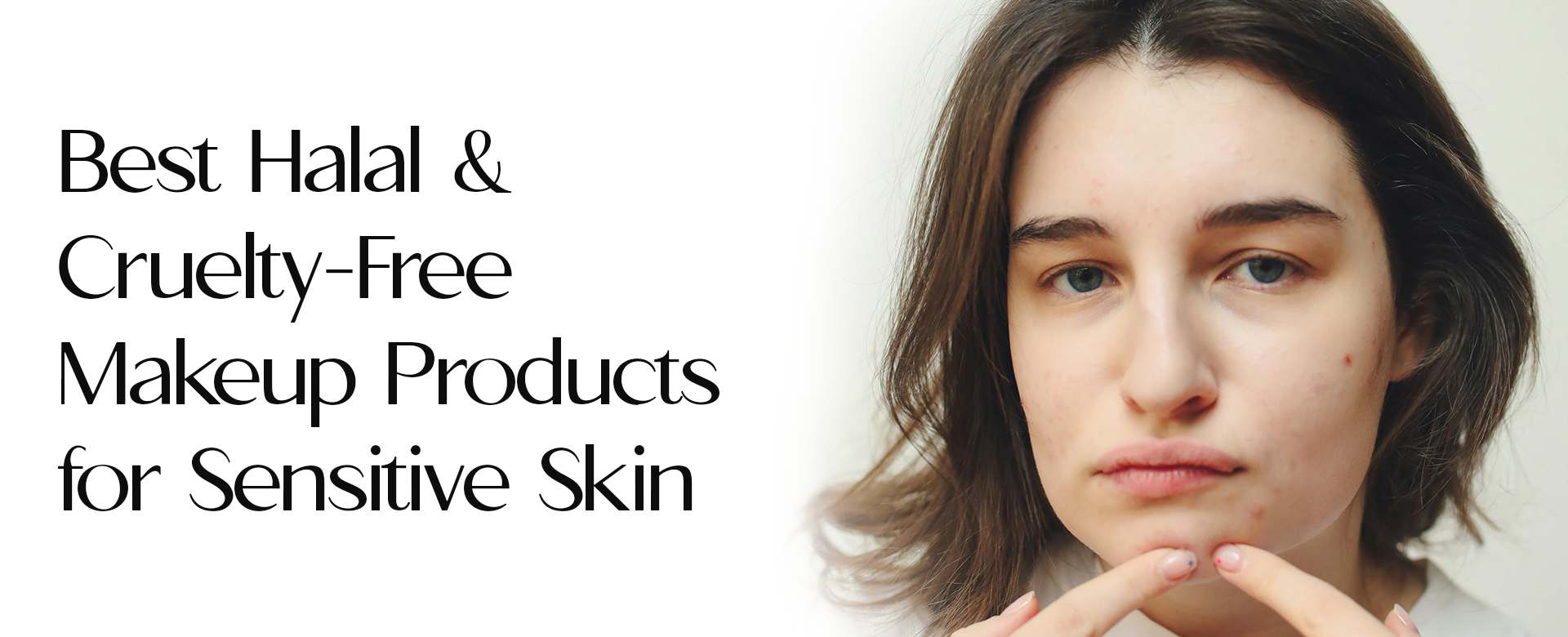
The girlies with sensitive skin know what we’re talking about; a new, expensive foundation causes a flare-up, a mascara leaves our eyes swollen. It can be frustrating to keep wasting money on products you’ll never be able to use. There is an easy solution: Halal-certified and cruelty-free beauty products are a genuinely strong fit for sensitive skin. They avoid many of the harsh chemicals and impure ingredients that can trigger reactions making them a safer starting point for anyone with reactive skin.
Halal beauty products are free from alcohol, animal-derived irritants, and often don’t have synthetic fragrances or parabens. Pair that with a clean, simple ingredient list and a quick patch test before full use, and you dramatically reduce the risk of a bad reaction.
What Makes Skin "Sensitive" in the First Place?
Sensitive skin can be harder to deal with than skin that’s just oily or dry. According to Cleveland Clinic, sensitive skin occurs when the skin's protective barrier is weaker than it should be, allowing irritants from the environment and products to penetrate deeper layers and trigger a response.
That response can look different for everyone and can include stinging, burning, itching, redness, or dryness. Cosmetics are one of the main triggering factor of sensitive skin, especially due to ingredients like alcohol, synthetic fragrance, and propylene glycol.
So the makeup we reach for every day matters more than we might think.
Why Halal Certification Is Good For Sensitive Skin?
Here’s a surprising face: halal cosmetic products aren’t just for Muslims. They are, by definition, formulated without a long list of ingredients that dermatologists already recommend people with sensitive skin should avoid.
To earn halal certified makeup status, a product must be free from:
| Ingredient | Why it must be avoided |
| Alcohol | A known skin irritant that strips moisture and disrupts the skin barrier |
| Animal fats from non-halal sources | Unnecessary, often comedogenic, and can trigger allergic reactions |
| Carmine (CI 75470) | An insect-derived red pigment that is not permissible in pure halal beauty and has been linked to allergic reactions |
| Impure or harmful substances | Including lead, mercury, and parabens, which are excluded under halal formulation standards |
The halal certification process also requires manufacturing under clean, contamination-free conditions, which means the entire production chain is audited, and cleanliness is of the essence.
For those of us with sensitive skin, that level of formulation care is exactly what we need.
What to Check Before Buying Makeup?
When choosing any makeup for sensitive skin, apart from certifications, here are the individual ingredients to watch out for:
| Ingredient | Why Avoid It | Commonly Found In |
| Synthetic Fragrance (Parfum) | Covers dozens of undisclosed chemicals that can trigger reactions. | Foundation, concealer, primer, lipstick, blush, eyeshadow, mascara, makeup wipes |
| Parabens (methylparaben, propylparaben, butylparaben) | Synthetic preservatives that can cause allergic contact dermatitis in sensitive skin. | Foundation, concealer, mascara, lipstick, eyeshadow, tinted moisturizers |
| Alcohol / Denatured Alcohol (ethanol, isopropyl alcohol) | Strips the skin of its natural oils and breaks down the moisture barrier, making rosacea or eczema worse. | Liquid eyeliner, setting sprays, primers, foundations, some lipsticks |
| Talc | Often contaminated with asbestos. Can also clog pores and cause irritation and breakouts. | Pressed and loose powder, powder foundation, eyeshadow, blush, bronzer, highlighter |
| Formaldehyde-Releasing Preservatives (DMDM Hydantoin, Quaternium-15, Imidazolidinyl Urea, Diazolidinyl Urea) | Slowly release formaldehyde, a known carcinogen and one of the most common causes of contact dermatitis. | Liquid foundation, mascara, concealer, eyeliner, makeup wipes, setting sprays |
| Sulfates (SLS, SLES) | Aggressive foaming agents that strip natural oils from the skin. | Cleansing makeup removers, makeup wipes, some primers |
| Phthalates (DBP, DEHP — often hidden under "fragrance") | Hormone disruptors linked to reproductive harm and endocrine disruption. Rarely listed by name and frequently concealed within "fragrance" on the ingredient list. | Nail products, fragranced lip products, some foundations and setting sprays |
| Propylene Glycol | A humectant and solvent that can cause contact dermatitis. | Foundation, concealer, primer, lipstick, eyeliner |
| Carmine (CI 75470, Cochineal Extract, E120) | A red pigment derived from crushed insects. Can cause allergic reactions. | Lipstick, lip gloss, blush, eyeshadow |
The fewer ingredients on the list, the better the product is for sensitive skin.
How to Check If a Makeup Product Is Safe for Our Skin
Before using any new halal cosmetic products, a few quick checks go a long way:
-
Look for certifications — Halal certified, cruelty-free, and fragrance-free labels all signal cleaner formulations
-
Read the first five ingredients — these make up the bulk of the formula; if they're familiar and skin-friendly, that's a good sign
-
Search for red-flag ingredients — use the table above as a quick guide
-
Patch test before full use — always, especially for eye and cheek products
How to Patch Test Any New Makeup Product
The American Academy of Dermatology recommends patch testing any new product before adding it to a full routine. Here's how:
-
Cleanse a small area — the inside of the arm or along the jawline works well
-
Apply a small amount of the product as we normally would
-
Leave it on for as long as we'd normally wear it
-
Wait 24–48 hours and check for redness, itching, swelling, or stinging
-
No reaction? It's likely safe to use on the face
-
Reaction? Stop using immediately and note which product caused it — this helps us identify the trigger ingredient
FAQs
-
Are all halal beauty products suitable for people with sensitive skin?
Not necessarily. Always check ingredient lists to be sure.
-
Is cruelty-free makeup always safe for sensitive skin?
Not always. Cruelty-free means no animal testing, but it doesn't guarantee the formula is free from irritants like synthetic fragrance or parabens..
-
What is the most common cause of eye irritation from makeup?
Liquid eyeliner and mascara are the leading causes of eyelid reactions, usually due to fragrance, preservatives, or harsh solvents in the formula — not the pigment itself.
-
How do we know if a product is truly fragrance-free?
Look specifically for the word "fragrance-free" on the label. "Unscented" products can still contain masking fragrances.
-
How long should I patch test a new makeup product?
Dermatologists recommend 24–48 hours as a minimum to catch both immediate irritation and delayed allergic reactions.
Conclusion
Sensitive skin deserves makeup that works with it, not against it. Halal certified makeup clears the field of some of the most common irritants by design: no alcohol, no carmine, no harmful animal derivatives, and a formulation process held to strict purity standards. Pair that with a clean ingredient list free from synthetic fragrance, parabens, and talc, and a simple patch test habit, and building a makeup routine that our skin actually loves becomes a lot more achievable.
Find Your Perfect Match with HAYA Beauty
HAYA Beauty is fully certified halal, cruelty-free, and formulated without alcohol, carmine, parabens, or harsh chemicals.
Every product in the HAYA collection is designed with purity and performance in mind, ideal for sensitive eyes and skin.
Sources
-
Sensitive Skin: What It Is, Symptoms, Causes & Treatment - A Cleveland Skin Clinic blog on sensitive skin and how to help manage it as well as avoid flare-ups.
-
Which Brands Use Carmine? - A natural food color manufacturer explains what Carmine is and which makeup brands use it.
-
How to Test Skin Care Products - An American Academy of Dermatology blog on how to check products on skin to see if they trigger an allergic reaction.

 English
 Arabic
 French
 Spanish
 Deutsch
 Turkish
 Dutch
Dutch
 Italiano
 Russian
 Romaian
 Portuguese (Brazil)
 Greek
Greek