


In today’s digital world, websites and web applications have become an essential part of businesses, education, entertainment, healthcare, banking, and communication. From online shopping platforms to social media applications, almost every digital service relies on web development. As technology continues to evolve, the demand for skilled developers who can handle both the front-end and back-end of applications has increased significantly. This is where Full Stack Development plays an important role.
Full Stack Development is one of the most popular and in-demand fields in the technology industry. A full stack developer is a professional who can work on both the client side and server side of web applications. This means they can design user interfaces, develop application functionality, manage databases, and handle server operations. Full stack developers have knowledge of multiple technologies and can build complete web applications from start to finish.
Because businesses today prefer flexible and multi-skilled professionals, full stack development has become a highly valuable career path. Companies rely on full stack developers to create responsive, secure, and scalable web applications efficiently.
What is Full Stack Development?
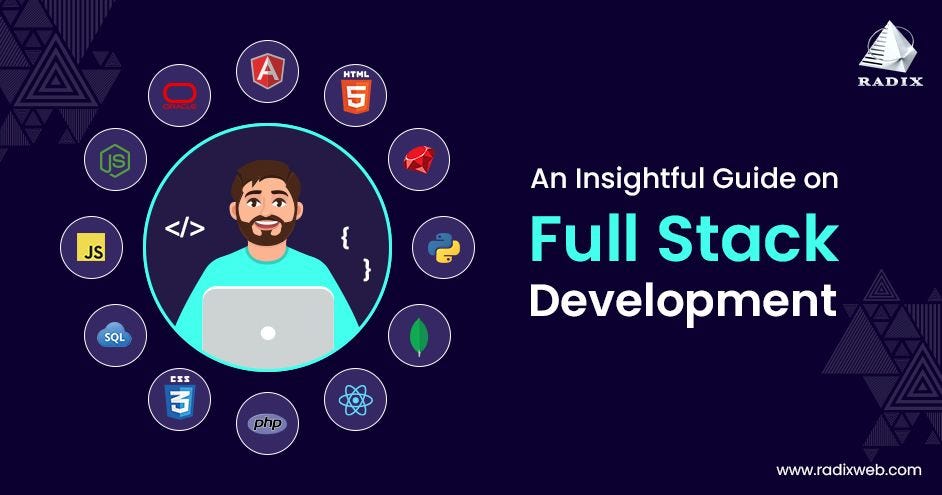
Full Stack Development refers to the process of developing both the front-end and back-end parts of a website or web application. It involves working with different technologies, programming languages, databases, frameworks, and servers to create fully functional digital platforms.
The front-end is the visible part of a website that users interact with, including layouts, buttons, navigation menus, and visual elements. The back-end is responsible for server operations, databases, authentication, and application logic that work behind the scenes.
A full stack developer combines both front-end and back-end skills to manage complete application development. This allows developers to handle multiple aspects of a project without depending entirely on separate teams.
Components of Full Stack Development
Full stack development mainly includes three important components: front-end development, back-end development, and database management.
Front-End Development
Front-end development focuses on the visual appearance and user experience of a website or application. It includes everything users see and interact with directly on their screens.
Front-end developers use technologies such as HTML, CSS, and JavaScript to create responsive and attractive interfaces. Modern frameworks like React, Angular, and Vue.js are also widely used to improve user experience and application performance.
The main goal of front-end development is to ensure that websites are visually appealing, easy to navigate, and responsive across different devices.
Back-End Development
Back-end development focuses on the server side of applications. It handles data processing, business logic, authentication, APIs, and communication between the server and the database.
Back-end developers commonly use programming languages such as Python, Java, PHP, Node.js, and Ruby. Frameworks like Django, Express.js, and Spring Boot are also used for efficient development.
The back-end ensures that applications function properly, securely manage data, and process user requests efficiently.
Database Management
Databases are essential for storing and managing application data. Full stack developers work with databases to store user information, transactions, application records, and other important data.
Popular databases include MySQL, PostgreSQL, MongoDB, and Oracle. Developers use database management systems to organize, retrieve, and update information effectively.
Efficient database management improves application performance, security, and scalability.
Technologies Used in Full Stack Development
Full stack development involves multiple technologies and tools that work together to create complete applications.
Front-End Technologies
- HTML
- CSS
- JavaScript
- React
- Angular
- Vue.js
Back-End Technologies
- Node.js
- Python
- Java
- PHP
- Ruby
Databases
- MySQL
- MongoDB
- PostgreSQL
Other Tools and Technologies
- Git and GitHub
- APIs
- Cloud Computing
- Docker
- Version Control Systems
These technologies help developers build modern, secure, and scalable applications efficiently.
Importance of Full Stack Development
Full stack development has become extremely important because businesses require complete and efficient web solutions. Full stack developers can work on multiple layers of an application, reducing development time and improving collaboration.
One major advantage of full stack development is flexibility. Full stack developers can switch between front-end and back-end tasks depending on project requirements. This makes them highly valuable for startups and companies with smaller development teams.
Full stack development also improves project understanding because developers can manage the entire workflow of an application. This leads to better communication, faster problem-solving, and more efficient development processes.
Another important benefit is cost efficiency. Hiring full stack developers can reduce the need for separate front-end and back-end teams, helping organizations save resources.
Applications of Full Stack Development
Full stack development is widely used in creating modern websites and web applications.
E-commerce websites use full stack development to manage product listings, payment systems, customer accounts, and order processing. Social media platforms rely on full stack technologies for user interactions, messaging systems, and content management.
Educational platforms use full stack development for online learning systems, student management, and virtual classrooms. Banking and financial applications also use full stack technologies for secure transactions and account management.
Full stack development is also widely used in healthcare systems, entertainment platforms, travel websites, cloud applications, and business management systems.
Advantages of Full Stack Development
Full stack development offers several advantages for businesses and developers.
One major advantage is versatility. Full stack developers can work on multiple parts of an application, making them highly flexible professionals.
Another benefit is faster development because one developer or team can manage both front-end and back-end tasks efficiently. This improves communication and reduces project delays.
Full stack development also supports better troubleshooting because developers understand how different parts of an application interact with each other.
Some additional advantages include:
- Cost efficiency
- Better project management
- Improved scalability
- Faster deployment
- Strong career opportunities
Because of these benefits, full stack development has become highly popular in the software industry.
Challenges in Full Stack Development
Despite its advantages, full stack development also comes with challenges.
One major challenge is the need to learn multiple technologies and frameworks. Full stack developers must continuously update their skills to keep up with rapidly changing technologies.
Managing both front-end and back-end tasks can also be time-consuming and demanding. Developers need strong problem-solving skills and technical knowledge to handle complex applications effectively.
Security is another important challenge. Full stack developers must ensure that applications are protected against cyber threats, data breaches, and vulnerabilities.
Maintaining performance and scalability for large applications can also be difficult without proper planning and architecture.
Skills Required for Full Stack Development
Full stack developers require a combination of technical and soft skills.
Important technical skills include knowledge of programming languages, front-end frameworks, databases, APIs, and server management. Developers should also understand responsive design, cloud computing, and cybersecurity basics.
Problem-solving abilities are highly important because developers often need to identify and fix technical issues quickly.
Communication and teamwork skills are also valuable because developers work closely with designers, project managers, and clients during application development.
Continuous learning is essential in full stack development because technologies evolve rapidly.
Career Opportunities in Full Stack Development
Full stack development has become one of the most in-demand career fields in the IT industry. Companies around the world are searching for professionals who can build complete web applications efficiently.
Popular career roles include:
- Full Stack Developer
- Web Developer
- Front-End Developer
- Back-End Developer
- Software Engineer
- Application Developer
Full stack developers are hired by technology companies, startups, e-commerce businesses, financial institutions, healthcare organizations, and multinational corporations.
Freelancing opportunities are also very popular in this field because businesses frequently require web development services.
Because of high demand and versatile skills, full stack development is considered a highly rewarding and well-paying career option.
Future Scope of Full Stack Development
The future of full stack development is extremely promising as businesses continue moving toward digital transformation. The increasing demand for websites, mobile applications, and cloud-based systems is creating more opportunities for full stack developers.
Modern technologies such as Artificial Intelligence, cloud computing, blockchain, and Internet of Things (IoT) are also influencing the future of web development. Full stack developers who learn modern frameworks and technologies will have strong career growth opportunities.
As companies continue investing in digital platforms and online services, the demand for skilled full stack developers is expected to grow significantly in the coming years.
Conclusion
Full Stack Development has become one of the most important fields in modern technology. It allows developers to build complete web applications by combining front-end, back-end, and database management skills.
From e-commerce and healthcare to social media and education, full stack development supports the digital systems used in everyday life. Its flexibility, efficiency, and versatility make it highly valuable for businesses and developers alike.
Although full stack development requires continuous learning and technical expertise, it offers excellent career opportunities and strong future growth. As technology continues to evolve, full stack developers will remain essential in building innovative and user-friendly digital solutions.
FAQs
1. What is Full Stack Development?
Full Stack Development is the process of developing both the front-end and back-end parts of web applications.
2. What skills are required for Full Stack Development?
Programming, front-end frameworks, databases, APIs, problem-solving, and server management skills are important.
3. Which languages are used in Full Stack Development?
Popular languages include HTML, CSS, JavaScript, Python, Java, PHP, and Node.js.
4. Is Full Stack Development a good career?
Yes, full stack development is a highly in-demand and well-paying career in the IT industry.
5. What is the future scope of Full Stack Development?
The future is very promising because businesses increasingly rely on websites, cloud applications, and digital platforms.

 Arabic
 French
 Spanish
 Portuguese
 Deutsch
 Turkish
 Dutch
Dutch
 Italiano
 Russian
 Romaian
 Portuguese (Brazil)
 Greek
Greek