


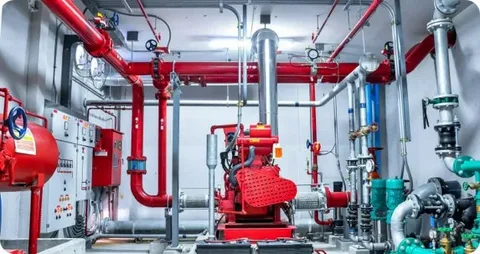
Workplace safety encompasses many responsibilities for facility managers and building owners. Among the most critical is ensuring that fire protection systems function reliably at all times. A fire in a workplace can cause injuries, fatalities, and permanent business closure. Proper fire protection maintenance is the most effective strategy for preventing these outcomes. It is also a legal obligation that employers and building owners cannot ignore.
Fire protection maintenance in workplaces involves more than annual inspections. It requires a systematic, multi-layered approach that addresses every component. It demands clear ownership, documented processes, and qualified service partners. When done correctly, it creates a workplace environment where fire emergencies are effectively controlled. This guide explores the key strategies that make workplace fire protection genuinely reliable.
Establishing a Formal Fire Protection Maintenance Policy
Every workplace needs a formal fire protection maintenance policy. This policy defines who is responsible for what and when. It specifies the service providers authorized to work on the system. It establishes documentation standards for all inspection and testing activities. It also outlines the process for addressing deficiencies discovered during inspections.
Without a formal policy, maintenance becomes inconsistent and poorly documented. Individual staff members may handle tasks they are not qualified to perform. Important activities get deferred when budget or operational pressures arise. A written policy prevents these gaps by creating clear expectations and accountability. It also demonstrates to regulators and insurers that fire safety is taken seriously.
Assigning Responsibility to Qualified Personnel
Someone in the organization must own fire protection maintenance. This responsibility should rest with a facilities manager or safety officer. That individual coordinates with external service providers on scheduling and access. They review inspection reports and ensure deficiencies are corrected promptly. They maintain the documentation archive that proves compliance over time.
In larger organizations, this responsibility may involve a dedicated safety team. Team members may hold formal fire safety certifications appropriate for their roles. They conduct interim visual inspections between professional service visits. They respond to alarm events and coordinate with fire departments as needed. This internal expertise complements external professional services effectively.
Understanding Regulatory Requirements for Workplace Fire Systems
Fire protection regulations for workplaces are comprehensive and jurisdiction-specific. Occupational health and safety legislation requires adequate fire suppression in most workplaces. Local fire codes specify the required system type for different occupancy categories. NFPA 25 establishes the inspection and testing frequencies that regulators expect. Understanding which regulations apply is the starting point for any compliance strategy.
Most jurisdictions require annual comprehensive inspections by qualified professionals. Some component tests are required more frequently depending on system type. Quarterly alarm valve inspections are required for many wet pipe systems. Weekly supervisory valve checks are required in high-occupancy buildings. Understanding these frequencies helps build an accurate and complete maintenance schedule.
The Consequences of Regulatory Non-Compliance
Fire code violations in workplaces carry serious consequences for employers. Fines from fire marshals can be substantial and are often calculated per violation. Repeat violations may result in mandatory evacuation orders that halt operations. Business interruption from a forced closure is extraordinarily costly. Regulatory non-compliance also creates significant civil liability exposure.
Workplace safety regulators treat fire system non-compliance seriously. They view inadequate fire protection as a direct threat to worker safety. Violations may be referred to occupational safety enforcement bodies for additional action. Workers who are injured in a fire may have grounds for additional legal claims. Compliance is not just the law; it is fundamental to worker protection.
Key Maintenance Strategies for Wet Pipe Sprinkler Systems
Wet pipe systems are the most common type found in commercial workplaces. They hold water under pressure throughout the pipe network at all times. When a head activates from heat, water discharges immediately without delay. This immediacy makes them highly effective for fast fire control in most environments.
Wet pipe maintenance focuses on several critical areas. Pipe integrity checks identify corrosion, mechanical damage, and joint condition. Control valve inspections confirm that all valves are in their required open position. Alarm test procedures verify that waterflow triggers correct notification and monitoring signals. Regular pressure checks confirm that system pressure is within normal operational parameters.
Managing Corrosion in Wet Pipe Systems
Internal corrosion is the leading long-term threat to wet pipe system reliability. Oxygen dissolved in standing water attacks steel pipe from the inside. Over time, corrosion creates tubercles that restrict water flow through the pipe. It also creates pinhole leaks that weaken system pressure and cause water damage. Corrosion management is therefore a critical component of any maintenance strategy.
Nitrogen-based corrosion inhibition systems are increasingly common in commercial buildings. They displace dissolved oxygen with inert nitrogen gas to slow corrosion rates. Regular water testing identifies elevated corrosion byproducts that signal active corrosion. Internal pipe inspections every five years reveal corrosion extent and guide remediation decisions. Addressing corrosion early prevents expensive mid-life system replacements.
Dry Pipe and Pre-Action System Maintenance Strategies
Dry pipe systems are used in unheated spaces like parking structures and loading docks. They require additional maintenance attention compared to wet pipe systems. Air pressure management is critical to prevent premature trips and moisture accumulation. Annual trip tests confirm that the system flows water within acceptable time limits. Air supply compressors and pressure settings need regular inspection and adjustment.
Moisture accumulation inside dry pipe systems causes corrosion and reliability issues. Auxiliary drains must be checked and drained regularly during the heating season. Low-point drains should be inspected and operated after every test or system activation. Accumulated moisture that is not removed accelerates internal pipe corrosion significantly. This specific maintenance task is often overlooked but critically important.
Pre-Action System Testing Complexity
Pre-action systems add detection system requirements to standard sprinkler maintenance. The detection system must trigger in coordination with sprinkler head activation. Integrated testing of both systems together is required to verify proper operation. This complexity requires service providers with specific pre-action system expertise. Not all sprinkler maintenance providers are equally qualified to service these systems.
Solenoid valves in pre-action systems require annual operational testing. These valves release water into the pipe network when the detection system activates. A failed solenoid means the system cannot transition from pre-action to active suppression. Testing confirms that solenoid response time meets system design specifications. This single component failure can render an entire pre-action system ineffective.
Training Staff on Fire System Awareness and Impairment Management
Fire protection maintenance is not solely a professional service provider responsibility. Workplace staff play an important role in day-to-day system protection. They must recognize conditions that may impair system performance and report them. They must also understand how to respond when system work creates temporary impairments. This awareness training is an often-overlooked component of workplace fire protection.
Staff should be trained to report any sprinkler heads that appear physically damaged. They should know to report changes in storage arrangements near sprinkler heads. They should understand that closed valves need to be reported to facilities immediately. This front-line awareness creates an additional layer of daily system protection. Professional maintenance augmented by informed staff delivers the strongest overall coverage.
Fire Watch Procedures During System Impairments
When any part of a fire system is temporarily out of service, fire watches are required. A fire watch involves trained personnel regularly patrolling affected building areas. They carry communication devices and know how to summon emergency services. Fire watch procedures must be documented and practiced before impairments occur. Many jurisdictions require fire watch to begin within 10 minutes of system impairment.
Planning for impairments in advance prevents compliance violations and confusion. Maintenance schedules should include notifications to the fire marshal when required. Temporary system shutdowns for maintenance should be completed as quickly as possible. Minimizing impairment duration reduces fire watch costs and risk exposure. Professional providers work efficiently to minimize time during system shutdowns.
Choosing experienced providers who truly understand fire sprinkler system maintenance makes every aspect of workplace fire protection more effective. Their technical depth ensures accurate code compliance across all system types. Their documentation practices satisfy regulatory and insurance requirements completely. Their efficiency minimizes operational disruption during planned maintenance windows. They are genuine partners in the ongoing mission of creating safer workplaces for everyone.
Conclusion
Fire protection maintenance in workplaces requires a strategic, multi-faceted approach. Formal policies, regulatory compliance, system-specific maintenance, and staff training all play essential roles. No single element is sufficient on its own to create truly reliable fire protection. When all elements work together, they create a workplace where the risk of a catastrophic fire event is genuinely minimized. Commitment to this comprehensive strategy is what distinguishes organizations that truly prioritize the safety of the people who work within their buildings.

 Arabic
 French
 Spanish
 Portuguese
 Deutsch
 Turkish
 Dutch
Dutch
 Italiano
 Russian
 Romaian
 Portuguese (Brazil)
 Greek
Greek