


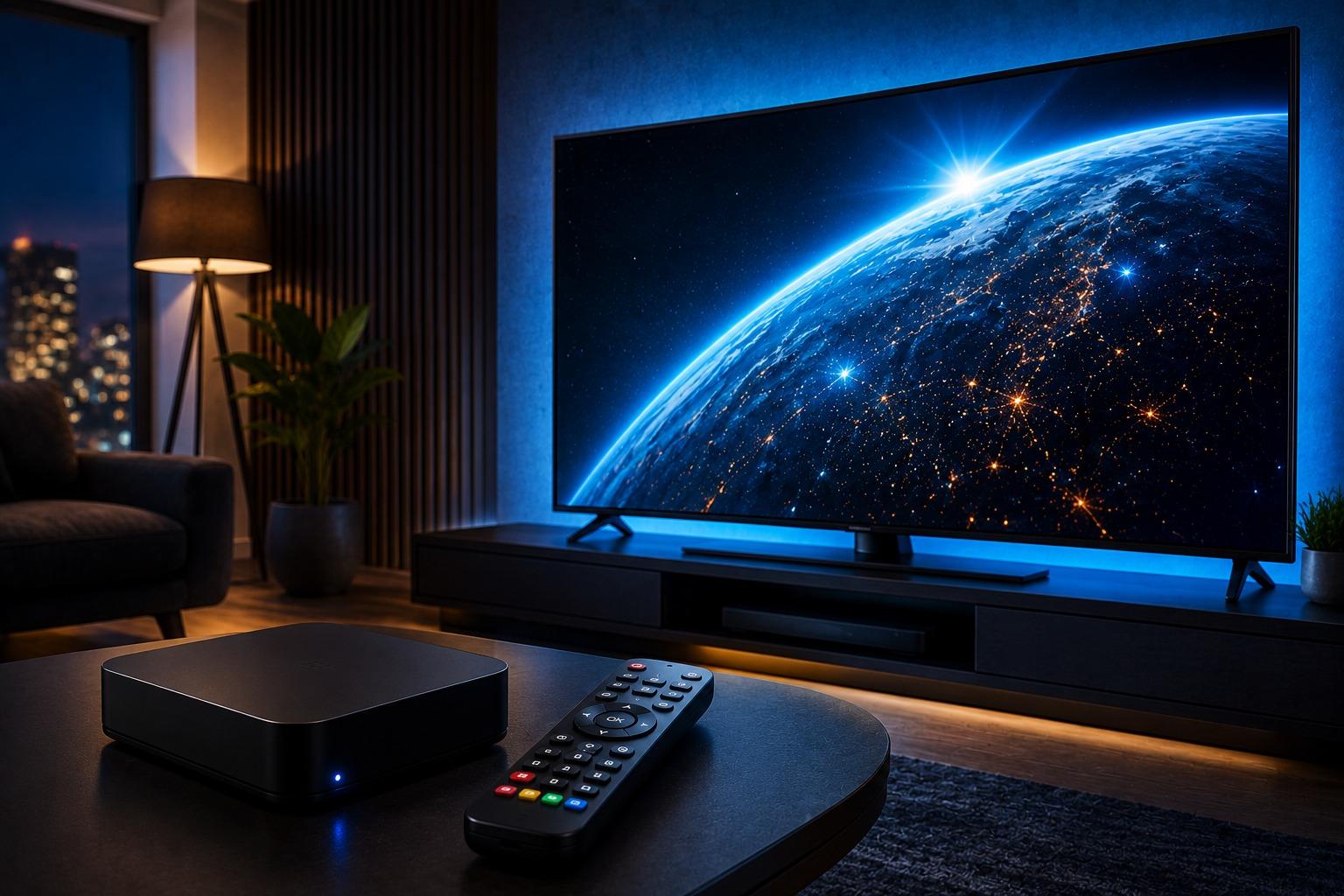
Think about how people watched television fifteen years ago.
A family would gather around one television set, wait for a specific show to start, and hope nobody missed it. If plans changed, the program was gone. Entertainment was tied to a place, a schedule, and a cable connection.
Now compare that with how most people watch content today.
Someone starts a movie on a smart TV, continues it later on a tablet, and checks sports highlights from a phone while commuting. The difference is not just technology. It is flexibility.
That flexibility is one of the biggest reasons internet-based TV continues attracting viewers who want entertainment that works around their lifestyle instead of the other way around.
The Problem With Fixed Viewing
Traditional cable was built for a world where households consumed content at the same time and in the same location.
Modern life rarely works that way.
Parents have different schedules from their children. Remote workers may take breaks at unusual hours. Students often consume content late at night. In many homes, nobody follows the same routine.
When entertainment depends on fixed schedules, viewers inevitably miss content or feel restricted by programming times.
Internet TV removes that pressure completely.
Entertainment No Longer Lives in One Room
One subtle but important change is where viewing happens.
Television used to belong to the living room. Today, content follows the viewer.
A sports fan can watch a live match while traveling. A professional can catch up on news between meetings. A student can continue a series from a laptop after class.
The television experience is no longer attached to a single screen.
That shift has fundamentally changed consumer expectations.
Choice Has Become More Important Than Channels
Years ago, television providers competed by offering more channels.
Today, viewers care more about access than numbers.
People want:
- The freedom to watch whenever they choose
- Content recommendations based on interests
- Easy switching between devices
- Access to both live and on demand programming
In other words, convenience has become more valuable than quantity.
Why Flexibility Influences Viewing Habits
An interesting trend has emerged over the last few years.
The more freedom viewers receive, the more often they engage with content.
Instead of waiting for entertainment opportunities, people can fit viewing into small moments throughout the day.
This is one reason services offering flexible access continue gaining attention among modern audiences. Viewers appreciate having entertainment available when it is convenient rather than when broadcasters decide to schedule it.
The value is not simply having more content. The value is having control.
The Rise of Personalized Television
Traditional television delivered the same experience to everyone.
Streaming platforms changed that model completely.
When two people open the same service, they often see entirely different recommendations, watchlists, and content suggestions.
This personalization helps viewers spend less time searching and more time enjoying entertainment.
Companies such as Netflix helped popularize this approach, while platforms like YouTube further reinforced the expectation that content should adapt to the user.
Today, personalization is no longer considered a premium feature. It is expected.
A Different Definition of Convenience
Convenience once meant having hundreds of channels.
Now it means:
- Watching anywhere
- Starting instantly
- Switching devices effortlessly
- Accessing content without complicated hardware
The definition of a good television experience has changed dramatically.
Consumers increasingly judge entertainment services by how easy they make everyday viewing rather than how many channels they advertise.
Looking Ahead
The future of television is unlikely to be defined by cables, boxes, or broadcast schedules.
Instead, it will be shaped by accessibility, personalization, and user control.
As internet infrastructure improves and streaming technology becomes even more sophisticated, viewers will expect greater flexibility than ever before.
The companies that deliver that experience will continue leading the entertainment industry.
Final Thoughts
Internet-based TV is more flexible than traditional cable because it aligns with how people actually live today. Modern viewers want entertainment that fits into their schedule, works across multiple devices, and adapts to individual preferences.
The shift toward internet TV is not simply about technology. It reflects a broader change in consumer expectations where convenience, freedom, and control matter more than ever.
And as those expectations continue to evolve, flexibility will remain one of the most important factors shaping the future of television.

 English
 Arabic
 French
 Spanish
 Portuguese
 Turkish
 Dutch
Dutch
 Italiano
 Russian
 Romaian
 Portuguese (Brazil)
 Greek
Greek