


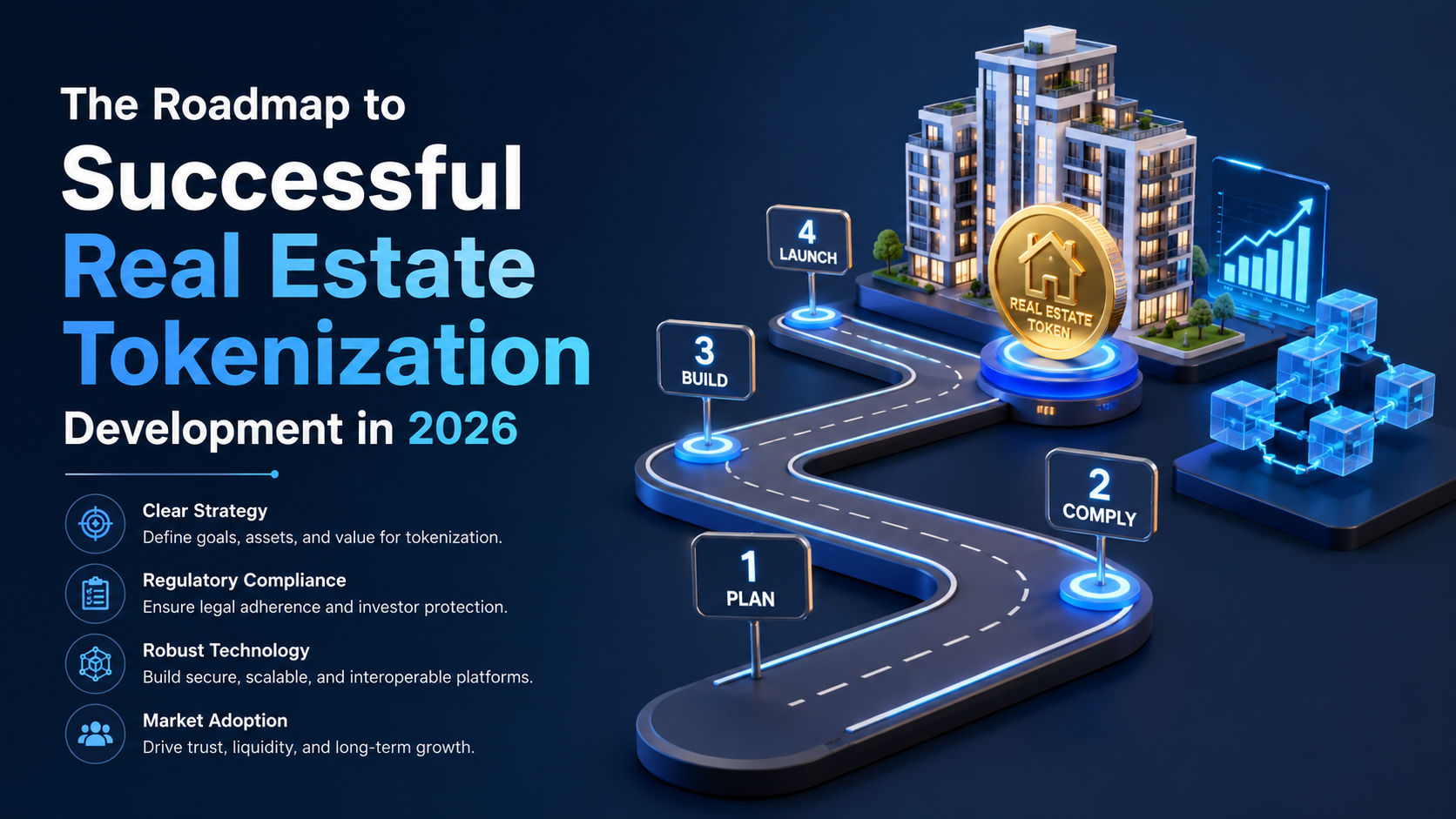
The real estate sector has traditionally relied on conventional financing structures, lengthy ownership transfers, and limited investor participation. As blockchain adoption continues to expand across industries, property owners, developers, and investment firms are evaluating new methods for raising capital and managing real estate assets. One of the most discussed developments in this area is Real Estate Tokenization.
By converting ownership interests into digital tokens recorded on blockchain networks, property investments can be divided into smaller units and offered to a broader range of investors. This approach is attracting attention from commercial property owners, residential developers, real estate funds, and institutional investors seeking alternative investment structures.
In 2026, organizations entering this market require a structured approach rather than simply adopting blockchain technology. Successful real estate tokenization development involves legal planning, asset evaluation, platform selection, compliance management, investor onboarding, and ongoing administration. A well-defined roadmap helps organizations move from concept to market participation with greater confidence and fewer operational challenges.
Understanding the Foundation of Real Estate Tokenization
Before beginning any project, organizations must understand what Real Estate Tokenization involves.
Tokenization refers to the process of representing ownership rights of a physical property through blockchain-based digital tokens. These tokens may represent full ownership, fractional ownership, revenue-sharing arrangements, or other investment structures depending on the legal framework selected for the project.
Through real estate asset tokenization, a commercial office building, residential development, warehouse facility, hotel, or mixed-use property can be divided into multiple digital units. Investors purchase tokens instead of acquiring an entire property, creating opportunities for wider market participation.
The first stage of any roadmap involves defining the business objectives behind tokenization. Some organizations seek broader investor access, while others focus on raising capital more efficiently or improving secondary market participation.
Step 1: Identifying Suitable Real Estate Assets
Not every property is an ideal candidate for tokenization.
Property owners should conduct detailed assessments before launching a project. Asset quality, valuation stability, income generation potential, market demand, and ownership structure all influence project success.
Commercial buildings with established rental income often attract investor attention because cash flows can be evaluated more easily. Multifamily residential projects, hospitality assets, industrial facilities, and mixed-use developments also present opportunities.
A successful real estate asset tokenization strategy begins with selecting assets that have strong fundamentals and clear investment appeal.
During this phase, legal ownership records, property valuation reports, operational performance, and risk factors should be reviewed carefully.
Step 2: Conducting Legal and Regulatory Analysis
Legal compliance remains one of the most important aspects of Real Estate Tokenization.
Every jurisdiction has unique regulations governing securities, digital assets, investor protections, taxation, and property ownership. Organizations must determine how tokens will be classified and whether securities regulations apply.
Many projects engage a Real Estate Tokenization company with legal and regulatory expertise to navigate these requirements. Legal advisors typically review ownership structures, investor rights, disclosure obligations, and transfer restrictions before token issuance begins.
Without proper legal preparation, projects may face delays, regulatory scrutiny, or limitations on investor participation.
A detailed compliance framework established early in the process helps reduce uncertainty throughout the project lifecycle.
Step 3: Defining the Tokenization Structure
After regulatory requirements have been assessed, organizations must determine how tokens will represent ownership interests.
Several structures are commonly used within Real Estate Tokenization:
Fractional Ownership Tokens
Investors purchase portions of a property through token holdings. Income distributions and ownership rights are allocated according to token ownership percentages.
Revenue Participation Tokens
Investors receive a share of rental income or project-generated revenue rather than direct ownership rights.
Equity-Based Tokens
Tokens represent ownership interests in entities that hold real estate assets.
Debt-Based Tokens
Investors participate as lenders and receive returns according to predefined lending agreements.
The selected structure should align with investment objectives, regulatory requirements, and investor expectations.
Step 4: Selecting a Blockchain Infrastructure
Technology selection plays a significant role in real estate tokenization development.
Organizations must evaluate blockchain networks based on transaction costs, security, ecosystem maturity, developer support, and interoperability.
Public blockchain networks often provide broader market visibility and liquidity opportunities. Private or permissioned blockchain environments may offer additional control and governance options.
A Real Estate Tokenization Development company typically assists clients in selecting infrastructure that aligns with business goals and compliance requirements.
Technology decisions made during the early stages can influence future operations, investor experiences, and platform maintenance requirements.
Step 5: Smart Contract Development
Smart contracts govern token issuance, ownership transfers, distributions, and administrative functions.
These digital agreements execute predefined actions when specified conditions are met. For example, rental income distributions can be processed according to token ownership percentages without requiring extensive manual administration.
During Real Estate Tokenization Platform Development, organizations must establish detailed testing procedures to verify contract functionality and identify vulnerabilities before deployment.
Independent audits are commonly performed to evaluate contract logic, security considerations, and operational reliability.
Well-designed smart contracts contribute to efficient platform operations and investor confidence.
Step 6: Building a Compliant Investor Onboarding Process
Investor onboarding is a critical component of successful Real Estate Tokenization.
Projects must establish procedures for identity verification, anti-money laundering reviews, investor suitability assessments, and compliance monitoring.
Many Real Estate Tokenization Services providers integrate Know Your Customer (KYC) and Anti-Money Laundering (AML) processes directly into their platforms.
The onboarding experience should balance compliance requirements with user convenience. Excessive complexity can discourage participation, while insufficient verification may create regulatory concerns.
A structured onboarding framework supports long-term platform operations and investor management.
Step 7: Developing the Investment Platform
The investment platform serves as the primary interface between investors and tokenized assets.
Real Estate Tokenization Platform Development involves designing dashboards, investor portals, asset information pages, transaction management systems, and reporting tools.
Investors typically expect access to:
- Property details
- Investment performance reports
- Ownership records
- Distribution history
- Transaction activity
- Regulatory disclosures
User experience considerations should remain a priority throughout development. Investors often evaluate platforms based on accessibility, functionality, and information availability.
A platform that presents complex investment information in an organized manner can improve participation rates and investor satisfaction.
Step 8: Token Issuance and Distribution
Once legal, technical, and operational components have been completed, token issuance can begin.
This stage includes:
- Token creation
- Allocation management
- Investor registration
- Distribution procedures
- Ownership recording
A Real Estate Tokenization Development company often coordinates these activities to maintain consistency between legal documentation, blockchain records, and investor accounts.
Detailed recordkeeping remains important during issuance to support future audits, reporting obligations, and compliance reviews.
Proper execution during this phase establishes the foundation for ongoing platform operations.
Step 9: Marketing the Tokenized Offering
A successful tokenization project requires investor awareness and participation.
Marketing efforts should focus on educating potential investors about the asset, investment structure, expected returns, risks, and ownership rights.
Organizations frequently target:
- Accredited investors
- Institutional investors
- Family offices
- Real estate investment groups
- International investors
A Real Estate Tokenization company may assist with communication strategies, investor engagement initiatives, and offering presentations.
Educational content often plays a valuable role in helping investors understand tokenized property investments and their potential benefits.
Step 10: Managing Secondary Market Opportunities
One of the reasons organizations pursue Real Estate Tokenization is the possibility of creating more active ownership transfer mechanisms.
Traditional real estate transactions often require significant time and administrative effort. Tokenized ownership structures may support secondary market participation where regulations permit.
Organizations should establish clear policies governing token transfers, ownership restrictions, compliance checks, and transaction reporting.
Secondary market functionality depends heavily on jurisdictional requirements and platform capabilities.
Planning for future trading activity during the initial project stages can reduce operational challenges later.
Step 11: Ongoing Asset Management and Reporting
Tokenization does not end after issuance.
Property management, investor communications, financial reporting, and compliance monitoring continue throughout the asset lifecycle.
Investors generally expect regular updates regarding:
- Occupancy rates
- Rental income
- Property performance
- Maintenance activities
- Financial results
- Market developments
Many Real Estate Tokenization Services providers offer reporting tools that support ongoing investor communications and operational oversight.
Consistent reporting contributes to investor engagement and supports long-term platform credibility.
Security Considerations for 2026 Projects
Security remains a major consideration within real estate tokenization development.
Organizations should establish security measures covering:
- Smart contract audits
- Wallet protection
- Access controls
- Data security
- Incident response procedures
- Infrastructure monitoring
Cybersecurity planning should be integrated into every phase of project development rather than treated as a separate activity.
Regular assessments and updates help organizations address evolving security concerns.
The Role of Specialized Development Partners
Many property owners and investment firms lack internal blockchain expertise.
As a result, collaboration with a Real Estate Tokenization Development company has become increasingly common. These organizations provide technical development, legal coordination, compliance support, platform implementation, and project management services.
Selecting an experienced partner requires careful evaluation of:
- Previous projects
- Technical capabilities
- Regulatory knowledge
- Security practices
- Industry expertise
- Support services
Organizations should assess multiple providers before making a final decision.
The quality of implementation often influences investor confidence and operational efficiency.
Common Challenges Organizations Face
Despite growing interest, tokenization projects can encounter several obstacles.
Regulatory uncertainty remains a concern in some jurisdictions. Investor education requirements may also create challenges, particularly among audiences unfamiliar with blockchain-based investments.
Technical integration complexities, compliance obligations, cybersecurity considerations, and operational management requirements can further complicate project execution.
Organizations that address these factors early in the planning process are generally better positioned for long-term success.
Comprehensive preparation reduces the likelihood of costly adjustments after project launch.
Future Outlook for Real Estate Tokenization in 2026
The global real estate market continues to evaluate digital ownership structures and blockchain-based investment models.
As regulatory frameworks mature and institutional participation increases, Real Estate Tokenization is expected to become a more familiar component of property investment strategies.
Real estate asset tokenization is attracting interest across commercial, residential, hospitality, industrial, and alternative property sectors. Technology providers, developers, asset managers, and investors are contributing to the expansion of this ecosystem.
Organizations entering the market in 2026 have access to more sophisticated infrastructure, stronger compliance frameworks, and a growing body of implementation experience compared to earlier years.
Conclusion
The roadmap to successful real estate tokenization development in 2026 extends far beyond blockchain implementation. It requires thoughtful planning, regulatory analysis, asset selection, investor onboarding, platform development, security management, and ongoing operational oversight.
Organizations pursuing Real Estate Tokenization should approach projects with a comprehensive strategy that addresses legal, technical, financial, and operational considerations from the outset.
By working with experienced Real Estate Tokenization Services providers and selecting the right Real Estate Tokenization Development company, property owners and investment firms can establish a foundation for sustainable growth within the expanding digital real estate investment landscape.
As adoption continues to increase, Real Estate Tokenization Platform Development and real estate asset tokenization initiatives are likely to play a larger role in how property investments are structured, managed, and distributed across global markets.

 English
 Arabic
 French
 Spanish
 Portuguese
 Turkish
 Dutch
Dutch
 Italiano
 Russian
 Romaian
 Portuguese (Brazil)
 Greek
Greek