


Introduction
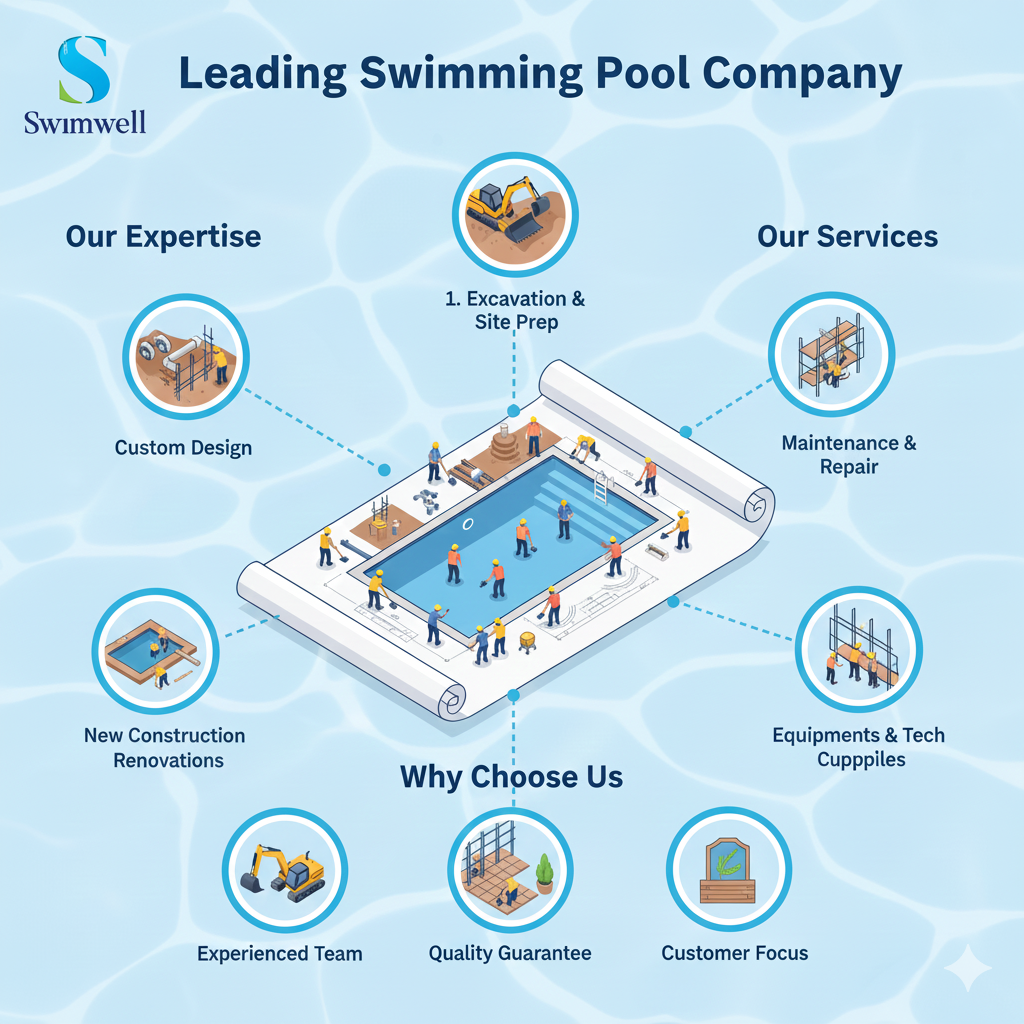
A swimming pool is more than just a recreational feature it is a long-term investment that can enhance the beauty, functionality, and value of a property. Whether it is a residential pool, luxury villa pool, hotel pool, resort pool, or commercial swimming facility, successful swimming pool construction requires careful planning, technical expertise, and quality workmanship.
Understanding the essential stages of swimming pool construction can help property owners know what to expect during the project and appreciate the importance of each phase in creating a durable and long-lasting swimming pool.
Project Planning and Consultation
Every successful swimming pool construction project begins with detailed planning. During this stage, the builder works closely with the client to understand specific requirements, available space, design preferences, and intended pool usage.
Proper planning helps establish clear project goals and ensures that the final design aligns with the client's vision while meeting practical and structural requirements.
Site Inspection and Assessment
Before construction starts, a thorough site inspection is conducted to evaluate the property's conditions.
This assessment includes:
- Soil analysis
- Ground level evaluation
- Drainage assessment
- Utility location identification
- Site accessibility review
A detailed site assessment helps identify potential challenges and allows builders to prepare appropriate construction solutions.
Pool Design and Engineering
After the site evaluation, the design and engineering phase begins.
During this stage, professionals prepare:
- Pool layout plans
- Structural drawings
- Plumbing designs
- Filtration system plans
- Equipment placement details
Proper engineering ensures the pool structure remains stable and performs efficiently over the long term.
Excavation and Ground Preparation
Excavation is one of the first physical stages of swimming pool construction.
Builders carefully remove soil according to the approved design dimensions and depth requirements. Once excavation is completed, the site is prepared for structural work.
Accurate excavation is essential because it forms the foundation for all subsequent construction activities.
Reinforcement Installation
The next stage involves installing reinforcement steel throughout the pool structure.
Reinforcement helps:
- Improve structural strength
- Resist water pressure
- Minimize cracking risks
- Enhance long-term durability
Proper reinforcement placement is critical to ensuring the stability of the swimming pool.
RCC Structure Construction
RCC (Reinforced Cement Concrete) construction is widely used for building durable swimming pools.
During this stage:
- Pool floors are constructed
- Walls are formed
- Structural supports are installed
RCC construction provides the strength and flexibility required for a wide variety of pool designs.
Plumbing and Pipeline Installation
A swimming pool relies on an efficient plumbing network for water circulation and operation.
Builders install:
- Main drains
- Return inlets
- Suction lines
- Overflow systems
- Water circulation pipelines
Well-designed plumbing systems help maintain water quality and ensure efficient pool performance.
Waterproofing Application
Waterproofing is one of the most important stages of swimming pool construction.
Professional waterproofing systems help:
- Prevent water leakage
- Protect concrete structures
- Increase durability
- Reduce maintenance requirements
Effective waterproofing contributes significantly to the long-term lifespan of the swimming pool.
Equipment Installation
Modern pools require specialized equipment to maintain water quality and operational efficiency.
This stage includes installing:
- Pumps
- Filters
- Water treatment systems
- Lighting systems
- Automation controls
Proper equipment installation ensures reliable performance and user convenience.
Tile Work and Interior Finishing
Once the structural and mechanical components are completed, attention shifts to aesthetics.
Interior finishing may include:
- Pool tiling
- Decorative finishes
- Surface treatments
- Pool coping installation
Quality finishing materials enhance both the appearance and durability of the swimming pool.
Decking and Landscape Integration
Many pool projects include improvements to the surrounding area.
Builders may develop:
- Pool decks
- Walkways
- Seating areas
- Landscaping features
These elements improve accessibility and create a more attractive outdoor environment.
Water Filling and Testing
After construction is complete, the pool is filled with water and thoroughly tested.
Testing procedures often include:
- Leak detection
- Plumbing inspections
- Filtration system checks
- Equipment performance evaluation
- Water circulation testing
These inspections help ensure the pool is functioning correctly before handover.
Water Treatment and Balancing
Before the pool can be used, the water must be properly treated and balanced.
This process includes:
- Water quality testing
- Chemical balancing
- Filtration optimization
- System calibration
Balanced water improves safety, comfort, and equipment performance.
Final Inspection and Handover
The final stage of swimming pool construction involves a comprehensive inspection of the completed project.
Builders verify:
- Structural integrity
- Equipment functionality
- Waterproofing performance
- Safety standards
- Overall construction quality
After approval, the pool is handed over to the owner along with operational and maintenance guidance.
Importance of Professional Project Management
Each stage of construction requires coordination between different specialists and teams.
Professional project management helps:
- Maintain quality standards
- Ensure timely completion
- Reduce construction errors
- Improve efficiency
Effective management plays a major role in the success of the project.
Common Challenges During Construction
Swimming pool construction projects may face challenges such as:
- Difficult soil conditions
- Drainage issues
- Weather delays
- Design modifications
Experienced builders are equipped to handle these challenges while maintaining construction quality.
Benefits of Following a Structured Construction Process
A systematic approach to swimming pool construction provides several advantages:
- Better structural durability
- Improved waterproofing performance
- Enhanced safety
- Reduced maintenance requirements
- Long-term reliability
Every stage contributes to creating a swimming pool that performs efficiently for many years.
Conclusion
The essential stages of swimming pool construction include planning, site assessment, design, excavation, reinforcement installation, RCC construction, plumbing, waterproofing, equipment installation, finishing work, testing, and final handover. Each phase plays a crucial role in ensuring the pool is durable, functional, and visually appealing.
For homeowners, villa owners, hotels, resorts, and commercial developers seeking professional pool construction services, Swimwell Pools offers customized pool designs, premium RCC construction, advanced waterproofing systems, modern filtration technology, and expert project management to deliver high-quality swimming pools built for long-term performance and customer satisfaction.
FAQ
1. What is the first stage of swimming pool construction?
The first stage of swimming pool construction is project planning and site assessment, where requirements and site conditions are evaluated.
2. Why is RCC construction commonly used for swimming pools?
RCC construction provides excellent strength, durability, flexibility, and long-term structural stability.
3. How important is waterproofing in swimming pool construction?
Waterproofing prevents leakage, protects the structure, and extends the lifespan of the swimming pool.
4. What equipment is installed during pool construction?
Common equipment includes pumps, filters, water treatment systems, lighting systems, and automation controls.
5. Why is testing necessary before pool handover?
Testing ensures all plumbing, waterproofing, filtration, and operational systems function properly before the pool is handed over to the owner.
Read Our Previous Blog -------> Swimming Pool Construction Cost: What Factors Can Reduce Swimming Pool Construction Cost Without Compromising Quality?

 English
 Arabic
 French
 Spanish
 Portuguese
 Turkish
 Dutch
Dutch
 Italiano
 Russian
 Romaian
 Portuguese (Brazil)
 Greek
Greek