


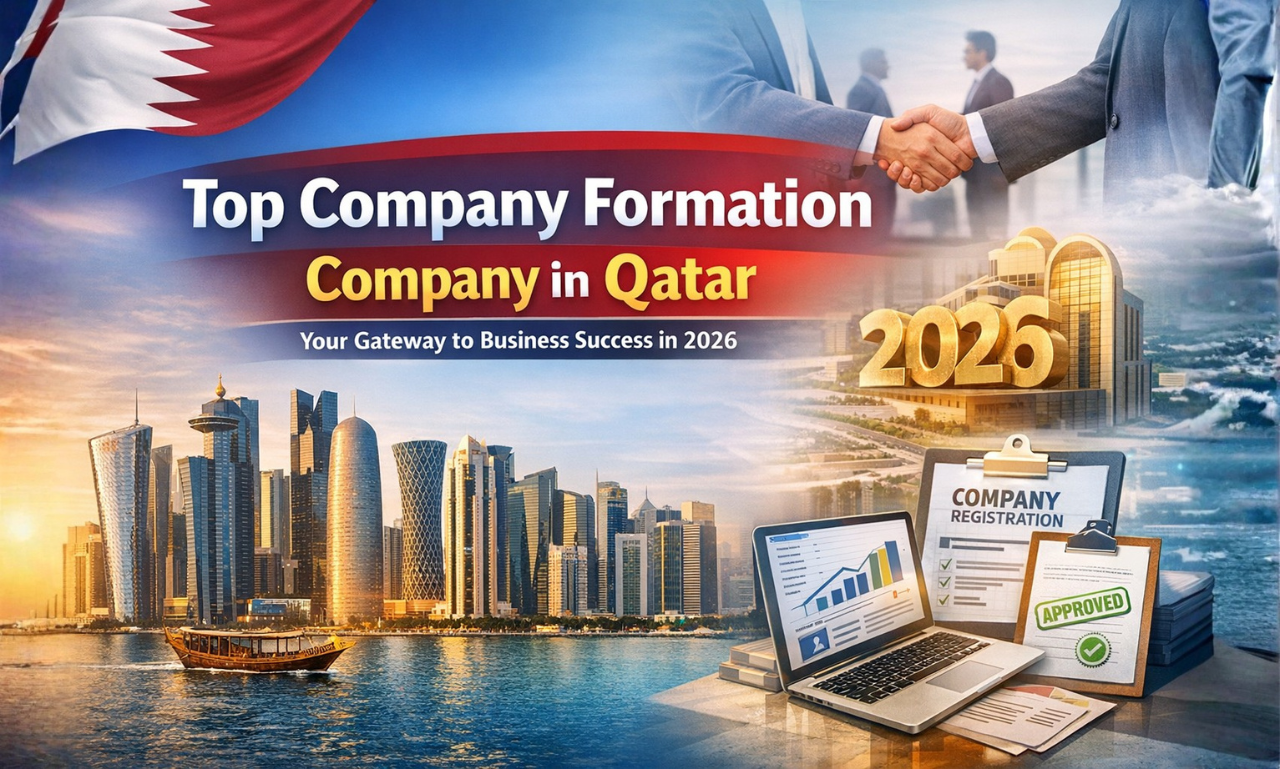
The Middle East has emerged as one of the world's most attractive regions for international business investment. From the UAE's thriving free zones to Saudi Arabia's Vision 2030 transformation and Qatar's sustained infrastructure boom, the opportunities for entrepreneurs and established enterprises have never been broader. Yet with so many markets competing for attention, knowing where to start — and how to start correctly — is what separates businesses that thrive from those that stall before they begin.
Company formation in Middle East is not a single process. Each country has its own legal framework, regulatory bodies, ownership rules, and licensing requirements. This guide focuses on what makes Qatar stand out as the leading choice for business formation in the region in 2026, what the process involves, and how choosing the right professional support — including resources available through Al Akhbar Publication — sets your business up for long-term success.
The Middle East Business Formation Landscape in 2026
Company formation in the Middle East broadly spans three jurisdictions that international investors most frequently consider: the UAE, Saudi Arabia, and Qatar. Each has genuine strengths. The UAE, particularly Dubai and Abu Dhabi, offers the region's most mature free zone ecosystem and a well-established services economy. Saudi Arabia, driven by Vision 2030, is opening enormous opportunities in entertainment, tourism, logistics, and manufacturing at a pace that has surprised even seasoned regional investors.
Qatar, however, offers a combination of advantages that positions it uniquely within this competitive landscape. Its political and economic stability is among the most consistent in the Gulf. Its regulatory reforms have opened most commercial sectors to 100 percent foreign ownership, removing the historical barrier of mandatory local partnership. Its corporate tax rate of a flat 10 percent, combined with zero personal income tax, creates a financial environment that competes directly with the UAE. And its investment in world-class physical infrastructure — ports, airports, road networks, and smart city development — gives businesses established here practical operational advantages from day one.
Why Qatar Leads for Company Formation in the Middle East
For businesses evaluating company formation in the Middle East, Qatar's appeal in 2026 is grounded in specifics rather than marketing language. The Qatar Financial Centre offers a regulated, internationally recognised environment for financial services and professional firms, operating under its own legal and tax framework that closely mirrors international standards. Free zones like the Qatar Science and Technology Park provide a streamlined formation pathway for tech, innovation, and research-oriented businesses with additional incentives not available on the mainland.
Mainland company formation under the Ministry of Commerce and Industry remains the best route for businesses targeting the domestic Qatari market, offering the widest range of permitted commercial activities and the most direct access to government and private sector procurement. The Limited Liability Company structure, which limits shareholder liability to equity contribution and accommodates most business types, is the most popular choice among foreign investors entering the Qatari market for the first time.
The formation process itself follows a well-defined sequence: business activity definition, legal structure selection, trade name reservation, documentation preparation, commercial registration, sector-specific licensing where required, employee visa and Qatar ID processing, and corporate bank account opening. Each step has its own timeline, and understanding the dependencies between stages is where professional guidance delivers the most value.
What Makes a Strong Company Formation Consultant
The complexity of company formation in the Middle East across multiple jurisdictions means the quality of your professional support matters enormously. A strong formation consultant does more than file paperwork. They guide your initial structure decisions in a way that aligns with your long-term business model, identify sector-specific licensing requirements before they become blockers, maintain working relationships with the relevant government authorities to expedite approvals, and provide ongoing compliance support — visa renewals, licence maintenance, regulatory reporting — after the initial formation is complete.
When evaluating consultants, prioritise verifiable experience across the specific jurisdiction and business structure you are targeting, full fee transparency with no hidden administrative charges, and client references that speak to post-formation support as much as the initial setup experience. The quality of ongoing service is often where the real difference between consultants becomes apparent.
How Al Akhbar Publication Supports Businesses in the Region
Al Akhbar Publication has built a reputation as a trusted source of business intelligence, job market insights, and industry analysis across the GCC. Its coverage spans Qatar, the UAE, Saudi Arabia, Kuwait, Oman, and Bahrain — making it one of the most comprehensive regional platforms available to entrepreneurs and professionals navigating the Gulf's business environment. For investors researching company formation in the Middle East, Al Akhbar Publication regularly publishes practical guidance on regulatory developments, market entry considerations, and business setup requirements across key Gulf markets. Alongside its career resources, CV posting services, and live job listings, it serves as a genuinely useful reference point for anyone building a commercial presence in the region.
2026 Trends Making Formation Faster and Smarter
Government digitisation programmes across the Middle East are compressing formation timelines significantly. Qatar's online trade name registration, digital commercial licensing portals, and paperless approval workflows for straightforward business types have reduced the administrative burden that once made formation feel daunting. AI-assisted compliance tools are emerging to help businesses manage documentation cycles and renewal obligations more efficiently. Investors who partner with formation consultants aligned with these digital workflows benefit from shorter launch timelines and reduced ongoing administrative costs.
Final Word
Company formation in the Middle East in 2026 offers international entrepreneurs access to some of the world's most dynamic and well-incentivised markets. Qatar stands out within this landscape for its regulatory clarity, fiscal competitiveness, infrastructure quality, and the consistency of its investment environment. Approach the process with a clear understanding of your structure options, the right professional guidance, and reliable market intelligence from regional platforms like Al Akhbar Publication — and your Middle East business will be built on a foundation designed to endure.

 English
 French
 Spanish
 Portuguese
 Deutsch
 Turkish
 Dutch
Dutch
 Italiano
 Russian
 Romaian
 Portuguese (Brazil)
 Greek
Greek