


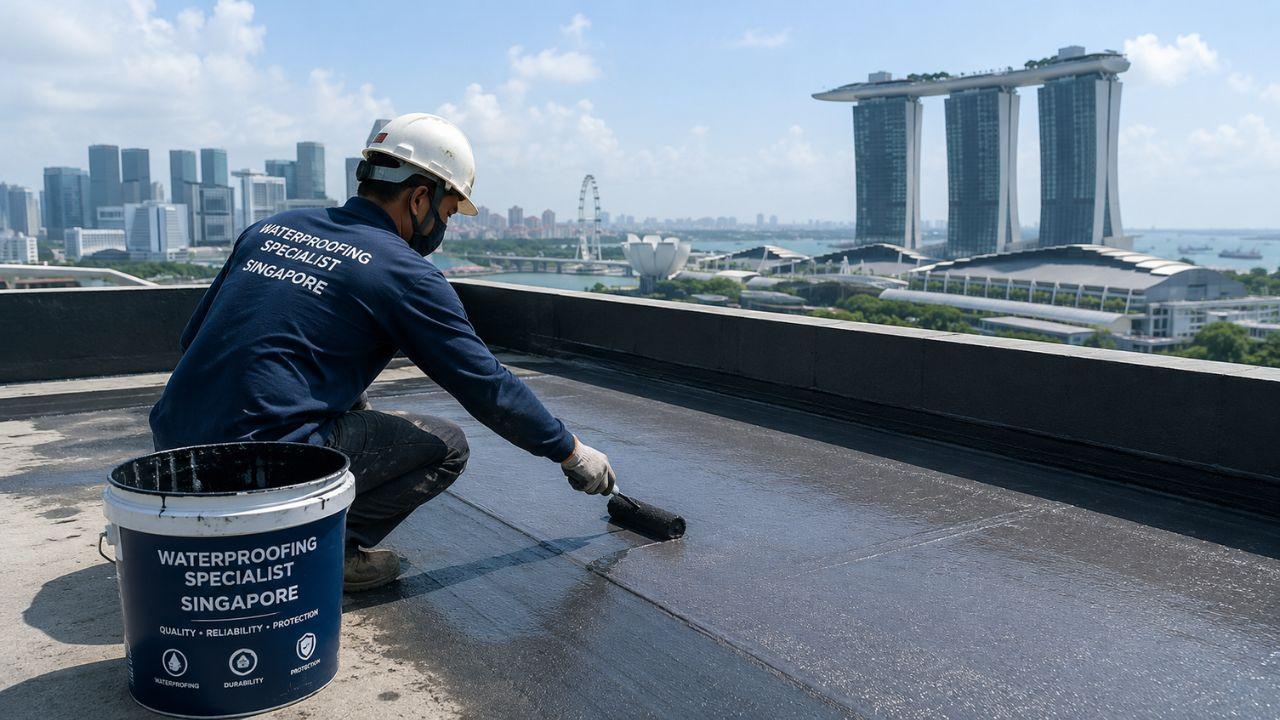
Hiring a waterproofing specialist in singapore at the first sign of moisture can prevent leaks from spreading and damaging your property. Allseal Waterproofing PTE Ltd can help property owners assess suspicious water stains, damp surfaces, cracks, and other signs that may indicate waterproofing failure.
Why Early Waterproofing Inspection Matters
Water intrusion rarely remains limited to one small area. Moisture can travel through cracks, concrete slabs, wall cavities, joints, and gaps around pipes before becoming visible.
A stain on the ceiling may not be directly below the actual entry point. Similarly, dampness on an internal wall may come from an external facade, a bathroom, a roof, or a concealed plumbing connection.
This is why quick surface repairs often fail. Repainting a stained ceiling or applying sealant over a visible crack may temporarily improve the appearance, but it may not stop water from entering the structure.
Early professional inspection can help identify the likely source before the damage becomes more extensive. It can also help distinguish between a waterproofing defect, plumbing leak, drainage issue, condensation problem, or structural crack.
1. Persistent Water Stains on Walls or Ceilings
Water stains are among the most recognisable signs of moisture intrusion. They may appear as yellow, brown, grey, or dark patches on ceilings and walls.
A new stain may look small, but its size does not always reflect the extent of the problem. Water may already have spread behind paint, plaster, ceiling boards, or concrete surfaces.
Pay attention when a stain:
-
Becomes darker after rain
-
Expands over time
-
Returns after repainting
-
Appears below a bathroom
-
Develops near a window or external wall
-
Feels damp when touched
Repainting the surface is not a permanent solution. The moisture source should be identified and treated first.
A specialist may inspect the area above, beside, or outside the stain to determine how water is entering and travelling through the building.
2. Peeling, Bubbling, or Flaking Paint
Paint often loses adhesion when moisture becomes trapped beneath it. You may notice bubbles, blisters, cracks, or sections of paint separating from the surface.
These signs are common on:
-
Bathroom ceilings
-
Walls beside balconies
-
Areas below roofs
-
External-facing walls
-
Ceilings beneath water tanks
-
Walls around windows
-
Rooms next to wet areas
Peeling paint can also result from poor surface preparation or ageing finishes. However, when it appears together with dampness, staining, or a musty smell, water intrusion should be investigated.
Removing and repainting the damaged layer without solving the moisture problem may cause the same defect to return.
3. Recurring Mould and Mildew
Mould needs moisture to grow. If mould repeatedly returns after cleaning, there may be an unresolved dampness problem.
Common areas include bathroom corners, ceilings, wardrobe walls, window edges, kitchens, storerooms, and walls behind furniture.
Poor ventilation can contribute to mould growth, but hidden water leakage may also be responsible. The distinction matters because increasing ventilation alone will not solve active seepage.
Recurring mould may indicate:
-
Condensation
-
External wall seepage
-
Bathroom leakage
-
Roof leakage
-
Concealed pipe problems
-
Moisture trapped behind finishes
Mould should not simply be painted over. The affected surface needs to dry, and the underlying moisture source must be addressed.
Consulting a waterproofing specialist in singapore can help determine whether the mould is connected to a waterproofing problem or another building-maintenance issue.
4. A Musty or Damp Odour
Not every leak is immediately visible. Sometimes, the first warning sign is a persistent musty smell.
This odour may be stronger in enclosed rooms, cabinets, storerooms, bathrooms, or areas with limited ventilation. It can indicate moisture trapped behind walls, beneath floors, inside ceilings, or under built-in furniture.
A damp smell should be investigated when it:
-
Remains after cleaning
-
Returns after the room is ventilated
-
Becomes stronger after rain
-
Appears near a bathroom or balcony
-
Is accompanied by mould or paint damage
Hidden moisture can remain unnoticed for an extended period. A professional assessment may include visual checks, moisture readings, controlled water testing, or examination of adjoining areas.
5. Damp Patches That Worsen After Rain
Moisture that appears or becomes worse during rainfall often points to an external source.
Possible entry points include:
-
Roof cracks
-
Damaged roof membranes
-
Deteriorated facade coatings
-
Gaps around windows
-
Failed construction joints
-
Balcony edges
-
Defective flashings
-
Cracks in external walls
Wind-driven rain can enter small openings that are difficult to detect during dry weather. Water may then travel through the building before appearing indoors.
Document when the dampness occurs. Photographs taken before, during, and after rain can help a contractor understand the pattern.
The specialist should inspect both the visible damage and the exterior surfaces that may be allowing water to enter.
6. Cracks in Walls, Roofs, Floors, or Balconies
Not every crack causes a leak, but cracks can create a direct path for water.
The seriousness of a crack depends on its width, depth, location, movement, and exposure to moisture. Some cracks affect only the surface coating, while others extend into concrete, masonry, joints, or waterproofing layers.
Warning signs include:
-
Cracks that become wider
-
Cracks with visible moisture
-
White mineral deposits around the opening
-
Rust stains near the crack
-
Repeated cracking after repair
-
Cracks around windows and doors
-
Cracks along balcony or roof joints
Do not assume that applying sealant over every crack will solve the issue. The surface must be prepared correctly, and the repair material must suit the crack condition.
Movement-related cracks may require a flexible system, while active water entry may require a different treatment method.
7. Loose, Hollow, or Lifting Tiles
Tiles can loosen when water enters beneath them and affects the adhesive, screed, or supporting surface.
This problem is often found in:
-
Bathrooms
-
Kitchens
-
Balconies
-
Terraces
-
Swimming pool areas
-
External tiled walls
-
Utility areas
A hollow sound when tapping tiles may indicate gaps beneath the surface. However, hollow tiles alone do not always prove that waterproofing has failed.
Further inspection is needed when loose tiles appear together with cracked grout, dampness, staining, or leakage below.
Replacing individual tiles may improve the surface, but it may not repair a damaged membrane underneath.
8. Cracked Grout or Failed Sealant
Grout and sealant protect vulnerable joints around tiles, sanitary fittings, windows, doors, and wall-floor connections.
Over time, these materials may shrink, harden, separate, crack, or lose adhesion.
Common problem areas include:
-
Shower screen edges
-
Bathtub joints
-
Floor traps
-
Pipe penetrations
-
Bathroom corners
-
Window frames
-
Balcony perimeter joints
-
Roof flashing connections
Small gaps can allow water to enter beneath finished surfaces. However, replacing grout or sealant may not be enough when the underlying waterproofing layer has already deteriorated.
A proper inspection should establish whether the problem is limited to the joint or extends deeper into the waterproofing system.
9. Water Dripping from the Ceiling
Active dripping requires prompt attention, especially when it occurs near electrical fittings, lights, switches, or appliances.
The source may be a leaking pipe, failed bathroom membrane, roof defect, water tank problem, air-conditioning drainage issue, or rainwater entry.
For safety, avoid touching wet electrical areas. Where necessary, arrange for the affected circuit or area to be assessed by an appropriate professional.
The timing of the dripping can provide useful clues:
-
Dripping after bathroom use may indicate a wet-area problem
-
Dripping during rain may indicate roof or facade leakage
-
Continuous dripping may suggest a plumbing issue
-
Intermittent dripping may relate to drainage or concealed water movement
Allseal Waterproofing PTE Ltd may be contacted to assess whether the visible leakage is related to a waterproofing defect and to recommend suitable next steps based on the site condition.
10. Water Ponding on Roofs or Balconies
Water should drain away from exposed horizontal surfaces. When it remains in one area for a long period, it is known as ponding.
Ponding may result from:
-
Blocked drains
-
Insufficient floor gradient
-
Sunken surfaces
-
Poorly positioned outlets
-
Damaged screed
-
Debris accumulation
-
Inadequate drainage design
Standing water increases prolonged moisture exposure. It can place additional stress on joints, coatings, membranes, tiles, and weak areas.
After rain or cleaning, check whether water drains efficiently. Repeated ponding should be investigated before cracks or membrane defects allow water to enter the building.
The solution may require more than applying a waterproof coating. Drainage conditions and surface levels may also need attention.
11. White Powdery Deposits on Concrete or Masonry
White or chalky deposits on concrete, brick, grout, or masonry are often known as efflorescence.
They form when moisture moves through a mineral-based surface and carries dissolved salts. As the water evaporates, the salts remain visible.
Efflorescence does not always indicate serious structural damage, but it is evidence of moisture movement.
Cleaning the deposit may improve the appearance temporarily. However, it may return unless the source of moisture is controlled.
A specialist should inspect the surrounding surface for cracks, failed coatings, drainage defects, or areas where water is entering.
12. Rust Stains or Corrosion
Rust stains on ceilings, walls, balconies, or concrete surfaces may indicate that moisture has reached embedded or exposed metal.
Possible affected components include:
-
Reinforcement bars
-
Metal fasteners
-
Roof screws
-
Railings
-
Flashings
-
Support brackets
-
Pipes
Corrosion can expand and place pressure on the surrounding concrete or finish. This may cause cracking, spalling, or surface separation.
Rust stains should not simply be painted over. The cause of water exposure and the condition of the metal need to be evaluated.
When concrete begins to break away or expose reinforcement, the issue may require both repair and waterproofing expertise.
13. Damaged or Spalling Concrete
Spalling occurs when sections of concrete crack, loosen, or fall away.
Moisture intrusion is one possible contributing factor. Water can reach reinforcement steel, support corrosion, and weaken the surrounding concrete.
Warning signs include:
-
Bulging concrete
-
Flaking surfaces
-
Exposed reinforcement
-
Rust-coloured stains
-
Falling fragments
-
Cracks around damaged sections
Spalling concrete can create a safety risk. The affected area should be professionally assessed rather than covered with filler or paint.
Waterproofing may form part of the solution, but damaged concrete must also be repaired using an appropriate method.
14. Leakage from Bathrooms or Wet Areas
Bathroom leakage often becomes visible on the ceiling or wall of the room below.
It may be caused by:
-
Failed waterproofing membranes
-
Damaged grout
-
Deteriorated sealants
-
Cracks around floor traps
-
Gaps around pipe penetrations
-
Plumbing defects
-
Poor floor drainage
The leakage pattern may help identify the cause. Water that appears after showering may point to the shower area, while continuous dampness may suggest a pipe or supply-line issue.
A waterproofing specialist in singapore should determine whether the problem involves the membrane, surface joints, drainage, plumbing, or a combination of defects.
Professional testing can reduce unnecessary hacking and help ensure that the selected repair addresses the actual source.
15. Leakage Around Windows and External Walls
Water appearing around windows is often blamed on the window itself, but several components may be involved.
Possible causes include:
-
Failed perimeter sealant
-
Cracks near the opening
-
Poorly sealed joints
-
Defective facade coatings
-
Drainage problems above the window
-
Gaps around frames
-
Water entering from another exterior location
The contractor should inspect the surrounding wall, not only the visible wet area.
External wall leakage can be difficult to trace because wind-driven rain may enter at one point and appear somewhere else.
Where high-level access is required, the contractor should also explain its work-at-height procedures and site-safety controls.
16. Repeated Failure of Previous Repairs
A leak that returns after repair is a strong sign that the original cause may not have been fully addressed.
Repeated failure can occur when:
-
Only the visible stain was treated
-
Sealant was applied over an unstable surface
-
Cracks were not prepared properly
-
The wrong material was used
-
Drainage defects remained unresolved
-
The leak source was misidentified
-
The waterproofing treatment did not cover all affected areas
Keep records of previous work, including photographs, reports, product information, and the areas treated.
These details can help the next contractor understand what has already been attempted.
Allseal Waterproofing PTE Ltd can be included when seeking a professional review of recurring leakage, especially when previous surface-level repairs have not provided a lasting outcome.
Why Professional Diagnosis Is Better Than Guesswork
Waterproofing problems are rarely solved effectively through guesswork.
A professional inspection should consider the building layout, moisture pattern, weather exposure, plumbing location, drainage system, surface condition, and previous repairs.
Depending on the problem, the assessment may involve:
-
Visual inspection
-
Moisture readings
-
Controlled water tests
-
Plumbing pressure tests
-
Drainage tests
-
Roof or facade inspection
-
Review of cracks and joints
-
Observation after rainfall
Not every test is necessary for every project. The specialist should explain what is recommended and why.
A reliable diagnosis also helps determine whether the issue needs a local repair, partial treatment, complete waterproofing system, plumbing work, structural repair, or ongoing monitoring.
What to Ask Before Hiring a Waterproofing Contractor
Before approving any work, ask clear questions.
What Is the Suspected Source?
The contractor should explain where the water is likely entering and what evidence supports that conclusion.
What Areas Will Be Treated?
The written scope should identify the exact surfaces, joints, cracks, drains, or penetrations included.
What Preparation Is Required?
Proper preparation may involve cleaning, drying, removing loose material, treating cracks, replacing sealant, or applying a primer.
What Method Will Be Used?
Ask whether the proposal involves a liquid membrane, cementitious coating, crack treatment, joint repair, protective coating, injection method, or another system.
How Will the Work Be Tested?
The contractor should explain whether visual checks, water testing, drainage checks, moisture monitoring, or post-rainfall observation will be used.
What Does the Warranty Cover?
Review the covered areas, exclusions, maintenance requirements, claim procedure, and documentation provided after completion.
How to Reduce Future Waterproofing Problems
Regular building maintenance can help identify early warning signs before serious leakage develops.
Property owners and managers should:
-
Inspect roofs and balconies regularly
-
Keep drains and outlets clear
-
Monitor cracks and joints
-
Replace deteriorated sealants
-
Check bathroom grout and floor traps
-
Investigate new stains promptly
-
Maintain external coatings
-
Avoid drilling through waterproofed areas unnecessarily
-
Record recurring leakage patterns
-
Keep renovation and waterproofing documents
Maintenance does not replace professional repair, but it can reduce the risk of minor defects developing into larger problems.
Conclusion
Contact a waterproofing specialist in singapore when stains, mould, cracks, ponding, peeling paint, or recurring leaks appear. Early diagnosis can limit further damage and prevent ineffective repairs. Allseal Waterproofing PTE Ltd can assess the affected area and recommend an appropriate solution based on the property’s condition.

 English
 Arabic
 French
 Spanish
 Portuguese
 Deutsch
 Turkish
 Dutch
Dutch
 Italiano
 Russian
 Romaian
 Portuguese (Brazil)