


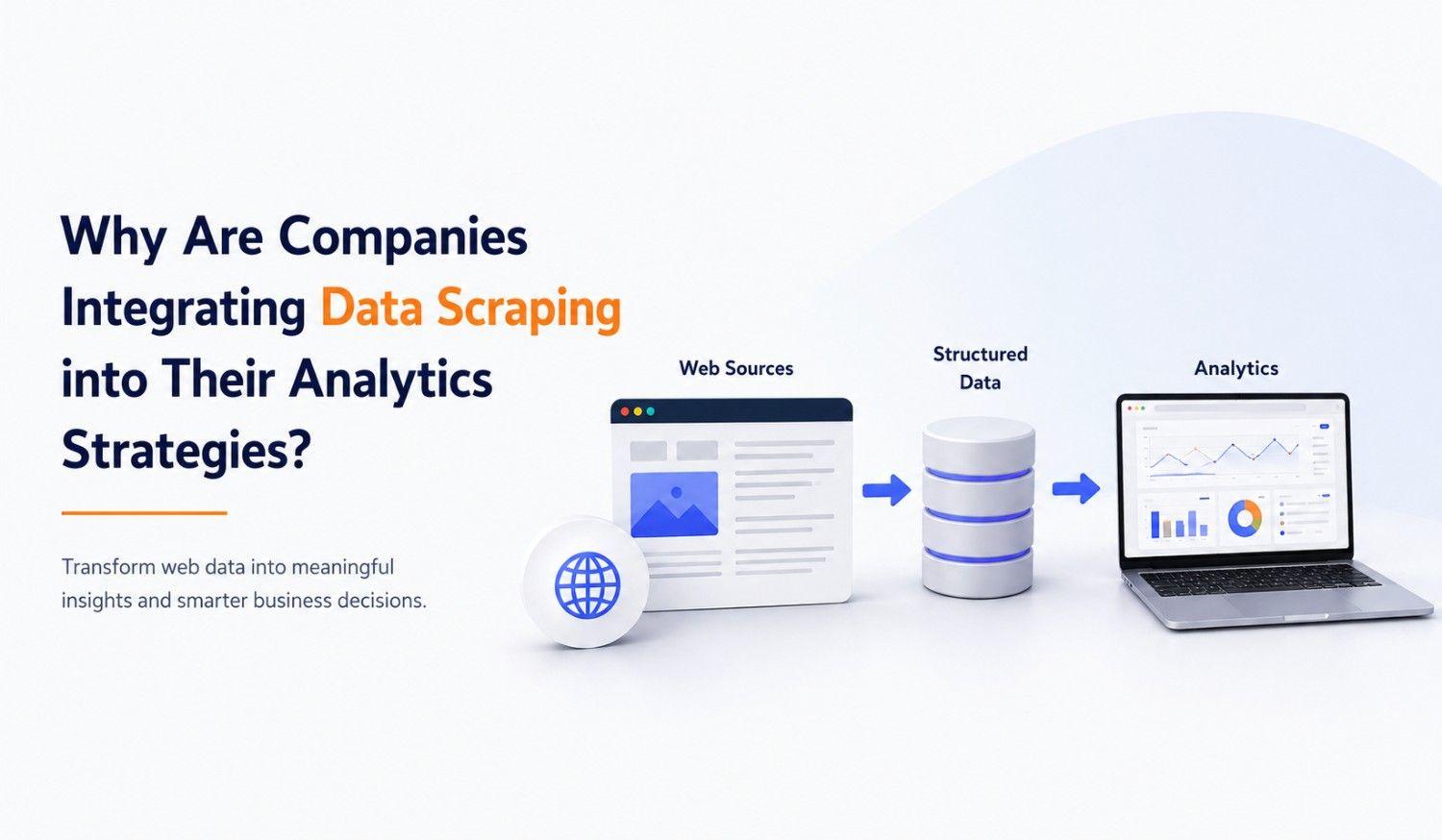
Data has become the fuel behind modern business decisions, but not all fuel is created equal. Most organizations already have plenty of internal information sitting inside CRMs, ERPs, spreadsheets, and dashboards. The challenge is that internal data often tells only part of the story. Markets change, competitors adapt, and customer preferences evolve faster than many reporting systems can keep up. That is why businesses increasingly turn to external sources to complete the picture. Through web data scraping services and intelligent analytics, companies can transform scattered information into meaningful insights that support smarter, faster, and more confident decisions.
The Analytics Landscape Has Changed Dramatically
Business analytics used to focus heavily on historical reporting. Companies reviewed last month's sales, last quarter's performance, and last year's trends, hoping the future would behave similarly. As many organizations have discovered (sometimes painfully), markets rarely cooperate with those assumptions. Today, analytics is expected to deliver real-time visibility and forward-looking insights. Publicly available information across websites, marketplaces, review platforms, and industry portals creates enormous opportunities. Businesses that combine internal records with external intelligence gain a broader understanding of what is happening now—not simply what happened yesterday.
Why Internal Data Only Tells Part of the Story
Internal systems provide valuable operational information, but they cannot explain everything happening outside company walls. Sales reports may show declining revenue, yet they may not reveal that competitors launched aggressive pricing campaigns or that customer expectations shifted. We often compare this to watching only one camera angle during a football game—you can see some action, but not the entire field. External data fills those blind spots. By combining operational metrics with market intelligence, businesses develop a clearer understanding of opportunities, risks, and changing customer behaviors.
Data Scraping Helps Businesses Monitor Competitors More Effectively
Competitor analysis has always been important, but manually tracking hundreds of websites quickly becomes exhausting. Few teams enjoy spending entire afternoons updating spreadsheets with competitor pricing information (and if they do, they deserve a trophy). Automated data collection simplifies this process considerably. Businesses can monitor pricing adjustments, product launches, promotional activities, feature updates, and market positioning from multiple sources simultaneously. One observation frequently seen across projects is that organizations often discover significant market shifts only after implementing automated monitoring, revealing opportunities they previously overlooked.
Better Customer Insights Start with Better Data
Customers share opinions everywhere—review sites, forums, social media platforms, and industry communities. Hidden within those conversations are valuable clues about preferences, frustrations, expectations, and emerging trends. Traditional surveys remain useful, but they often capture only a small portion of customer sentiment. External data sources provide a much broader perspective. Businesses can identify recurring complaints, recognize popular features, and understand purchasing motivations more effectively. When customer feedback is analyzed alongside internal metrics, organizations gain deeper insights that support better products, stronger services, and more meaningful customer experiences.
Supporting Predictive Analytics with Real-Time Information
Predictive analytics depends heavily on the quality and freshness of available data. Even the most advanced forecasting model struggles when it relies on outdated information. External datasets help improve forecasting accuracy by introducing real-world market signals into analytical models. Demand fluctuations, pricing trends, consumer sentiment, and industry developments can all influence future outcomes. Organizations that continuously collect and analyze these signals often identify opportunities earlier than competitors. Rather than reacting to change after it occurs, businesses can anticipate trends and prepare strategically before market conditions fully shift.
Improving Market Research Without Increasing Costs
Traditional market research often requires significant time, resources, and coordination. Surveys must be distributed, interviews scheduled, and reports compiled before insights become available. By the time findings arrive, market conditions may already be changing. Automated data collection provides a more efficient alternative for many organizations. Businesses can gather information from multiple sources across industries and regions without dramatically increasing research expenses. The result is broader market visibility, faster access to intelligence, and a more agile research process that helps decision-makers respond to opportunities before competitors even notice them.
Strengthening Strategic Decision-Making Across Departments
Effective analytics should not benefit only one department. Sales teams use external insights to identify potential opportunities and understand prospect behavior. Marketing teams monitor audience interests and campaign trends. Operations departments analyze market demand patterns to improve planning and resource allocation. Executive leadership gains broader visibility into industry shifts and competitive developments. When every department works from a richer dataset, strategic alignment improves significantly. We have often seen organizations discover that better decisions emerge not from having more meetings, but from having better information available before the meetings begin.
Sales Teams
Sales professionals succeed when they understand prospects beyond basic contact information. External data provides valuable context about company growth, market activity, customer engagement, and industry developments. Instead of approaching conversations blindly, sales teams can tailor outreach using meaningful insights. Better preparation often leads to stronger engagement and improved conversion opportunities. In competitive markets, even small informational advantages can make a measurable difference. Access to richer prospect intelligence helps teams spend less time guessing and more time focusing on building productive business relationships.
Marketing Teams
Marketing departments constantly seek a deeper understanding of audience interests and behaviors. External data sources reveal emerging topics, customer preferences, competitive campaigns, and shifting trends across digital channels. These insights help marketers create more relevant content and optimize campaign performance. Rather than relying entirely on historical engagement metrics, teams can identify opportunities developing in real time. A campaign informed by current market intelligence often performs better than one based solely on assumptions. Data-driven marketing becomes significantly more effective when supported by broader external visibility.
Operations Teams
Operational efficiency depends on accurate planning. Supply requirements, staffing levels, inventory management, and resource allocation all benefit from reliable forecasts. External market signals provide additional context that internal systems alone may not capture. Demand spikes, seasonal shifts, competitor activity, and economic changes can influence operational performance. Access to these insights allows organizations to adjust proactively rather than reactively. Businesses that monitor external indicators frequently reduce disruptions and improve planning accuracy, creating smoother operations and stronger overall performance.
Executive Leadership
Executives are expected to make strategic decisions that influence long-term business growth. Those decisions become easier when supported by comprehensive data. External intelligence provides visibility into industry trends, competitive movements, customer expectations, and emerging opportunities. Leadership teams can evaluate risks more effectively and identify growth possibilities earlier. We often notice that successful organizations share one common trait—they make decisions based on evidence rather than assumptions. Broader access to relevant information supports stronger planning and increases confidence in strategic initiatives.
Data Scraping Enables Faster Responses to Market Changes
Business environments rarely remain stable for long. New competitors enter markets, consumer preferences shift, and industry disruptions appear unexpectedly. Organizations that rely solely on periodic reports may discover changes after valuable opportunities have already passed. Automated data collection creates a more continuous flow of market intelligence. Teams can monitor developments as they happen and respond more quickly when conditions change. Faster awareness leads to faster action. In many cases, the difference between gaining a competitive advantage and missing an opportunity comes down to how quickly information becomes available.
Data Quality and Automation Work Hand in Hand
Collecting information is only part of the equation. The quality of that information ultimately determines its value. Poorly organized datasets create confusion, inaccurate reporting, and unreliable forecasts. Automation helps businesses collect, structure, and standardize large volumes of information efficiently. Clean datasets can then be integrated into business intelligence platforms, dashboards, and reporting systems. Strong analytics depends on trustworthy data. Organizations that invest in both automation and data quality practices often achieve better results because their decisions are supported by accurate and consistent information.
Compliance and Ethical Considerations Matter
Responsible data collection should always remain a priority. Businesses must consider privacy regulations, website policies, and ethical standards when gathering information from external sources. A sustainable analytics strategy depends on trust as much as technology. Experienced providers focus on compliant collection methods that respect applicable regulations while still delivering valuable insights. Organizations that prioritize ethical practices reduce risk and strengthen credibility. Effective data collection is not simply about obtaining information—it is about obtaining information responsibly and using it in ways that support long-term business objectives.
The Future of Analytics Will Depend on Broader Data Sources
Analytics continues to evolve as artificial intelligence, machine learning, and advanced forecasting technologies become more accessible. These technologies require large, diverse, and current datasets to perform effectively. Internal records remain important, but they are no longer sufficient on their own. Businesses increasingly combine operational information with external intelligence to create a more complete analytical framework. As competition intensifies and markets become more dynamic, organizations that leverage broader data sources will be better positioned to adapt, innovate, and identify opportunities before others recognize them.
Conclusion
Companies are integrating data scraping into their analytics strategies because modern business decisions require more than internal visibility. Market conditions, competitor activities, customer sentiment, and industry developments all influence outcomes in ways that traditional reporting cannot fully capture. Throughout countless projects, one lesson consistently emerges: businesses rarely struggle because data is unavailable. More often, they struggle because the right information is hidden in the wrong places. By combining internal intelligence with external insights, organizations can transform raw information into strategic advantage—and that advantage becomes increasingly valuable as markets continue to evolve.
FAQs
1. What is data scraping in business analytics?
Data scraping is the automated process of collecting publicly available information from websites and online sources to support analysis, reporting, forecasting, and business decision-making.
2. How does data scraping improve analytics strategies?
It expands internal datasets with external market intelligence, helping organizations understand competitors, customers, and industry trends more effectively.
3. Can data scraping support predictive analytics?
Yes. External information such as pricing trends, customer sentiment, and market activity can improve forecasting accuracy and strengthen predictive models.
4. Which industries benefit most from data scraping?
Industries including eCommerce, healthcare, finance, real estate, logistics, manufacturing, and technology commonly use data scraping to enhance decision-making.
5. Is data scraping legal?
Data scraping can be legal when conducted responsibly, ethically, and in compliance with applicable regulations, privacy requirements, and website policies.
6. How does data scraping help competitor analysis?
Businesses can monitor pricing, product launches, promotions, feature updates, and market positioning to make informed strategic decisions.
7. Can scraped data be integrated into existing systems?
Yes. Data can be integrated with CRM platforms, ERP systems, dashboards, business intelligence tools, and reporting solutions.
8. Why are companies investing more in data scraping?
Organizations want faster market intelligence, stronger customer insights, improved forecasting, and a sustainable competitive advantage in rapidly changing markets.

 English
 Arabic
 French
 Spanish
 Portuguese
 Deutsch
 Turkish
 Dutch
Dutch
 Italiano
 Russian
 Romaian
 Portuguese (Brazil)