


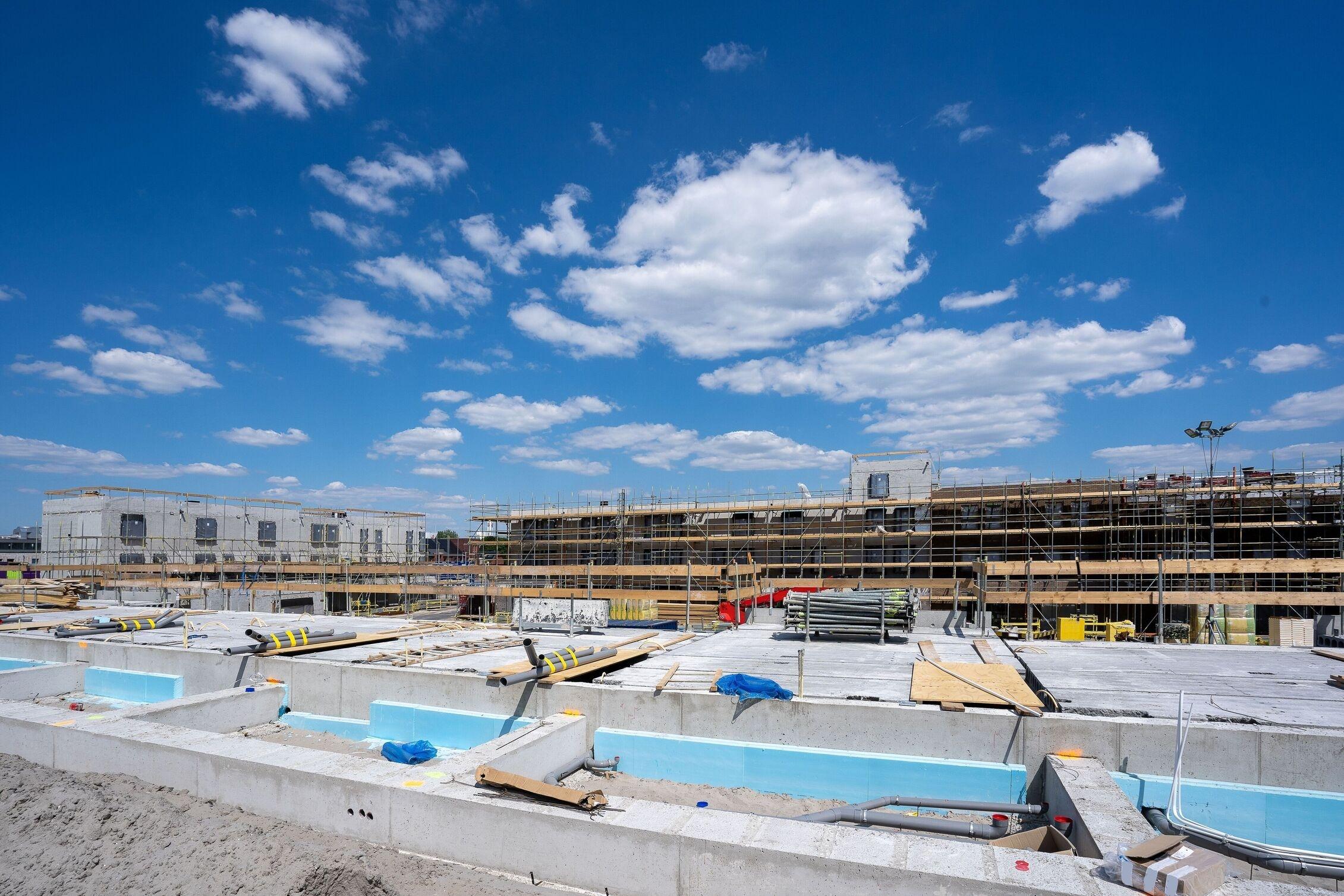
Description: An informative overview of formwork techniques used in Manchester’s urban development, focusing on structural integrity, safety standards, and modern site methodologies.
In the rapidly evolving skyline of the United Kingdom, few cities demonstrate the pace of architectural growth quite like Manchester. As cranes dominate the horizon and new high-rise developments spring up across the city centre, the underlying engineering principles remain constant. At the heart of this structural transformation is Manchester formwork, a critical component of modern civil engineering that dictates the shape, strength, and finish of our urban environment.
Formwork refers to the temporary or permanent moulds into which concrete is poured. Once the concrete sets and reaches sufficient strength, the formwork is removed or, in some specific designs, left in place as part of the structure. In a city like Manchester, where industrial heritage meets contemporary design, the precision of these moulds is paramount. Whether constructing reinforced concrete frames for residential towers, basement retaining walls, or intricate bridge supports, the methodology employed is fundamental to the structural integrity of the project.
The Role of Manchester Formwork in Modern Construction
The application of formwork in the region has moved beyond traditional timber shuttering. Today, engineers and site managers utilise a diverse range of systems to meet the rigorous demands of Manchester’s climate and tight urban footprints.
System Formwork: To maintain the brisk pace required by large-scale projects, modular steel or aluminium systems are frequently used. These components are designed for rapid assembly and dismantling, allowing for a repetitive cycle that is essential for multi-storey concrete frames.
Climbing Formwork: For the city’s burgeoning skyscraper sector, climbing systems are indispensable. These structures "climb" the building as each floor is poured, ensuring that vertical elements like lift shafts and stairwells are aligned with millimetric precision.
Safety and Compliance: Working on complex sites necessitates a strict adherence to UK safety regulations. The design and installation of formwork are subject to rigorous risk assessments. Ensuring the load-bearing capacity of the moulds is calculated accurately is not just a matter of structural efficiency; it is a vital safety requirement to prevent failure under the immense pressure of wet concrete.
Sustainability and Material Efficiency
Modern trends in regional construction have begun to emphasise sustainability. Waste reduction is a significant consideration; consequently, there is a shift toward reusable steel systems that minimise the carbon footprint associated with disposable timber formwork. Furthermore, the use of high-performance concrete mixes in conjunction with precision-engineered moulds allows for thinner, stronger structural elements, reducing the total amount of material required for construction.
The Technical Challenge
Manchester’s unique ground conditions—ranging from historical canal-side sites to dense urban infill plots—require bespoke solutions. Formwork designers must account for site-specific constraints, such as limited access for heavy machinery or the need to preserve surrounding masonry.
Ultimately, the mastery of Manchester formwork represents a blend of technical expertise and logistical planning. It is the invisible scaffolding of progress, providing the necessary support for the city’s architectural evolution. As Manchester continues to reshape its landscape, the refined use of these temporary structures remains the cornerstone of safe, durable, and efficient building practices.

 Arabic
 French
 Spanish
 Portuguese
 Deutsch
 Turkish
 Dutch
Dutch
 Italiano
 Russian
 Romaian
 Portuguese (Brazil)
 Greek
Greek